
You may have noticed the term trauma-informed gaining traction recently in Christian counseling circles. The idea of being informed versus uninformed about something gives a sense of urgency to the topic. No one wants to be out of the loop when it comes to the care of the people in your sphere of influence. But instead of feeling like you’re behind the times and scrambling to catch up, it’s good to take a careful look at this concept so you can make an informed decision (pun intended) about whether adopting a term like “trauma-informed” accurately describes your work.
The idea of being trauma-informed first came into use in the realm of domestic violence shelters in the 1970s. Workers at these shelters saw benefit to compassionately understanding the impact of someone’s home being unsafe. A decade later, the term was used by Child Advocacy Centers to for similar reasons; they wanted people on their team who were sensitive to the impact of a child being abused or neglected by their caregiver. After the Adverse Childhood Experiences (ACE) study, conducted by Vincent Felitti and Robert Anda (1995–1997) revealed strong correlations between childhood trauma and adult health problems, the term became quite prevalent. In the early 2000s, law enforcement began to train officers on trauma who could respond more effectively when encountering major tragedies.
That is four decades of history in one paragraph. But it gives you a history of the term, who used it, why, and how it spread. Take a moment and reflect on that brief history. What stands out to you? Here are some observations.
- There is a great deal of diversity in the venues under which the term became popularized.
- Mental health professionals or licensed counselors were not the initiators of coining or defining this phrase.
- Front-line and first responders working with vulnerable populations (correctly) felt the need to understand how the experience of trauma impacted the groups with which they worked.
- Each profession thought they could be more effective if they understood the experience of trauma better.
- None of these settings are places where a thorough treatment plan for processing trauma is provided.
- Being trauma-informed played a supplemental role in their primary responsibilities. It was an attempt to ensure they did not unintentionally do harm as they tried to help in their primary role.
In the early 2000s, when the term became well recognized, a set of five core values or principles emerged that became the most accepted marks of what it means to be “trauma-informed.” These are values or principles that can be adopted by both professional and nonprofessional helpers.
- Safety. Ensuring that the victim is safe and feels safe is the first priority. Trauma is marked by a profound sense of feeling unsafe. A trauma-informed helper realizes that thinking clearly about one’s immediate choices when fearing for one’s safety is an unfair expectation.
- Trustworthiness. A key part of prioritizing safety is building trust and rapport with the traumatized individual. A trauma-informed helper realizes that just because they (the helper) have good intentions and want to assist does not mean a vulnerable person feels safe. Therefore, the helper patiently devotes extra time to building trust throughout the helping relationship.
- Choice. The helper realizes, “If I am not the one who lives the consequences of a choice for the other person, I should not be the one who makes the choice.” When overwhelmed, the traumatized individual is too willing to defer their choices. A trauma-informed helper is intentional about not capitulate to this deferring.
- Collaboration. Collaboration is the alternative to making choices for the individual. A trauma-informed helper takes the posture of identifying options, weighing the implication of those options, and helping the individual vet those options within their values.
- Empowerment. After a traumatic experience, people can become passive. Empowerment realizes that helping someone regain a sense of agency, a sense that they can make choices and their choices can have a positive impact on their life, is the desired outcome of helping.
Notice that being trauma-informed is not about making a diagnosis. It is not about implementing a counseling technique. Most trauma-informed people are not counselors. Being trauma-informed is about being sensitive to the impact of profound suffering and altering one’s approach (without changing one’s role: social worker, law enforcement officer, pastor, or friend) in light of the challenges that traumatic experiences introduce into our lives.
Now you know enough to begin to assess whether being trauma-informed would benefit your work or ministry. Here are some questions to help you make that assessment.
- Do you frequently work with vulnerable populations?
- Do you frequently care for people during or after intense suffering?
- Are you in a role where vulnerable people would defer their decision making to you?
The more you minister to vulnerable populations, the more benefit there would be to being trauma-informed. But here is the frustrating part. There is no credential or training process that makes someone specifically credentialed in this area. Being “informed” is about awareness and compassion rather than a strict set of educational criteria.
Being trauma-informed is not a protected professional title or regulated term. That means we can take a sigh of relief about incurring liability for using the term. No one is suing workers in domestic violence shelters, child advocacy centers, or law enforcement offices for using the term “trauma-informed” to describe their work. But this same reality makes it harder to determine if we are using the term with integrity. So where do you start?
One option is to go through a basic training about the impact of trauma. Here is a free video training with a workbook you could use with someone, individually or as part of a group experience, who has experienced trauma. If you answered “yes” to enough questions above that you wanted more training, the Christian Trauma Healing Network is also an excellent option.
As a pastor, biblical counselor, or other type of Christian leader, what are you communicating if you refer to yourself as trauma-informed?
- You are saying you are compassionate toward intense suffering, that you won’t tell someone that the impact of their suffering is sinful or that they shouldn’t feel that way.
- You are saying you understand the basic responses that are common after trauma and that you will be patient and fulfill your role in this person’s life at their pace.
- You are saying you know your limits; you are only informed rather than trained in trauma counseling.
- You are saying you want to be helpful without claiming you can tell the other person what to do what will eliminate the effects of their traumatic experience.
My hope is that, after reading this article, you have gained three things. First, a better understanding of what it means to be trauma-informed. Second, questions to help you assess whether being trauma-informed would be an asset for your work or ministry responsibilities. Third, awareness of training options that would allow you to effectively care for the vulnerable populations you serve, and use the term with integrity.
My guess is that these three points are less impressive (i.e., sophisticated) but more approachable (i.e., achievable) than you anticipated when you started this article. That was my goal. I want to help you get to the point where you could say, “I could do that.” I also want to help you assess, “In my role, would it be beneficial for me to be trauma-informed?” Whether you answer yes or no to that question, I hope this history of the term trauma-informed helps you understand what it does (and doesn’t) mean.
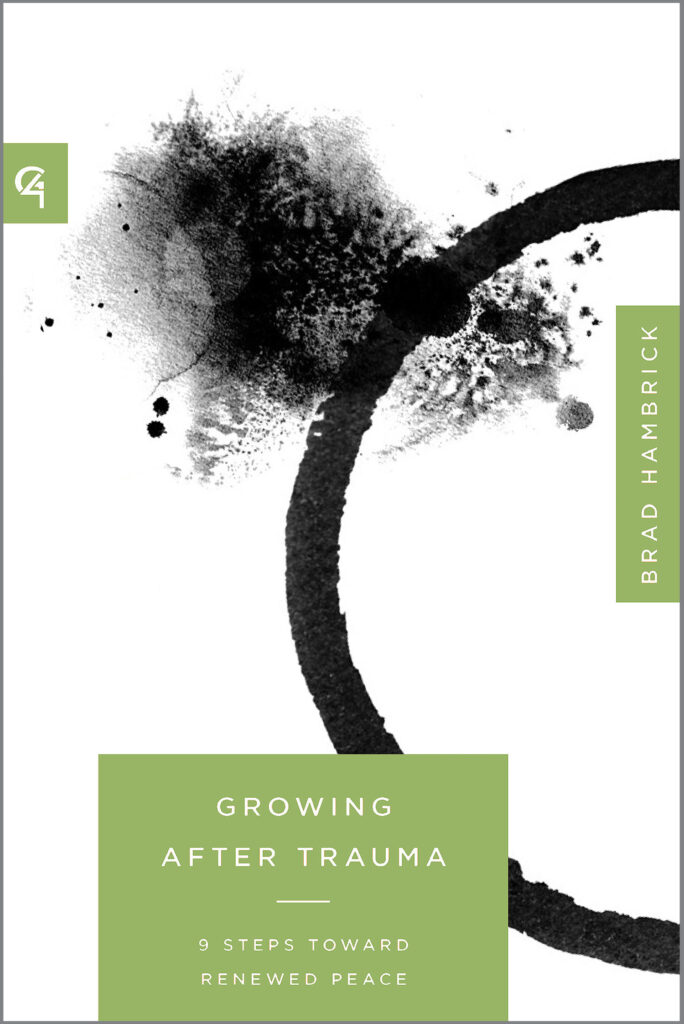
Growing After Trauma
Trauma is an intense past experience with lingering effects in the present. It is futile to minimize trauma’s impact, but trauma should not have the last word on our lives. As we understand and counter the impact of trauma, we can live satisfying and fruitful lives. Brad Hambrick outlines a process for finding peace after trauma by establishing an environment of safety, processing painful memories, and reengaging the life God designed for you to live.