
Is faster always better? Obviously, no. But that truth only tells us that patience is sometimes a virtue. It doesn’t help us sort out when slower might be better. Consider these two lists:
- List One: Life challenges when efficiency in change is best (fast is better).
- List Two: Life challenges when patience in change is best (slower is better).
What would you put on each list? Here are some examples:
- List One: Being honest about an addiction or repenting of an offense against a friend. In these cases, the longer we wait, the more damage is done. Faster is better. Wisdom points us toward prompt action.
- List Two: Gaining confidence after a major setback or growing trust in a strained relationship. In these scenarios, haste often reaps a negative return. Slower is better. Wisdom points us toward patience.
With this in mind, let’s ask a difficult question: After a prolonged struggle with depression and anxiety, is hope best restored quickly or with patience? Grapple with that question for a moment. Let the tensions you feel coalesce into thoughts you can put into words.
Your thoughts might go something like this:
- As a Christian, I know we have sure and ultimate hope (1 Peter 1:3).
- When I feel emotionally threadbare, I don’t trust things that move fast.
- I know that faith and doubt can coexist (Mark 9:24), but life is disorienting when they do.
- Sometimes being patient feels like being passive.
- Slow growth and change tend to be sturdier than fast growth and change.
- When I hear sermons about hope, they tend to be neon and fast rather than pastel and patient.
- There are many “How long?” psalms in the Bible. That suggests that God sometimes moves slowly.
- Life would be easier if hope were always restored quickly.
Some of these statements lean toward the quick restoration of hope, others toward a patient restoration of hope. All of them sound reasonable. Allow the ebb and flow of these statements to give you the freedom to grapple honestly with your questions. It is natural to feel torn.
Let’s consider both sides of this question.
First, why would we expect a quick restoration of hope? Because of the resurrection of Jesus, there is no hardship we face in this life that is greater than the hope we have in him. For this reason, hope is more than fast; it’s immediate and constant. Hope was never absent.
Second, why would we sometimes expect a slower restoration of hope? Because we live mid-journey lives, the ultimate hope of the gospel does not immediately erase every hardship we face. For this reason, hope is content to be patient; we have a Good Shepherd who is willing to move at the pace of his sheep (Psalm 23).
Notice that these two statements do not contradict one another. You can fully embrace the ultimate hope of the gospel and still wrestle with the real hardships of day-to-day life in a broken world. Both things are true.
That means sometimes hope will be restored quickly; other times hope will be restored patiently. There is no one-size-fits-all pattern. God does not work the same way in every person’s life or in every situation. Reflect for a moment on the life, teaching, and miracles of Jesus. As you flip through the Gospels, notice that it is almost as if Jesus goes out of his way never to do things the same way twice. He has no intention of reducing his involvement in our lives to a formula.
Our confusion is often the by-product of wanting uniformity of experience—we want God and his work in our lives to be predictable. But God never promised that; instead, God said he would manifest his presence in each of our lives differently (1 Corinthians 12:4–7). What does that mean for our question of hope?
- If you quickly embrace hope after a hardship, rejoice—but avoid making your experience a standard for others. God said sanctification would occur progressively (Hebrews 10:14), and he didn’t specify a pace.
- If hope after a hardship thaws more slowly, fear not—but do keep moving forward. God does not view you as being “behind” because others embrace hope more quickly; but he does (for your sake) want you moving forward.
Who needs to hear this most? Probably those of us who are more cautious about embracing hope. Those who have had an ongoing struggle with depression and anxiety may be some of the most representative of this group. When we’ve known depression and anxiety for months or years, we begin to view “hope” like the word “leprechaun” or “faun.” We know what the words mean, but we doubt that what they refer to really exists.
If this is you, you have permission not to rush. If you feel rushed to experience hope, you’re more likely become mistrusting toward those you think are rushing you.
How to Embrace Patient Hope
To be sure, permission not to rush is not permission to stagnate or regress. Patience isn’t the same as passivity. So how do we patiently embrace hope if the thawing of hope is hard for us? Consider these recommendations.
- Make sure you’ve embraced the ultimate hope of Christ. Without this, anything we do can only provide relief but not hope.
- Care for yourself physically. Get six to eight hours of sleep, eat a balanced diet, and get a little exercise. Caring for your body this way reflects God’s care for you.
- If prayer is difficult or dry, offer short prayers rather than trying to have an extended prayer time. Simple “thank you” or “this is hard” prayers keep you engaged with God.
- For a season, focus your Bible reading on the psalms of lament, which include Psalms 6, 13, 41-43, 88, 130, and 143. God inspired these psalms to give expression to dry, hard seasons of life.
- Confide in a friend and ask them to pray for you. It is wise to refuse to face hard things alone.
- Consider talking with your pastor or a counselor who shares your Christian faith.
- If your depression-anxiety persists, consider talking with your physician or psychiatrist to discuss whether medication might be helpful. Here is guidance on how to prepare for that conversation.
- Consider other lifestyle habits that might contribute to better mental health.
Chances are, you read that list and thought, “I’m already doing many of those things.” Don’t be surprised by that. We are prone to think: If life is hard, I must be doing everything wrong. But that’s not true. Doubtless, you have been making many wise choices, and you should be commended for that. Allow that encouragement to be part of what God uses to build a patient, solid, sturdy hope in you. Patient hope is solid hope.
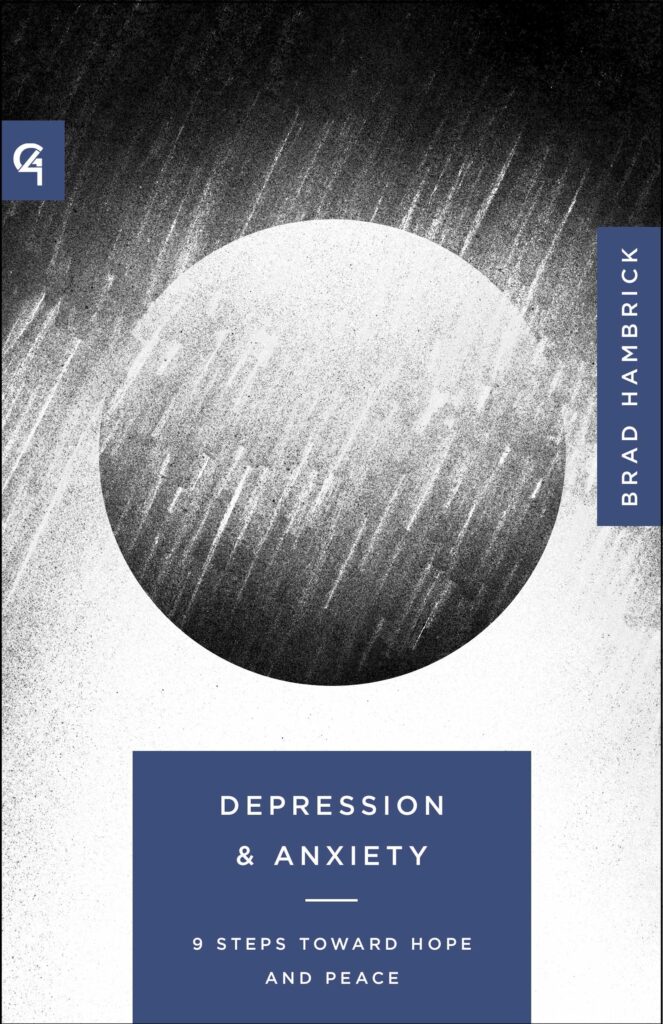
Depression and Anxiety
The persistent presence of depression or anxiety can make us want to give up. We begin to wonder, “What’s the use?” The slow fade of hope and heavy weight of dark emotions make our suffering more intense. In a broken world, it’s impossible to completely eradicate depression and anxiety, but we can have hope and find meaning amid our struggle. This hope becomes more tangible with a concrete plan and support from friends. Brad Hambrick outlines a 9-step process for finding hope and relief amid the struggles associated with depression and anxiety.