
Christmas is a celebration of God coming to us and becoming one of us. The anticipation and preparation that leads up to the big day each year is but a taste of what those who were waiting for the Messiah experienced so many years ago. In The Surprising Savior: 25 Advent Devotions from Luke’s Gospel, Dave Furman sets out to examine the familiar stories anew, while stepping back and appreciating the mind-blowing nature of every little detail surrounding the first Christmas.
In these twenty-five devotions, Furman explores the surprising ways God fulfilled his promises in every little detail surrounding the birth of Jesus—through the lives of unlikely individuals, in unexpected places, with unanticipated timing. By exploring Christmas through the lens of the book of Luke, readers will find hope and encouragement in their own seasons of waiting and be reminded of how God often works through the weak, humble, and ordinary to accomplish his extraordinary purposes.
In this interview with Dave Furman, we learn more about the surprises surrounding Jesus’s birth.
Q: The majority of people like Christmas, but you really love It. Tell us a little bit about how much the Furman family loves all things Christmas.
I love surprises, and I also love Christmas … our whole family does. We put up our Christmas trees (plural) every October. Now, it’s true that I live in the Middle East where we don’t experience seasons, but yes, we completely ignore the American rule that says you have to wait until Thanksgiving to put up the tree. Why have only one month of Christmas décor when you can have three? When the calendar turns to October, we put on a Christmas movie while everyone gets to work.
We even have a tradition on December 23, Christmas Eve Eve (that’s an actual holiday!), when our kids (who are no longer little) sleep underneath or next to the Christmas tree. The lights, the decorations—is there anything better? We are mesmerized by their beauty.
Q: How did your combined love of Christmas and surprises lead you to write the Advent devotional, The Surprising Savior?
I also love Christmas surprises. There’s joy in giving unexpected gifts to loved ones and being equally delighted by their gifts. Christmas parties and gatherings also lead to unexpected conversations and memorable moments together. Here in Arabia, we are also surprised by who attends our Christmas Eve church services. Our congregation meets in a hotel, and we frequently have people who have never participated in a church service join us for Christmas. Guests often hear the singing, and they pop into our gatherings. I’m surprised by who God brings our way. Christmas and surprises have become synonymous for me. Ultimately, we know Christmas isn’t about trees, presents, or gathering as a church (though it’s a good thing to do).
I love Christmas, and I love surprises … and it turns out there are so many surprises, which we may have missed, wrapped up in the story of Christmas. As I was reading the beginning of the Gospel of Luke, I noticed a theme of surprise and the birth of Jesus that combines both Christmas and surprise.
Q: How does your devotional highlight God’s use of unexpected people and places in the story of Jesus’s birth?
Most of these devotions focus on the early chapters of the Gospel of Luke, which are full of unexpected moments and characters. It’s surprising that the Savior of the world would be born of a young virgin in a small town in the middle of nowhere. It’s surprising that the forerunner, John the Baptist, was born to an elderly couple well past childbearing age. It’s surprising that Joseph stood by his soon-to-be wife’s side even though Jesus was not his child. It’s also surprising that the birth narrative ends with two heroes of the faith we hardly ever talk about: Simeon and Anna.
Simeon had faith that he would see the Savior before he died, and he did! Anna, a long-time widow, had faith to go to the temple to pray every day and wait for the Savior; she saw him and became the first female evangelist. The Gospels include surprising people and places throughout the story of Jesus’s birth.
Q: In what ways does the humility of Jesus’s incarnation challenge our modern ideas of greatness?
The story of the Bible is not about strong superheroes saving the day. No, the story of the Bible, from beginning to end, is a story of weakness. Weakness is the way in which God gets all the glory. Jesus’s incarnation surprises us because it shows humility beyond anything we’ve seen before. And yet we should have been clued in that we would have a humble Savior.
Consider the biblical heroes. Joseph was discarded by his brothers and thrown into a dungeon but later saves Israel from famine. Moses was a stutterer, but he is who God uses to deliver his people from slavery. David was the youngest and smallest brother, and yet he defeats Goliath. Joshua defeats Jericho, not with strength or a strategic battle plan, but by walking around the city once a day for about a week, and then walking a little more on the last day while screaming and blowing some trumpets. It must have been the oddest battle plan in history, but God showed, once again, that he would deliver his people, not through their strength, but through their weakness. The Apostle Paul, the great church planter, constantly suffered and had chronic pain. God uses weak individuals to make it abundantly clear that He’s the one doing the work.
The Incarnation was another part of God’s plan to show that He would deliver His people through humility, not strength.
Q: How do Zechariah and Elizabeth’s experiences of waiting and answered prayer speak to people today?
Zechariah and Elizabeth desperately wanted a child, but the years went on, and they found themselves in old age with no children. They waited beyond what they expected, but when all seemed lost, they were in for the surprise of their life: Elizabeth was well past childbearing age, but she was pregnant. The Lord did more than answer their prayers: Their son would be the forerunner of the Messiah.
The Lord answers our prayers, but that doesn’t mean God will always answer our prayers the way we’d like. There are so many who have prayed for children who’ve never been able to have children. The story of Zechariah and Elizabeth should encourage us to never stop praying, and it should also encourage us that even when it doesn’t seem like God is answering our prayers, He is always doing a million things behind the scenes that we can’t see in the moment. We can trust Him.
Q: What can we learn from Mary’s response to God’s call, especially her willingness to trust in the face of uncertainty?
Mary was such a woman of faith! We can learn that even when our circumstances are uncertain, God is not uncertain. Even when our lives take a surprising turn, God is still there. Even when life feels like a mess, God is with us. God holds the whole world in his hands, and so he certainly holds our lives in his hands. Mary was faithful to follow God’s leading—we must be faithful to do the same, knowing God is in control and that he knows best.
Q: Why do you think God chose to announce Jesus’s birth to shepherds first, rather than to religious or political leaders?
Perhaps because God comes to the lowly. Everything about Jesus’s birth was a surprise, including the announcement. One might think the announcement would come to the leaders first, but instead it went to the lowly—those who would believe, those who had faith.
Q: How does celebrating the first advent point us to Christ’s second advent?
Jesus has come once; he will come again! In the Upper Room with his disciples and before his death, Jesus explains that he is going to prepare a place for them in his Father’s house. Jesus describes heaven as a prepared place where all God’s people will dwell with him forever. Jesus isn’t abandoning his followers; he’s getting ready to bring his people home. Jesus is telling his disciples that he will come back to get them and take them to himself.
The first advent (Christmas) is intricately linked to the second advent (his return for his people). Because Christ came once to fulfill Old Testament promises, we can be confident that he will again do what he has said and come for us. Advent encourages us to wait for Christ’s second coming and the return of our King. This is the Christian’s ultimate hope. It will be the time when Jesus will wipe away every tear from our eyes, as all evil and suffering will be extinguished forever (Revelation 21:4). It will be a time full of joy and community with all the saints from all times. What sweet and comforting words that Jesus will come again and take us to himself.
The One who came the first time to save his people will come a second time to gather his people. The first advent is part of the mission, but the second advent will complete the mission. Therefore, on Christmas morning, we celebrate the first coming of the King, but we also look forward to his second coming. Christmas causes us to look back at Jesus’s birth, but it also encourages us to look ahead to future hope. When the King returns to take us to be with him, our Savior will welcome us and fill us with eternal joy. We will gaze upon his face and be forever changed.
Q: In the devotions, you share personal stories from your life and ministry in the Middle East. How have these experiences shaped your understanding of the Christmas story?
We live in a very diverse city with people from all around the world. The diversity is a constant reminder that Jesus came not only for one people group but for all peoples. Jesus came for everyone who would call upon his name in repentance of sins and belief for salvation. Jesus is not only a Middle Eastern savior or a Western savior, but the Savior of the world.
Q: Christmas is a difficult time for many people, and you do acknowledge that in The Surprising Savior. What advice would you give to someone who struggles to find hope or joy during the Christmas season?
First, if someone is struggling during Christmas, I want to tell them, “I’m so sorry.” This is not how life is supposed to be. This world is broken. I would point them to Jesus, coming as part of God’s redemption plan to make all wrong things right. Their suffering has an expiration date. It will end. If they follow Christ, a day is coming when there will be no more tears, and the King will return once more to take his people, whom will gaze upon his face and be forever changed.
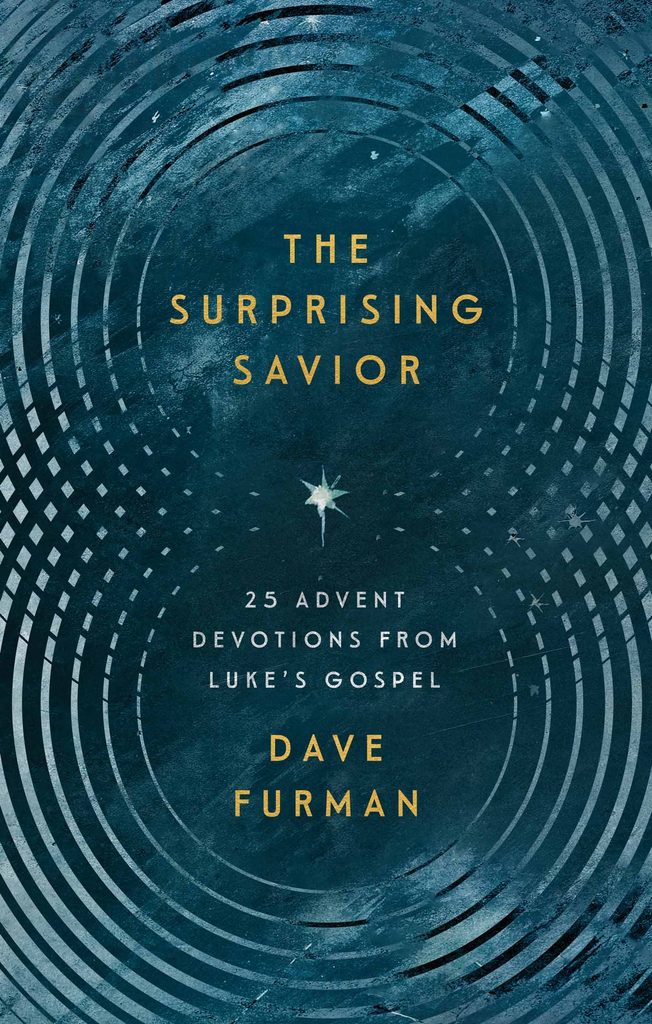
The Surprising Savior
Christmas is a celebration of God coming to us and becoming one of us. The anticipation and preparation that leads up to the big day each year is but a taste of what those who were waiting on the Messiah experienced so many years ago. In The Surprising Savior, Dave Furman sets out to examine the familiar stories anew, while stepping back, and appreciating the mind-blowing nature of every little detail surrounding the first Christmas.