
Technology has always drawn us in—offering to make life easier, faster, and more efficient. But in recent years, artificial intelligence has entered a new territory: the promise of intimacy. AI “companions” and “romantic chatbots” are marketed as substitutes for human relationships. They promise companionship without rejection, affection without conflict, and intimacy without risk. At first glance, this may seem harmless, even appealing, especially to those who feel lonely or wounded by broken human relationships. But a biblical perspective reveals that pursuing intimacy with an AI is not just a shortcut—it is a distortion of what God designed human relationships to be.
Much like pornography, AI relationships offer the illusion of intimacy while stripping away what makes love real and meaningful. Both porn and AI give the illusion of closeness without requiring the sacrifices, mutual give and take, growth, and sanctification that come through real human connection. Instead of growing in Christlike love, AI cultivates a heart of self-oriented consumption. And in doing so, it robs us of the very things God created us for.
The Consumer Illusion
At the core of AI companionship lies a consumer mindset: “I get what I want, when I want it, exactly how I want it.” The AI relationship exists to do what I want and please me. If I’m tired of conflict, I can mute it. If I want affirmation, it gives it. If I long for romance, it simulates it. The relationship is engineered by all my preferences, comforts, and pleasure. It holds none of the frustrations, misunderstanding, and annoyances a real relationship has. And these pseudo relationships are even in children’s toys. Dolls and teddy bears are being made with AI bots so children can form a fake relationship with their toy.
This is the opposite of the real love as God intended. In 1 Corinthians 13, Paul describes love as patient, kind, not self-seeking, not easily angered, keeping no record of wrongs. Real love involves relating to another flawed, fallible human being. It requires attending to the needs of another, laying down our desires, enduring frustrations, forgiving offenses. It requires stepping outside of my comfort zone. Relationships refine and sanctify us precisely because they do not conform to our every whim.
AI companionship bypasses this process. Like pornography, it creates a “costless intimacy” that demands nothing from us. But in removing the “cost,” it removes the beauty and sanctification that real relationships bring. Instead of shaping us into Christ’s likeness, it shapes us into consumers—always taking, never giving. It changes us by corrupting us.
God’s Design for Relationship
From the beginning, God designed humans for relationship:
- With him: “Let us make man in our image, after our likeness” (Genesis 1:26). God is a communion and God made us like him. Our deepest need is communion with God himself.
- With others: God creates Eve not just as Adam’s helper but as his counterpart—bone of his bone, flesh of his flesh (Genesis 2:23). Their relationship is marked by vulnerability, unity, and mutuality.
We see throughout Scripture that relationships are places where God refines his people. Think of Joseph forgiving his brothers, David learning faithfulness in friendship with Jonathan, or Paul and Barnabas working through conflict and reconciliation. In the church, believers are called to bear with one another, forgive as the Lord forgave, encourage, and exhort. The New Testament churches all had issues to wrestle through with one another.
These realities cannot be replicated by code. An AI cannot sin against you and then repent. It cannot wound you, forgive you, or grow alongside you in Christ. It cannot teach you the humility of saying, “I was wrong,” or the grace of hearing, “I forgive you.” By turning to AI for intimacy, we miss out on the very practices that form us into people of love.
What We Miss When We Settle for AI Intimacy
- Forgiveness and Reconciliation – True love requires us to face brokenness, seek forgiveness, and extend grace. These practices mirror God’s forgiveness toward us. An AI never needs forgiveness, so we never practice it.
- Selflessness and Sacrifice – Philippians 2 calls us to “look not only to your own interests, but also to the interests of others.” Relationships stretch us beyond ourselves. AI keeps us locked within ourselves.
- Conflict and Growth – In Proverbs 27:17, “Iron sharpens iron, and one man sharpens another.” Disagreements, challenges, and conflicts—though painful—sharpen us into wiser, humbler people. AI, programmed to avoid offending us, dulls our edges.
- Listening and Empathy – James 1:19 calls us to be quick to listen and slow to speak. True listening means entering another’s world and carrying their burdens. An AI only reflects my world back to me, confirming my feelings but never inviting me into another’s reality.
- The Mystery of Covenant Love – Human marriage points beyond itself to Christ’s covenant with his bride, the church (Ephesians 5:32). A covenantal love is steadfast, enduring, costly, and filled with mystery. AI can simulate romance but cannot covenant, cannot vow, cannot remain faithful in the face of suffering.
When we replace human relationships with AI, we trade away these gifts for a shallow shadow. It is like feasting on imitation food—always eating, never nourished.
Implications
At the heart of AI intimacy is a rejection of God’s design for love and humanity. Instead of being formed into people who reflect his self-giving love, we turn inward. Instead of being image-bearers in community, we become consumers of artificial companionship.
This reveals two dangers:
- Idolatry of the Self – Rather than loving God and neighbor, we fashion a “relationship” where we remain the center. The AI becomes a mirror reflecting only my desires back to me. It is not love, but narcissism disguised as companionship.
- Dehumanization – By treating “relationship” as something that exists only for my consumption, I reduce love to a commodity. This mindset can carry over into real human relationships, tempting me to view people as tools for my fulfillment rather than image-bearers worthy of honor and care.
The Better Way
The gospel offers a radically different vision of love. Christ did not seek comfort or self-pleasure; He laid down his life for his bride. Real love costs us—but in losing ourselves, we find life (Mark 8:35)
Instead of chasing the illusion of intimacy with a machine, we are called to lean into the messy, difficult, but beautiful reality of human relationships. This means risking rejection, working through misunderstandings, confessing sins, extending grace, and practicing patience. These are the very means God uses to conform us to Christ.
And for those wrestling with loneliness, the good news is this: intimacy is not found in an AI chatbot or even in marriage, but in Christ himself. He is the friend who sticks closer than a brother, the Bridegroom who will never forsake his bride, the Savior who never deserts his people.
AI intimacy offers a shortcut to connection, but it is a shortcut that leads nowhere. It promises closeness but delivers only isolation, affirmation but not transformation, pleasure but not sanctification. Like pornography, it creates consumers who take without giving, who grasp without serving, who settle for shadows instead of embracing God’s design.
True love is costly. True relationships are messy. But in those costs and messes, God meets us and makes us more like Christ. And that is something no AI bot can ever replicate.
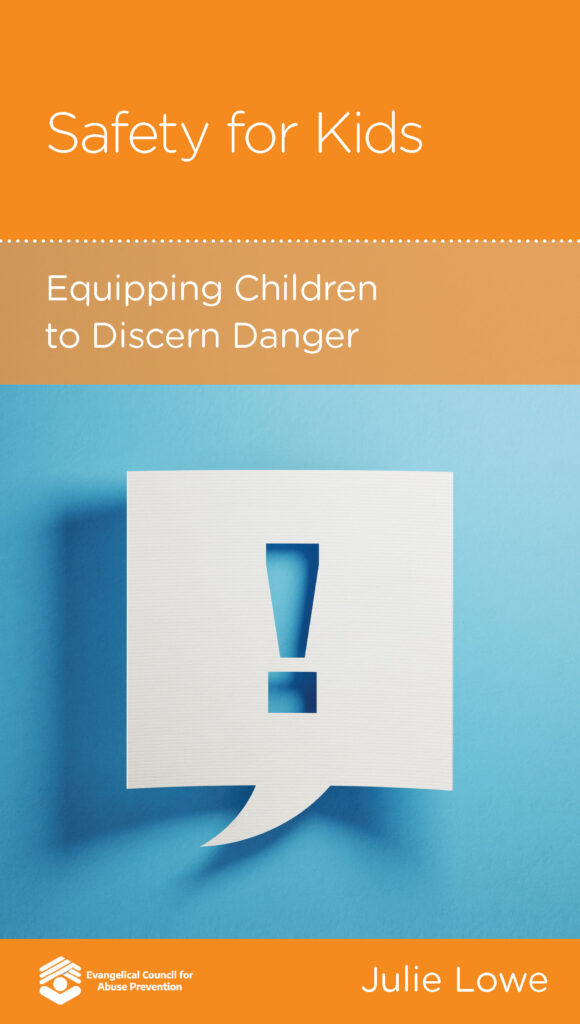
Safety for Kids
Children today face many dangers, from cyberbullying to pornography, substance abuse to school shootings. How can parents teach their children to navigate these dangers? Family and children’s counselor Julie Lowe offers help to parents shepherding their children in a complex world. She encourages parents to respond to the reality of danger by nurturing their children’s relationship with God and teaching their children to discern good and evil both around them and inside their own hearts.