
Born between 2010-2024, Gen Alpha is growing up in a world very different from the one their parents and teachers did. This generation faces intense pressure from school, social media, mental health struggles, and the rapid rise of technology. Despite a deep desire to make a difference, parents, educators, and faith leaders often feel overwhelmed by the growing generational divide. In Raising Gen Alpha: Helping Kids Navigate Everything from Anxiety to AI, author Dave Boden helps readers bridge the gap to make a connection and ensure these children and teens feel seen, heard, valued, cared for, loved, and safe.
Q: A lot of people get confused by which generation is which. Let’s start off by defining who Gen Alpha is. What birth years does Gen Alpha cover?
Generation Alpha generally refers to children born between 2010 and 2024. They are the first generation born entirely in the twenty-first century, growing up in a world shaped by smartphones, streaming services, social media, and artificial intelligence from the very beginning.
While generational labels are never the whole story, they do help us understand shared experiences. Gen Alpha is not simply a continuation of Gen Z. Many researchers suggest we are not just turning a page culturally but stepping into an entirely new chapter. Some would even argue we are no longer on a different page but in a completely different library.
When we understand the world Gen Alpha is growing up in, we are better placed to love, lead, teach, parent, and disciple them.
Q: What makes Gen Alpha different from all the generations that have come before them?
Gen Alpha is not simply growing up in a different world, they are growing up from a completely different starting point. My daughter once summed this up perfectly when she said, “The older generation doesn’t understand us because they didn’t grow up like us. It’s as simple as that.” There is a lot of wisdom in that observation.
This generation is navigating pressures that previous generations never faced at such a young age. Academic expectations arrive earlier. Social comparison follows them home. Global issues are no longer distant headlines but daily realities arriving through the screens in their pockets.
Previous generations adapted to the technological revolution. Gen Alpha was born into it. They are the first generation to grow up entirely in a hyper-connected, AI-shaped world. Data is air. Wi-Fi is water. For previous generations, technology was a destination. For Gen Alpha, it is the environment. Constant connection is simply normal life. And this changes how they see their sense of identity, purpose, and belonging.
That is why understanding Gen Alpha matters. We cannot effectively disciple, parent, or lead a generation if we fail to understand the environment that is shaping them. One thing I have learned over the years is that young people are not problems to fix but people to love and lead. When we slow down and genuinely listen, we discover they are often thoughtful, perceptive, compassionate, and far more aware than we give them credit for.
Q: Walk us through the five key themes (the acronym ALPHA) that explain the challenges and experiences that have shaped this generation of children.
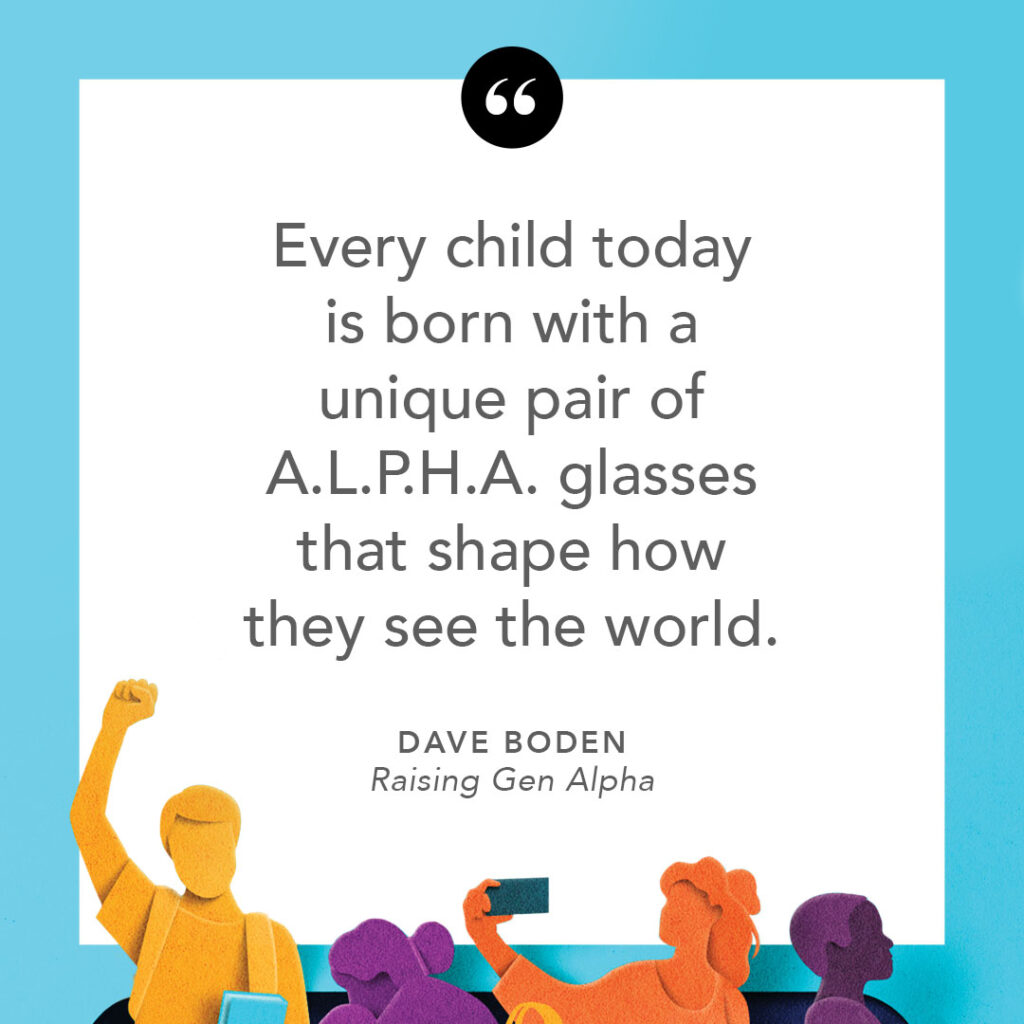
The ALPHA framework is really a pair of glasses. It helps us see the world through the eyes of Generation Alpha.
A is for Anxious-Minded. This is perhaps the most anxious generation we have seen. Many young people are carrying the weight of pressure, comparison, uncertainty, and constant connectivity.
L is for Leading Influencers. They are not simply consuming culture. They are shaping it. They care deeply about causes, justice, and making a difference, often from a surprisingly young age.
P is for Pandemic-Impacted. COVID disrupted key developmental years and affected learning, relationships, confidence, and emotional wellbeing in ways we are still discovering.
H is for Hyperconnected. Their world is always on. Identity, belonging, friendships, and influence are increasingly shaped through digital spaces.
A is for AI-Shaped. Artificial intelligence will influence almost every area of their future, bringing both extraordinary opportunities and important questions about truth, wisdom, and identity.
Q: How is Raising Gen Alpha different from other parenting books and generation guides?
This is not a traditional parenting book. In many ways it is a cultural intelligence guide for anyone seeking to understand the next generation. It does not try to tell parents exactly how to raise their children or offer a one-size-fits-all formula. Instead, it helps readers understand the world Gen Alpha is growing up in. How do we help young people follow Jesus in this world rather than retreat from it?
One of the recurring themes throughout the book is that every generation is shaped by the environment around it. We cannot pretend Gen Alpha is growing up in the same world we did. The challenge is not to wish things were different. It is to understand reality and respond faithfully. The goal is not simply protecting children from culture. The goal is helping them develop the faith, resilience, wisdom, and character needed to live faithfully within it.
Q: Why is it especially important for the church to make a greater intentional effort to understand Gen Alpha? Generally speaking, what does Gen Alpha think about faith and church?
Many Gen Alpha children are asking spiritual questions without having Christian answers available to them. They are asking questions about identity, belonging, justice, purpose, and truth. Yet many have little understanding of the gospel itself.
For many Gen Alpha children, church is not something they have rejected. It is simply something they have never really encountered. One of the examples I use is Olivia, a young girl who briefly clicks on an online church service before quickly switching back to Netflix. The music feels strange. The language feels unfamiliar. The whole experience seems disconnected from her world. That story reflects the experience of many young people today. Church is not something they are actively against. It is something that feels distant and unexplained.
The practical challenge for churches is simple. We need to spend less time talking about young people and more time listening to them. We need spaces where questions are welcomed, relationships are prioritised, and discipleship is lived out in everyday life.
The church does not need a new gospel. Jesus is still good news for Generation Alpha. Every pressure facing this generation finds its answer in Christ. For the anxious-minded, he is the Prince of Peace. For the leading influencers, he is the Servant King. For the pandemic-impacted, he is Immanuel, God with us. For the hyper-connected, he is the True Vine. For the AI-shaped, he is Wisdom and Truth.
One of the themes running through the book is that God’s nature is inherently intergenerational. When God speaks to Moses from the burning bush, he introduces himself as the God of Abraham, Isaac, and Jacob. The same God who worked in previous generations is still at work in this one.
Q: More young people are struggling with their mental health than ever before. What is driving this rising anxiety?
Anxiety in Gen Alpha is not coming from one place. It is layered. What appears on the surface is rarely the whole story. A child may seem worried about a test, a friendship, or a particular situation, but when we begin to peel back the layers, we often uncover deeper forms of pressure, whether that is performance, relationships, expectations, school, social media, uncertainty, reputation, or their wider world of constant crises.
A helpful way to understand the difference between fear and anxiety is through a matchstick. Fear is like striking a single match. It flares up in response to a specific threat and then fades. Anxiety is more like a handful of matches burning at once. The source is often harder to identify, and the feeling lingers long after the immediate danger has passed. That is why anxiety can be so difficult for parents to spot. Children often cannot explain exactly what is wrong. They simply know something feels heavy.
Another image is the invisible backpack. A little anxiety is a normal part of life. We all carry worries from time to time. But for many young people today, that backpack is becoming heavier and heavier until ordinary tasks begin to feel overwhelming.
Technology has accelerated much of this. We have seen a shift from a play-based childhood to a phone-based adolescence. The volume has been turned up on everything. Young people are constantly connected, constantly informed, and constantly comparing themselves with others.
The practical implication for parents is not to dismiss anxiety or simply tell children to worry less. We need to create environments where they can talk honestly about what they are carrying and develop healthy ways of responding to it.
Q: What are some practical tips for parents seeking to help their children navigate the anxious world in which they live?
Anxiety is not simply a mind issue—it affects the whole person. That is why I encourage parents to focus on three areas:
- Renew the mind. Young people need practical tools to examine anxious thoughts rather than simply believe everything they think. A simple framework called SEE can help: Situation, Emotions, Evaluate. What happened? How am I feeling? Is what I am telling myself actually true? Often anxiety grows because thoughts and beliefs go unchallenged.
- Move the body. Sleep, exercise, movement, routine, and healthy rhythms are not optional extras. We sometimes underestimate how much a walk, a good night’s sleep, or regular physical activity can help regulate emotions.
- Feed the spirit. Gen Alpha is surrounded by noise. Prayer, Scripture, worship, gratitude, and time with God help anchor young people in something stronger than their circumstances.
Parents often feel pressure to fix anxiety. More often, what children need is someone willing to walk alongside them. The goal is not to remove every source of anxiety. That is impossible. The goal is to help children develop the resilience, perspective, and faith needed to navigate it. Most of all, they need adults who are present, who listen well, and who walk alongside them.
Q: You describe Gen Alpha as caring but conflicted. Can you tell us more about their views about social justice and activism? How can parents help their children align their values with their actions?
Many young people genuinely want to make a difference. They care about justice, equality, mental health, poverty, and the environment. Yet they are navigating a culture where influence is often measured by visibility, popularity, and online engagement. Social media can amplify this tension. The pressure is not simply to do good but to be seen doing good. Sometimes conviction becomes performance. Sometimes awareness is mistaken for action.
The challenge for parents is not to dampen their passion but to shape it. The biblical framework I return to is Micah 6:8: act justly, love mercy, and walk humbly with God. Practically, that means helping young people move beyond simply expressing opinions to serving others in meaningful ways. Encourage them to volunteer, support local causes, build relationships with people who are different from them, and take responsibility within their communities. Real influence is not measured by followers or platforms but by the positive difference we make in the lives of others.
The goal is not to raise children who simply talk about changing the world. It is to raise children who are prepared to serve it.
Q: One way you describe Gen Alpha as “screenagers.” How can families create a healthy balance between screen time and real-life connections?
One of the biggest mistakes adults make is assuming Gen Alpha sees a clear distinction between online and offline life. For them, connection is connection.
Asking Gen Alpha to avoid technology completely would be a bit like asking previous generations to avoid roads. The challenge is not avoiding the environment. The challenge is learning how to navigate it wisely. Digital technology is not an add-on to life. It is woven into almost everything they do. That means the conversation needs to move beyond simply counting hours of screen time. The more important question is what screens are doing to them and what they are doing on screens.
In the book I encourage adults to help young people discover identity, foster belonging, and find purpose.
- Identity matters because social media constantly tempts young people to look for worth in likes, views, and followers. Parents can help by reinforcing that identity is rooted in who they are, not how they perform.
- Belonging matters because digital connection is not always the same as meaningful connection. Shared meals, family traditions, church community, sports teams, and friendships all help young people experience genuine belonging.
- Purpose matters because screens make a poor destination even if they can be useful tools. Young people need meaningful goals, responsibilities, and opportunities to contribute to something bigger than themselves.
Q: What are some red flags parents should watch for when it comes to their child’s social media use?
Not all screen use is a problem. Social media can be creative, social, and even helpful. The issue is whether it is helping a young person flourish or slowly pulling them away from flourishing.
- Withdrawal: If a child is increasingly pulling away from family, friendships, hobbies, or activities they once enjoyed, it is worth paying attention.
- Comparison: Social media creates endless opportunities to compare appearance, popularity, achievement, and lifestyle. If a child’s confidence seems increasingly dependent on likes, views, followers, or online approval, something deeper may be happening.
- Sleep disruption: Many young people are carrying devices into spaces where they should be resting. When sleep suffers, emotional wellbeing often suffers too.
- Mood changes: Increased anxiety, irritability, sadness, or emotional volatility linked to online activity may suggest that digital life is having a greater influence than we realise.
The most important thing parents can do is stay connected: Keep talking, stay curious, and ask questions. Take an interest in the digital spaces your child inhabits. Young people are far more likely to seek help when they know they can speak openly without fear of immediate judgement.
Q: In a world being increasingly influenced by artificial intelligence each day, how can parents help their children use AI responsibly?
Generation Alpha is growing up in a world where technology is no longer just a tool. Increasingly, it is becoming a companion, a coach, a teacher, and sometimes even a source of answers. AI will shape how young people learn, create, and make decisions throughout their lives. How do we help them remain deeply human in an increasingly artificial world?
- Think critically. Not everything AI produces is accurate. Young people need to learn how to ask questions, evaluate information, and think for themselves. Parents can help by encouraging children to check sources, compare viewpoints, and ask, “How do I know this is true?” AI can be a useful tool, but it should never replace curiosity, learning, or independent thinking.
- Choose wisely. Technology is never neutral. Every tool shapes the person using it. Wisdom is knowing when AI is helping and when it may be replacing something important. Parents can help children think carefully about when to use AI and when to do the hard work themselves. Sometimes the greatest growth comes from wrestling with a problem rather than instantly outsourcing it.
- Live authentically. The future will belong not simply to those who know the most, but to those who possess wisdom, character, and discernment. One of the risks of AI is that it can imitate almost anything. It can generate essays, images, conversations, and content. Yet authenticity cannot be generated, character cannot be automated, and relationships cannot be replicated. Parents can help by celebrating creativity, honesty, effort, and real-world relationships over convenience and performance.
Parents do not need to become AI experts overnight. They simply need to stay engaged, ask questions, and explore these technologies alongside their children. The goal is not fear but formation. We are not raising children to avoid technology. We are helping them use it wisely, faithfully, and in ways that help them become more human, not less.
Q: What is the most important thing parents can learn about how to love, lead, and disciple their Gen Alpha child?
The most important thing parents can learn is this: Gen Alpha does not need perfect parents. They need present ones. Despite everything competing for their attention, you are still one of the most significant influences in your child’s life. The small moments matter more than we often realise. Discipleship is rarely built through big events alone. It grows through ordinary conversations, shared experiences, daily rhythms, and lives that consistently point towards Jesus.
Our role is not simply to protect children from culture but to prepare them to live faithfully within it. That means helping them discover an identity rooted in Christ, a sense of belonging in God’s family, and a purpose that is bigger than themselves.
Ultimately, discipleship is about helping young people hear and respond to the voice of God for themselves. The God of Abraham, Isaac, Jacob, and Moses is still calling a new generation to follow him. He is the Generational One, faithfully at work from one generation to the next. Every generation is shaped by what it is shown. My hope is that Gen Alpha will see adults who love Jesus, live authentically, and show them that following him is still the most compelling way to live.
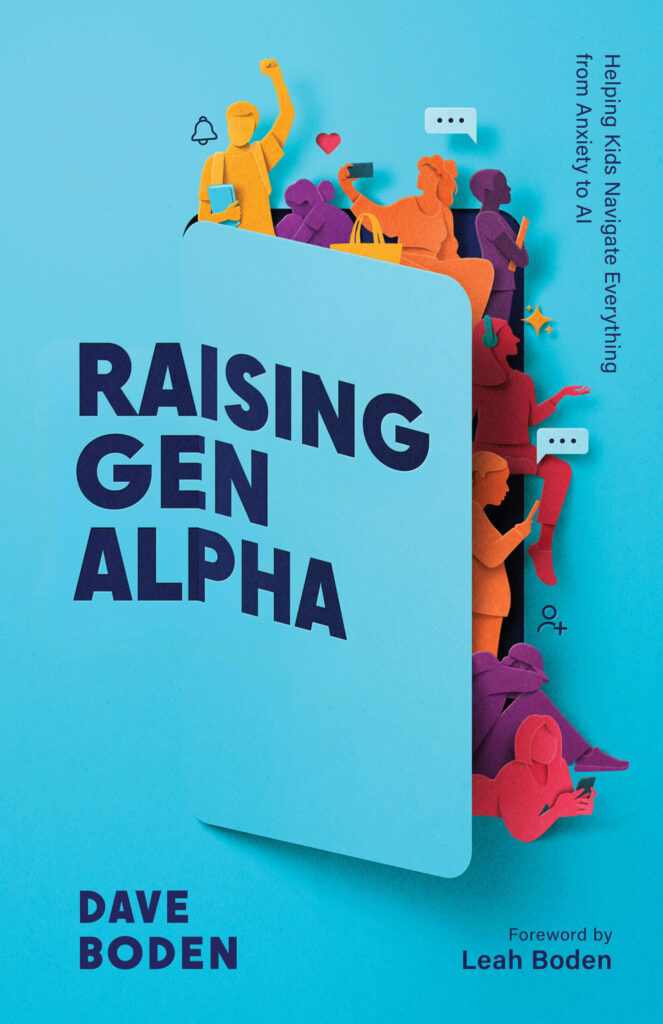
Raising Gen Alpha
Using the acronym ALPHA (Anxious-minded, Leading influencers, Pandemic-impacted, Hyperconnected, and AI-shaped) to explain the challenges and experiences that have shaped them, author Dave Boden equips readers to disciple Gen Alpha with clarity, compassion, and confidence. By understanding the world today’s children are growing up in, we’re better prepared to equip them with the faith and insight they need to thrive.