
We’ve all felt the sting of disappointment, unmet expectations, and even grief. Sometimes it seems like we should just give up hope on things getting better. While we live in a culture that tells us to look for happiness and fulfillment in ourselves, there is only one path to true contentment and satisfaction—walking with Jesus.
In You Are Satisfied: Devotions for Your Longing Heart, Joanna Kimbrel guides women on a 40-day journey designed to bring them to God’s Word to find peace, encouragement, and wisdom in the middle of life’s highs and lows. Through this study, women will discover hope in challenging circumstances and encouragement to deepen their faith.
Our hearts are prone to sinful desires and seeking things that ultimately disappoint, but we were created with longings that only Christ can satisfy. Each week of You Are Satisfied focuses on a different way God shapes and satisfies our desires by exploring themes such as God’s promises, provision, plan, and presence. As we grow in our knowledge and love of God, he will transform our desires. We can find hope in the words of Jesus recorded in Matthew 5:6: “Blessed are those who hunger and thirst for righteousness, for they shall be satisfied.”
In this interview, we talk to Joanna about her devotional study.
Q: Behind every book is a story. What led you to write You Are Satisfied?
You Are Satisfied came out of an extremely challenging season that, in a lot of ways, I’m still walking through. The season has included multiple chronic illness diagnoses, church hurt, navigating broken relationships, difficult transitions for my kids, and many other challenges. In the middle of the chaos, I needed to know that satisfaction and contentment aren’t reserved for easier circumstances. I needed hope for happiness even here, and I knew I wasn’t the only one.
This has been one of the hardest seasons of my life, but also one of the most joyful. As I’ve leaned on Jesus, I’ve experienced a deep satisfaction, not because everything changed, but because he didn’t. So I wrote this book because I needed it, and I believe others do too. This devotional is an invitation to anchor our satisfaction in the unchanging God, even when life feels unstable.
Q: How does our culture’s messages about happiness and fulfillment conflict with the biblical idea of finding our satisfaction in God?
Our culture makes a lot of promises about what will make us happy. It says we’ll have full lives if we maintain and enhance our youth and beauty, whether through anti-aging serums, supplements, Pilates, or GLP-1s. It promises fulfillment from within—that if we live by our own truth and become our most authentic selves, then we’ll find joy. It influences us to buy more and more stuff, promising that the right clothes, decor, vacation, or homestead is the path to the good life. But even those who achieve all these things will tell you it’s not enough.
While the promises of the world prove to be untrustworthy, the promises of God never fail. Satisfaction, his Word tells us, is possible, but only in him. While the world offers us ways to extend our youth, God promises eternal life with him. While the world encourages us to discover who we truly are, God invites us to become who he made us to be. Culture promises happiness if we acquire more things, but God gives us joy that endures through all circumstances because he himself is our inheritance that can never be lost or destroyed.
When we seek satisfaction in the promises of the world, we will be disappointed and left grasping for more every time. But when we seek our satisfaction in him, we find that we have everything we need.
Q: What does it mean to hunger and thirst for righteousness? How does this ultimately bring us satisfaction?
Jesus makes this promise in Matthew 5:6, saying “Blessed are those who hunger and thirst for righteousness, for they shall be satisfied.” When Jesus talks about righteousness in this passage, he’s referring to righteous character. This righteousness looks like people who live with hearts aligned with the heart of God. It’s a picture of a reality where sin plays no part, but all the world experiences goodness and peace in God’s presence. This righteousness means no more wrestling with impure motives or being wounded by others.
The righteousness Jesus promises is so far from the reality we experience that it sounds impossible, but Jesus says those who hunger for it will be satisfied, and he’s the one who makes it possible. But so often, we turn elsewhere to satisfy our longings.
Do you hunger and thirst for righteousness, or is there something else you crave? When you long for what God says will harm you, you’ll be left sick and not satisfied, after you indulge your craving. If your heart is set on your plans, you’ll be disappointed when things don’t go how you hoped. If your deepest desire is for a comfortable life free of trouble and pain, you’ll live with deep discontentment. Perhaps our satisfaction problem isn’t that God doesn’t give us what we desire, but that we need him to reshape our desires. After all, if we hunger and thirst for righteousness, we will be satisfied.
There is a day coming when all the world will be drenched in righteousness. Living in the presence of God, our hearts will be free from sin that pulls our desires away from our greatest delight. This devotion helps us explore what it looks like to find satisfaction while we wait. It looks at God’s Word to see a vision for righteousness both now and in eternity. It prompts us to ask him to transform our desires by his Word and by his Spirit. And it helps us tap into the unending joy and delight available for us even now.
Q: You compare God’s Word to a feast. How does viewing God’s Word as soul-nourishing change your approach to reading and studying the Bible?
Scripture is full of language that describes God’s Word as our spiritual food. Isaiah 55, in particular, depicts God’s Word and the good news it proclaims as an extravagant feast, overflowing with rich food, bread and water, and milk and wine.. Not only that, but God enthusiastically invites us to come and be satisfied in the feast he provides without paying a penny.
This understanding transforms how I approach the Bible. Where I once thought of Bible study as an obligation I must keep in order to be a good Christian, I now understand that it’s a gift of God’s grace to give us life and sustain us, but also to give us joy! God could have described his Word only as bread and water—the basic necessities—but the feast also includes abundance and delicacies. His Word provides life and satisfaction. When I remember these truths, I don’t read my Bible out of guilt, but with gratitude. I come to His Word because I know it will satisfy me.
Q: Our world is full of broken promises, but God always keeps His. How can remembering this bring us hope when we are hurting?
There aren’t many things in life that are a sure thing, and many of us develop a self-protective cynicism to guard against disappointment. Sure, we can hope things will turn out the way we planned or how others promised, but there are no guarantees. But when it comes to God’s promises, we have a greater hope. This kind of hope isn’t wishful thinking, but a confident assurance that God will fulfill his promises, because he always does.
When we experience suffering, calling these promises to mind is especially important and encouraging. While suffering may seem like evidence that things are only getting worse, we can rest in God’s promise that he is redeeming it, using it for our good, and producing future joy for us through it. We can trust in the promise that, one day, God will renew and restore this world gone wrong, and resurrect these bodies plagued by disease and decay. We can always have hope even when we don’t understand how God could be working in the chaos, because we have confidence that he holds all knowledge and wisdom, he has unlimited power, and he is always faithful. This is the kind of hope that we can be confident in—things will get better, God will be faithful, and even the pain will turn out for your good.
Q: You often acknowledge unmet desires and painful longings. Why is it important to sit with these tensions instead of trying to rush to finding answers?
Whenever we experience unmet desires or painful longings, God is doing something in us through them. While we may think solving the problem will bring about the desired outcome, God has so much more for us. He never wastes our pain, but works in it to form us into the likeness of Jesus. We have the opportunity to press into what God wants to teach us and how he wants to grow us.
Our desires tell us something important; they reveal the orientation of our hearts. Rushing to solutions or stuffing down our difficult emotions might seem easier, but then we miss the opportunity to identify misplaced desires or ways we try to satisfy our longings with something insufficient or even harmful. When we respond in despair, it’s a warning sign that we’re finding our hope in something other than God. When we react with inordinate anger, it can help us identify that we’re grasping for control instead of depending on the Lord. Our unmet longings can be a place where we draw near to God, asking him to search our hearts, reveal our sin, and transform us. When we turn from things that do not satisfy, we can experience truer joy in the only One who can satisfy us completely.
Our desires can also lead us to prayer. As hard as we may try, we don’t have the power to control our circumstances, but God does. Pour out your heart to him, telling him your longings and asking him to meet them. This type of honest prayer leads us to deeper intimacy with God and greater dependence on him. He may answer our prayers exactly as we hope, but if he doesn’t, we can rest in the knowledge that he will always do what is for our good and ultimate joy.
When we allow ourselves to sit in the tension of the gap between our desires and circumstances, we practice a vital part of the Christian life—waiting. God calls all his people to wait—to wait on the Lord, his promises, his help. We are all waiting for Christ’s second coming and the day when he will make all things new. We are waiting for eternity. Waiting doesn’t come naturally for us, and patience must be practiced. As we sit in the tension, we remind ourselves that our allegiance and hope are not to this world. We are not home yet.
Q: What are some practical ways we can delight in God’s love in our daily life?
God is so kind and has given us many ways to delight in his love, including, but not limited to, his Word, his world, and his people.
In his Word, God reveals himself and his plan of salvation. He shows us his love, his promises, and his plan. Perhaps the most impactful thing we can do to delight in God’s love is to develop a daily habit of Bible reading and prayer. In Scripture, God speaks to us, and in prayer, we join the conversation. What better way to experience God’s love than by spending time with him and cultivating a relationship with him?
In his world, God reveals his character and gives us good gifts for our delight. Putting away our devices and spending unhurried time in nature allows us to stand in awe of the beauty he’s made. While a day at the beach or a mountain hike certainly displays the grandeur of God, delighting in his love through his world can be as simple as going on a walk or sitting on the porch.
In his people, God has given us the gift of fellowship. When we enter into community with other believers, we experience the love of Christ in them. Because each of us is uniquely made in God’s image, each person we come in contact with is an opportunity to uniquely glimpse God’s character. The most practical way to enter into community is by joining a local church. The Church is part of God’s design for us to know the Lord, grow up into Christ, and participate in the mission to make disciples of Jesus.
Q: What role does community play in helping women in their search for finding the contentment they long for?
Community plays a vital role in our search for contentment. God is clear in Scripture that he never intended for us to live the Christian life alone. Paul calls us members of one body, each vital to the functioning of the whole with our unique gifts. The author of Hebrews warns us not to neglect meeting together, but instead to encourage one another as we wait for the fulfillment of all of God’s promises in Jesus Christ. Community in the body of Christ is not optional, but absolutely essential to growth and maturity.
In our brokenness and frailty, we’re prone to despair or self-reliance. We quickly pursue temporary things of the world to meet desires that can only be filled by the eternal. And the scary thing is, we often aren’t aware that we’re doing it. We need other people who can see our blind spots and warn us before we harm ourselves or others. We need faith-filled people to remind us of the hope that is coming. We need the body of Christ to encourage and walk alongside us as we journey toward eternity. We can’t do it on our own.

Q: What can we learn about grief and suffering from Jesus’s example?
Grief is not something Jesus shied away from. Jesus acknowledged the brokenness of this world ravaged by sin and mourned over it. Even though he knew that redemption and resurrection were coming, he wept over death and was furious over the destruction that sin causes. And then, when he agonized over his own impending suffering, he entrusted himself to the will of the father, setting his eyes on the joy set before him.
Jesus’s example teaches us that mourning and faith aren’t mutually exclusive, and that anger and hope can coexist. God doesn’t call us to shun negative emotions or put on a happy face. He doesn’t condemn us for our sorrow. Instead, he invites us to lament. Jesus models the posture God calls each of us to take in the face of suffering by bringing his emotions, complaints, and desires honestly to the Lord, and then trusting in the Lord no matter the outcome. Like Christ, we should look to eternity even as we allow ourselves to feel the weight of sorrow and loss in this moment.
Q: What final piece of encouragement would you like to offer someone who may be in the middle of struggle with discouragement or disappointment right now?
First, you are not alone. You’re not alone in your pain, because even your perfect savior identifies with you in your sorrow. He not only saves you, but he sympathizes with you and strengthens you in your darkest hour. He has not left you, and he never will.
Second, God will bring joy from your sorrow. There will be a day when there won’t be any more death or pain or crying, and God will wipe away every tear from your eyes. That’s not a possibility, it’s a promise. Not only that, but every bit of pain you experience now will result in a degree of everlasting joy in eternity that you would not experience if not for the suffering. And in the meantime, you can experience satisfaction now—as you draw near to Jesus, depend on him, commune with him, and be formed into his image. Blessed are you—you who hunger and thirst for righteousness—you will be satisfied.

We would like to introduce to you the Gospel Truth for Women series by offering you previews of each devotional. When you sign up, we will send you a week’s worth of devotionals for twelve weeks.
This series helps women to identify their struggles, go to Scripture to meet God, then share those truths with family, friends, neighbors, and coworkers. Each beautifully designed forty-day devotional is relatable for busy women of all ages and stages, making the books perfect for individuals or small groups.
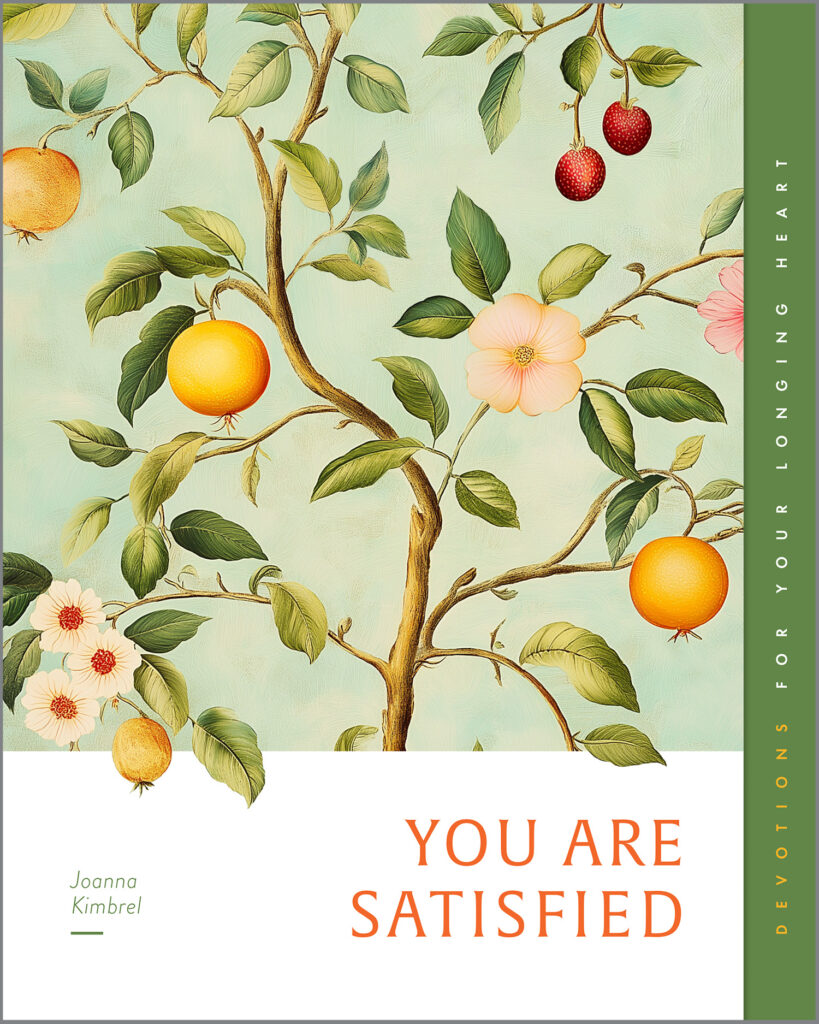
You Are Satisfied
While we live in a culture that tells us to look for happiness and fulfillment in ourselves, there is only one path to true contentment and satisfaction—walking with Jesus. In You Are Satisfied, Joanna Kimbrel guides women on a 40-day journey designed to bring them to God’s Word to find peace, encouragement, and wisdom in the middle of life’s highs and lows.