
For most of my adult life, King Solomon has been a constant conversation partner. It’s strange to say it, but he has always been there. Frustrating me. Tormenting me. Staggering me with his decisions. Surprising me with his sin and wisdom.
Did you know that about 6 percent of the Bible is either written by or about King Solomon? I don’t know about you, but that surprised me. If you ask the same question about the apostle Paul, he too wrote or had written about him approximately the same percentage of the Bible as well. Does your devotional reading and yearly Bible reading plan reflect the importance of what God is saying to you through Solomon and his life?
Do You Really Understand the Book of Proverbs?
A particular book of Solomon’s of interest for me has been Proverbs. The importance of understanding Proverbs for our time could not be overstated. It is the hidden-in-plain-sight manual for every follower of Jesus, given by God and delivered to you for the purpose of growing you in Christlikeness. So why is it such a neglected and misunderstood book? Well, partly because many Christians believe they do already understand it.
What I mean is, the book of Proverbs is often read only as little bite-sized nuggets of practical wisdom for this life. But I believe God is doing something more with these passages. Just as you shouldn’t read the Gospel of John or the book of Ephesians as an isolated, standalone text, neither should you approach Proverbs as a self-contained book of truisms without understanding the context of this book. Of course, it’s not wrong or sinful to read a chapter and glean some immediate truths from it. But to get everything out of your study, it’s important to first understand the context of Proverbs. It ought to be read in consecutive order with surrounding texts to really get the panorama. Solomon wisely constructed and compiled the book of Proverbs. We should read it in the way that he wisely constructed and compiled it.
The Key to Unlocking the Riddle that is the Book of Proverbs.
When we read the book of Proverbs from beginning to end, what we discover is that one master metaphor governs and illumines the whole book. God designed the book to create an imagistic world, with key word pictures. The primary images are two paths—or two directions one can take in life. Whatever wisdom statements or poems you read, the notion of a choice between two paths is always the key to understanding the subject at hand. Two ways. Two paths. Two roads the way of the wise or the way of fools.
When we read Proverbs in light of this master metaphor, it unlocks the meaning of Proverbs beyond moral interpretation. The two paths metaphor is there to allow us to understand Proverbs in a Christ-centered way. Christ alone saves and is the true path to life—the wise and righteous path—whereas the path of the fool, the naive, and the wicked is folly and death. These two paths show that every moment is an opportunity to follow Christ. In every decision, you are choosing a path. Nothing is neutral. That’s what Proverbs teaches us. Solomon himself chose the foolish path when it came to political alliances, marital choices, and more, and his heart was turned away from the Lord. But the Greater Solomon, Jesus Christ, never once faltered or stumbled into sin.
Applying the Book of Proverbs
The way to properly read and apply the wisdom of Proverbs is to understand that every penny spent, every relationship accepted or repelled, every word and sentence chosen or disregarded and every piece of counsel rejected or accepted is an opportunity to choose one of two paths. At every God-given moment, we are presented with contrasting possibilities of choosing the wise and righteous path or the foolish wicked one. So whatever the subject under discussion, the question of death versus life, the fear of man versus fear of God is what is at stake. Eternity hangs in the balance, so choosing the wise path displays even now your final destination.
Reading Proverbs in a Christ-Centered Way
Maybe you’ve noticed that it is difficult or downright impossible, like keeping all 10 Commandments, to “keep” the Proverbs perfectly. But this is where we understand and must read Proverbs as Christian literature—gospel literature! Christ alone has lived the wise path for us. His life has delivered the wise path to us and imputed to us the wise way. In every way, Christ has rejected folly and wickedness and chosen life and righteousness and wisdom and the fear of the Lord at every turn. And the results are ours through grace as we come to Christ in faith.
Conclusion
So, remember when you read the book of Proverbs to read it in consecutive order. This will help you to learn and discover that life is like an abundance of choices between two paths. That Christ intends to save you from the wicked and foolish path and put you on to the way of truth that leads to life both now and eternally.
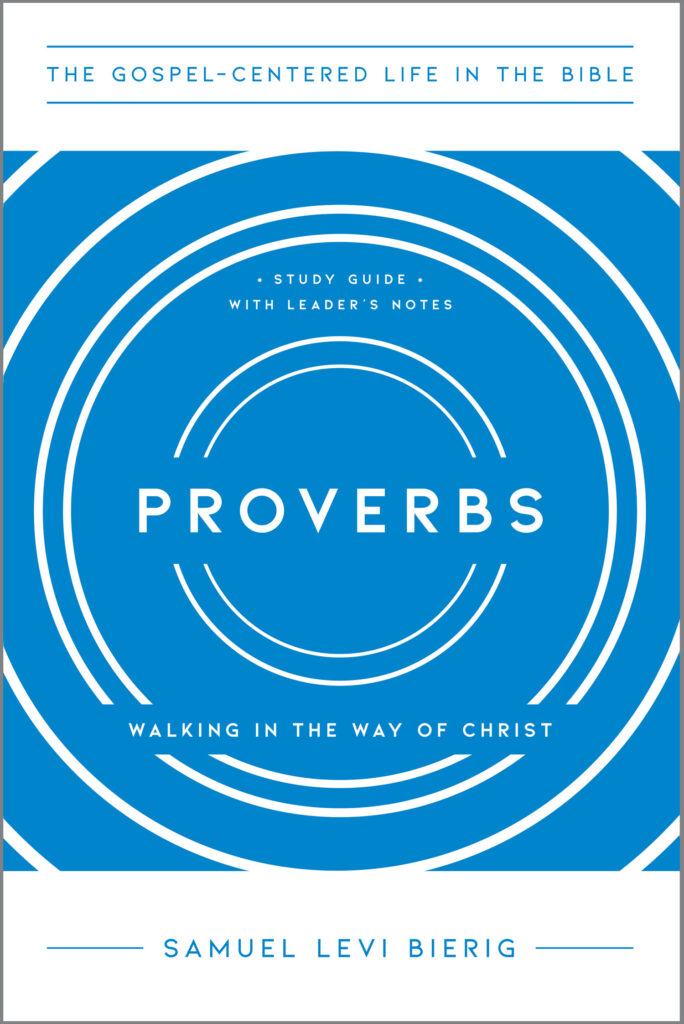
Proverbs: Walking in the Way of Christ
Samuel Bierig walks readers through a Christ-centered study of Proverbs and gives practical direction and strength for the journey of faith. Rather than moralistic advice, Proverbs: Walking in the Way of Christ, offers a fresh, gospel-focused perspective on the wisdom given in Proverbs and how to apply it to daily life. Readers will see how Christ has fulfilled the commands in Proverbs and now gives his power to his followers to walk in his footsteps.