
Humility might seem like a weakness or being soft, but in reality, it is the path of a resilient, bold, sturdy, strong, even-tempered, and confident Christian. In his new devotional and companion study guide, The Humility Project for Men: The Way to Strength, Honor, and Contentment, Edward T. Welch invites men on a 42-day biblical journey to explore the transformative power of humility for their lives, faith, and relationships.
We’ve asked Ed to participate in a fast dozen questions on humility with us.
Q: Introduce us to The Humility Project for Men. Why did you feel like this was an important topic to write on?
It is an important topic in Scripture. It comes close to being another word for faith.
It is neglected, or even demeaned, in our world.
Q: What is the core definition that you use for humility in the book?
Dependent on God, listening to him over all other voices.
Q: What misconceptions do we have about humility? Why does the topic of humility typically make us uncomfortable?
The misconceptions: humility is about being under others and comes close to being willing to be humiliated.
The truth: humility is first before God and is the only path to strength.
Q: How does humility lead to strength?
We no longer have to protect our reputation; we are willing to take risks that don’t work out.
Q: What is humility’s opposite?
Pride.
Q: How can we see our pride more clearly?
That is a hard question. Pride rarely feels like, “I am so great.” It feels like insecurity, being controlled by people’s opinions, fear of failure, jealousy, and anger (legitimate anger, of course). And it is very slow to turn to God.
Q: How does humility help us combat pride and insecurity?
When we don’t have to protect our own kingdom, we are free to love and listen to others, enjoying their successes and bearing their sorrows.
Q: How can humility help us navigate conflicts and build stronger relationships?
Imagine a conflict in which you are more interested in listening to the other person than trying to defend yourself. Or you are more interested in loving them than in being right.
Q: You mention that humility is an “activist” virtue. Please explain what you mean by that.
We think of humility as a quiet wallflower, but when you fear the opinions of other people a little less and are more eager to know God’s mission in your life, you tend to take more initiative.
Q: How did Jesus exemplify humility?
He never defended himself, he cared about the wrongs done against others, and he washed feet, just as he still does with us.
Q: What are some practical ways to practice humility in a world that often rewards pride and self-promotion?
Psalm 40:17 has been a good way to start my day.
Q: Can men read the devotional and do the study on their own? Why is it important for men to do the study in a group setting?
The book is accompanied by a study guide that you do with other men. Anything that brings men together, talking about important personal matters, and knowing God better, is a very good thing. The book aims to do that.
And now, we’d like to share a devotional with you from The Humility Project for Men:
BAD COMPLAINING
The Lord said to Moses, “How long will these people treat me with contempt?”
—Numbers 14:11 NIV
When he walked in the door, the first thing he did was yell at the dog—the stereotype of a man who feels powerless and wants to exert power over something. Better the dog than his spouse, children, friends, or roommates, but all the same, the scene was an ugly one. The dog, of course, was not the problem. It was the people at work, the kids, the bills, the grudges, and everything but the dog. The world had not cooperated in the way he expected it would. You can be sure that he didn’t begin the day by praying, “Father, your will be done.”
Israel experienced a day when all did not go as planned. They had just sent scouts into the land God promised them, and those men came back with a mixed report. The land was, indeed, rich and fertile. It bore clusters of grapes that required two men to carry them. It was also occupied by people who were big, strong warriors. The majority report was that the occupying people were too powerful to overcome. “And all the people of Israel grumbled against Moses and Aaron” (Numbers 14:2).
Grumbling and complaining are a regular part of a day when something interferes with our plans. We might respond with a profane gesture, making a ruckus online, venting to a coworker, or muttering to no one in particular. We all have our own ways of complaining. This particular complaint is a bad one because God is not in it. Instead of going to God, you are grumbling against God.
Remember that humility begins with knowing God, living under him, and listening to what he says. This means you are actually speaking with him and asking for help and grace. At first, you wouldn’t think that a little complaining has anything to do with God, which is exactly the point. All of life is lived before God and reveals our hearts toward him. What feels like a little complaining about other people or life in general is in truth complaining against God. He is, after all, the one who is in charge and over all things.
Israel seemed to have good reason for their complaining. They had trekked through the desert only to find that the land promised to them was occupied by professional warriors. But look more closely. Their hearts said, “You, God, have not served us well.” This is why the Lord tells Moses and Aaron that the people were not grumbling and complaining against them. The people had rejected God. They wanted to trade him in for Pharaoh. It felt like fear. It sounded like complaining. But it was contempt against the Holy One. Uberpride.
Humility is first before God. The problem is that you often think that everything is fine between you and God. You live your life while he is busy ruling the world. Since we all tend to be blind to how we judge God, this story about Israel is especially good for our soul. It reminds us that the inconveniences and troubles of life expose the truth about our relationship with him. Watch for your frustration and impatience when no one sees. Notice your private thoughts and imaginations. Just because you are not yelling at God does not mean that you are not yelling about God.
A bad complainer thinks his complaining is not personal. After all, he is not saying anything to God, which is the point. He is only yelling at the dog. But look deeper and you will see that he is yelling at God. He stands over the God who carried our judgment on himself and died. He should be ashamed.
Complaining, of course, is an ideal occasion for confession of sin. It is very good news to say with David in Psalm 51:4, “against you, you only, have I sinned.” Any opportunity to know holy forgiveness will encourage your heart. Just be sure to keep the conversation with God going until it ends in genuine thankfulness for his forgiveness. When thankfulness has the last word, you are headed toward humility.
Excerpted from The Humility Project for Men © 2026 by Edward T. Welch. Used with permission of New Growth Press. May not be reproduced without prior written permission.
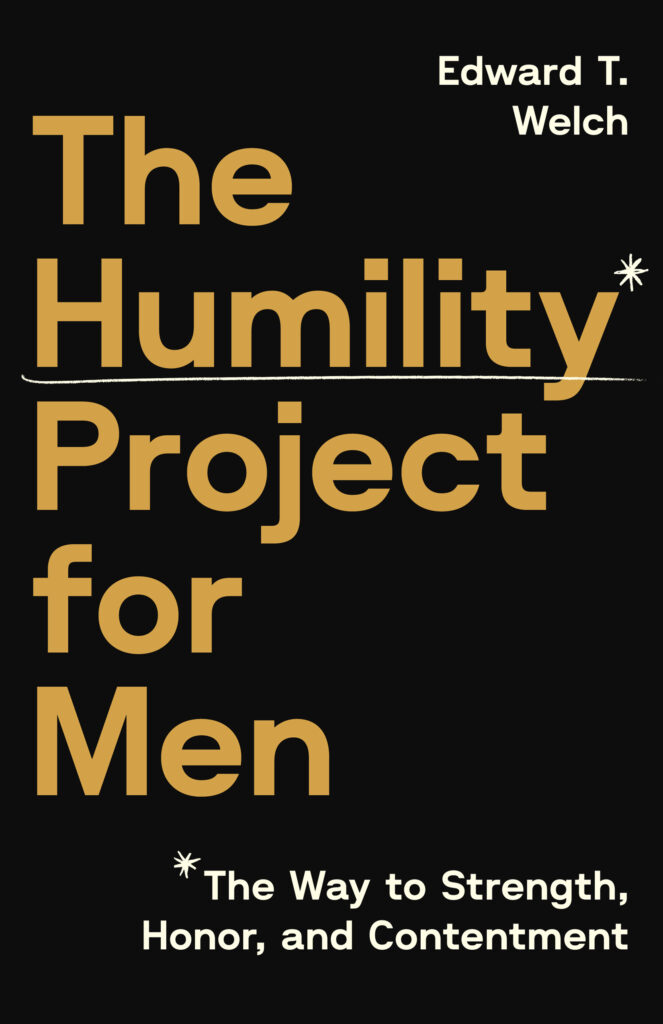
The Humility Project for Men
Edward T. Welch invites men on a 42-day biblical journey to explore the transformative power of humility for their lives, faith, and relationships. Humility might seem like the way of doormats and punching bags, but in reality, it is the path of a resilient, bold, sturdy, strong, even-tempered, and confident Christian. In these devotions, men will explore how to build lives that no longer need to teeter on fragile egos, but rest on something much firmer—the God who came to earth as the humble servant Jesus—our model and the source of humility.