
The local church is meant to function as a healing and helping community that cares for God’s people. But what if, instead of grace and care, someone has experienced harm and hurt? When the church becomes a place of abuse and silence, the pain leaves people spiritually disoriented and alone. These individuals may wonder if they will ever feel safe around God’s people again. Instead of running to God and his people, they run as far away as possible.
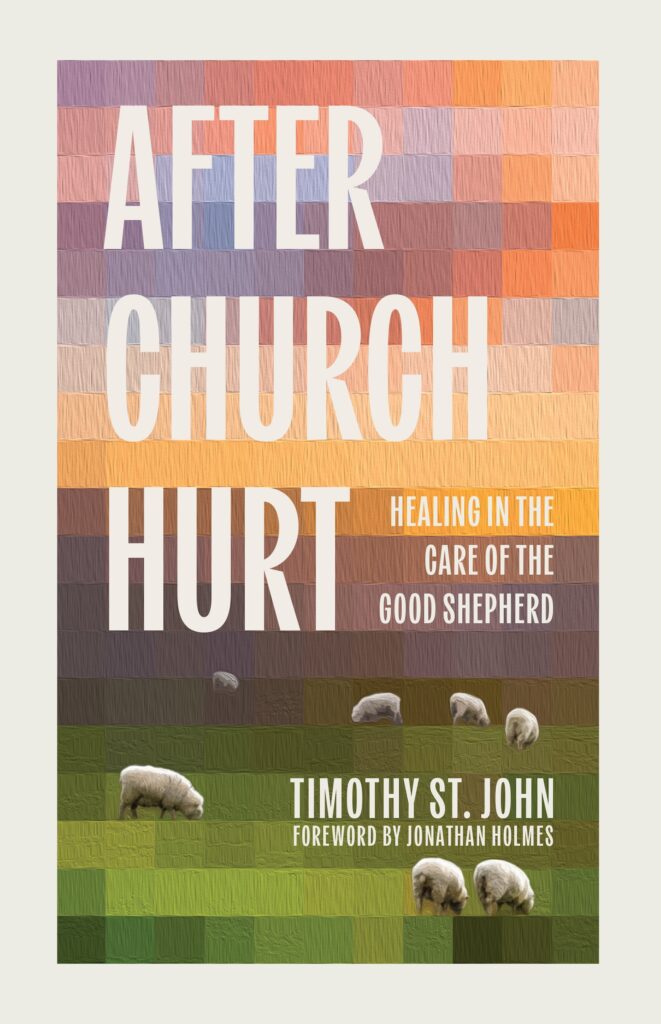
In his book, After Church Hurt: Healing in the Care of the Good Shepherd, counselor Timothy St. John offers compassion and hope to individuals who have experienced hurt in emotionally and spiritually damaging church cultures.
In this interview we talk to St. John about what church hurt is, how we can care for those who have been hurt, and steps toward healing.
Q: For the sake of clarity, how do you define church hurt? Can you give us a few examples that would fit within this definition?
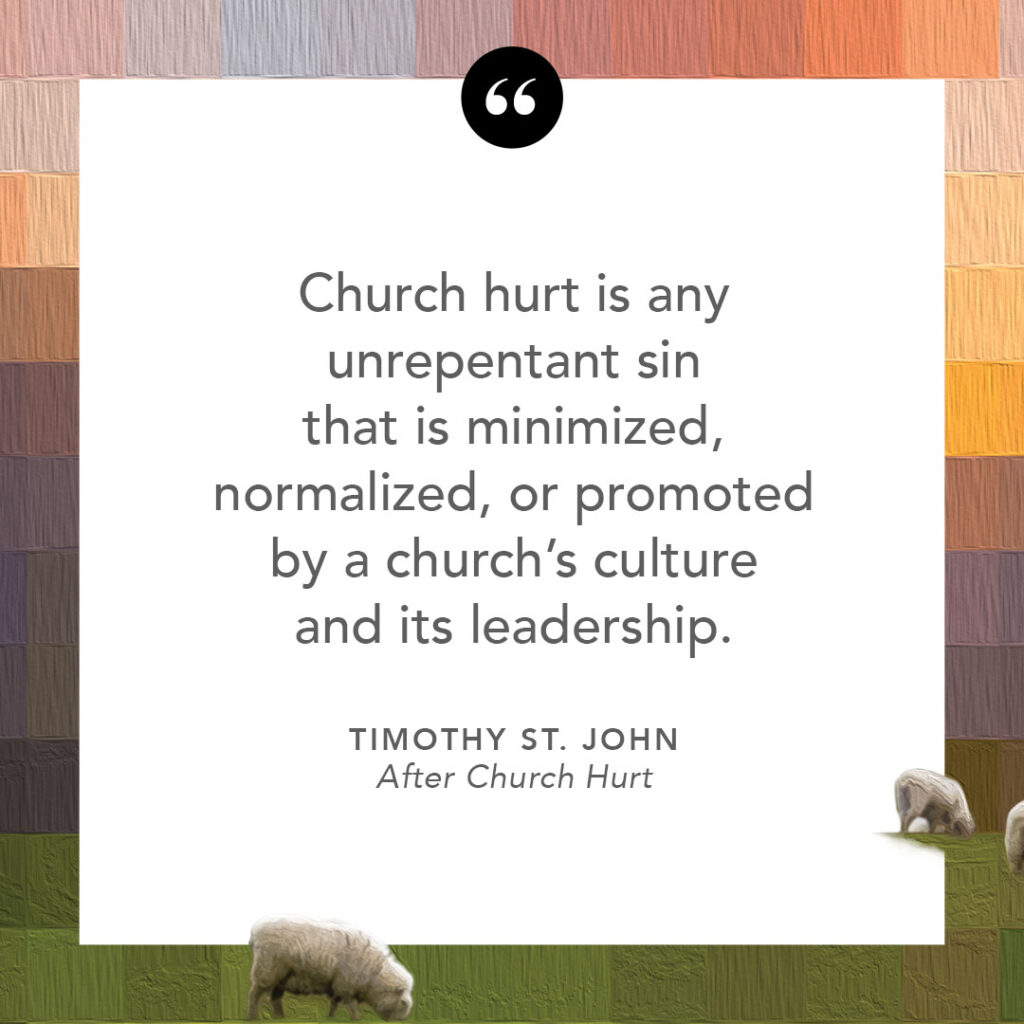
One of the most important things I wanted to do in this book was carefully define church hurt because the phrase gets used in many ways. I define church hurt as any unrepentant sin that is minimized, normalized, or promoted by a church’s culture and its leadership.
Notice this is more than simply being sinned against inside a church. Every church is made up of sinners, and ordinary conflict happens in healthy churches. Church hurt becomes something different when the very people or culture that should address sin instead excuse it, protect it, or even celebrate it.
Throughout the book I describe examples such as spiritual abuse, verbal intimidation, public shaming, sexual abuse that leaders failed to respond to appropriately, manipulation through guilt, financial neglect of pastors, overwork being praised as spirituality, and vulnerable people being ignored instead of cared for.
The biblical picture of church hurt is perhaps seen most clearly in Ezekiel 34:2–4 (ESV), where God rebukes Israel’s shepherds because they “feed themselves” rather than the flock, fail to strengthen “the weak,” neglect “the sick,” and rule “with force and harshness.” God’s concern isn’t simply that sin occurred, but that those entrusted to shepherd his people corrupted their calling. That passage became foundational in shaping the definition throughout this book.
Q: How does this book help people distinguish between ordinary conflict in the church and true church hurt?
That distinction is incredibly important because we don’t want to minimize genuine suffering, but we also don’t want to label every disagreement as church hurt.
Healthy churches experience conflict. Christians misunderstand one another, hurt each other, repent, forgive, and grow together. That’s actually part of discipleship. Jesus himself assumes this process in Matthew 18:15–17, where he gives the church a pathway for confronting sin and pursuing restoration.
Church hurt develops when there is a persistent culture that protects sin rather than confronting it. If someone can humbly bring concerns, leaders listen, repentance occurs, and reconciliation is pursued, then there is a biblical pathway forward. But when leadership dismisses concerns, silences people, or uses spiritual authority to shield sin, the environment itself becomes unsafe.
Paul reminds us that love “does not rejoice at wrongdoing, but rejoices with the truth” (1 Corinthians 13:6,). Healthy churches bring sin into the light because they love both holiness and people.
Q: How has your own experience as a counseling pastor shaped your understanding of church hurt and healing?
Serving as a counseling pastor has given me the privilege of sitting with many people whose stories are never publicly heard. Many didn’t initially come seeking help for church hurt. They came because of anxiety, depression, panic attacks, addiction, marriage struggles, or hopelessness. As we slowly listened to their stories, we discovered that unresolved wounds from their church often lay underneath many of those struggles.
One thing that has shaped me deeply is realizing that healing doesn’t begin with answers; it begins with being understood. Many people have never had someone simply believe their story, patiently listen, and help them make sense of what happened through Scripture.
Counseling has also convinced me that Christ’s care is often experienced through ordinary believers who patiently embody his compassion. Healing isn’t simply learning new information; it’s experiencing the love of the Good Shepherd through his people again.
Q: In what ways can a church minimize pain or sin, making the situation worse instead of better?
Sometimes churches unintentionally make suffering worse because they’re trying to protect the reputation of the church more than they’re protecting the people Christ loves.
Pain gets minimized when someone is immediately told to “just forgive,” when leaders rush to explain away sin before understanding it, when victims are questioned more than the offender, or when concerns are labeled as divisiveness rather than carefully investigated.
Churches can also normalize unhealthy patterns by spiritualizing burnout, excusing harsh leadership as “strong shepherding,” conflating loyalty with biblical submission, or prioritizing performance over people.
The irony is that churches are called to be communities where suffering is brought into the light. Whenever pain is hidden or dismissed, we unintentionally communicate that protecting appearances matters more than caring for souls.
Q: When the topic of church hurt comes up, the focus often falls on harmed members of the congregation, yet leaders and staff can experience hurt as well. What are some situations in which this occurs?
One of the chapters intentionally addresses suffering shepherds because pastors are members of Christ’s body too. Many pastors experience intimidation from senior leaders, manipulation from elder boards, impossible expectations from congregations, false accusations, financial neglect, or profound isolation.
Scripture reminds us this isn’t new. Jeremiah lamented that he had become “a laughingstock all the day” (Jeremiah 20:7). Paul experienced desertion from ministry partners (2 Timothy 4:16), and even wrote, “the more abundantly I love you, the less am I to be loved?” (2 Corinthians 12:15). Ultimately, Christ himself “came to his own, and his own people did not receive him” (John 1:11).
Acknowledging pastoral suffering doesn’t diminish the suffering of church members. Instead, it reminds us that unhealthy church cultures can wound everyone within them.
Q: What are some practical first steps for someone who is struggling to process their hurt?
The first step is simply acknowledging that your pain matters to God. Psalm 34 reminds us, “The Lord is near to the brokenhearted and saves the crushed in spirit” (Psalms 34:18). God never asks us to pretend we’re fine.
After that, I’d encourage people to move slowly rather than making major decisions while overwhelmed emotionally. Find one mature believer who is biblically wise, trustworthy, and willing to listen before trying to solve everything.
I also encourage people to carefully tell their story. Understanding what actually happened (what was sinful, what was painful, and what was simply confusing) is important to untangle in order to see what a clear path forward should be.
Q: How can someone discern whether it’s time to leave their church or stay and work towards reconciliation?
There’s no single answer that fits every situation, and that’s one reason I encourage people not to make this decision alone. Pray for wisdom, seek counsel from mature believers, and move slowly whenever possible (James 1:5; Proverbs 11:14).
Whenever possible, Scripture encourages reconciliation, repentance, and restoration. Jesus calls us to pursue one another when sin occurs (Matthew 18:15–17), and Paul urges believers, “if possible, so far as it depends on you, live peaceably with all” (Romans 12:18).
One of the questions I encourage readers to ask is: Is there a genuine biblical pathway toward repentance here? If church leaders are humble, willing to listen, and open to correction, there is often good reason to patiently pursue reconciliation.
But the book also discusses the wisdom of Proverbs 9, which distinguishes between the wise person and the scoffer. Proverbs says, “Do not reprove a scoffer, or he will hate you; reprove a wise man, and he will love you” (Proverbs 9:7–8). There comes a point when repeated, biblical attempts to address serious sin are met only with hostility, manipulation, or hardened resistance. At that point, continuing the confrontation may simply create greater division rather than genuine repentance.
That’s why there are situations where leaving becomes necessary, particularly when serious sin is continually protected, leadership refuses accountability, abuse continues unchecked, or remaining puts someone in ongoing spiritual or physical danger. Scripture also commends prudence: “The prudent sees danger and hides himself” (Proverbs 22:3). Remaining in harm’s way is not always an act of faith; sometimes wisdom requires stepping away.
Ultimately, our loyalty is to Christ, not to one particular local church. If a church persistently refuses to repent or no longer reflects the heart of the Good Shepherd, believers are free to seek fellowship in another faithful congregation where they can once again grow under healthy shepherding (Colossians 1:18; 2 Timothy 3:5).
I hope the book helps readers avoid two extremes: leaving too quickly whenever conflict arises or staying indefinitely in a spiritually unsafe environment because they mistakenly believe that enduring ongoing, unrepentant abuse is what faithfulness requires.
Q: What questions should someone ask when seeking out a new church home to protect themselves from encountering a similar situation and finding a truly safe place to land?
I would encourage people to look less at the church’s public image and more at its culture.
Ask questions like:
- How do leaders respond when they make mistakes?
- How is conflict handled?
- What happens when members disagree with leadership?
- Is repentance modeled publicly?
- How are vulnerable people cared for?
- Is there meaningful accountability among leaders?
- Do people feel known or merely needed?
Paul describes the church as a body where “the members may have the same care for one another” (1 Corinthians 12:25). Peter likewise exhorts elders to shepherd God’s flock “not domineering over those in your charge, but being examples to the flock” (1 Peter 5:2–3). Healthy churches aren’t churches without problems; they’re churches where grace, humility, repentance, and accountability are normal.
Q: In what ways can church leaders unintentionally contribute to church hurt, and how can they avoid these pitfalls?
Most leaders don’t wake up intending to hurt people. Often it happens through gradual drift. Leaders become overly task-oriented and stop seeing people. Ministry productivity begins replacing shepherding. Correction outweighs encouragement. Programs become more important than souls. Ministry fatigue narrows a leader’s compassion.
The antidote isn’t simply better leadership techniques; it’s continually remembering that pastors are shepherds before they’re executives. Jesus never treats people as unwanted interruptions. Leaders who regularly long to draw near to Christ because they remember how desperately they need his care are much better equipped to shepherd others with humility, gentleness, and patience.
Q: How can pastors and church leaders create a culture of care and accountability within their churches?
Healthy cultures are built intentionally. Churches need to normalize confession, repentance, gracious correction, and humble listening. Leaders should actively invite feedback rather than becoming defensive. Members should know exactly where to go when concerns arise and trust they’ll be treated fairly.
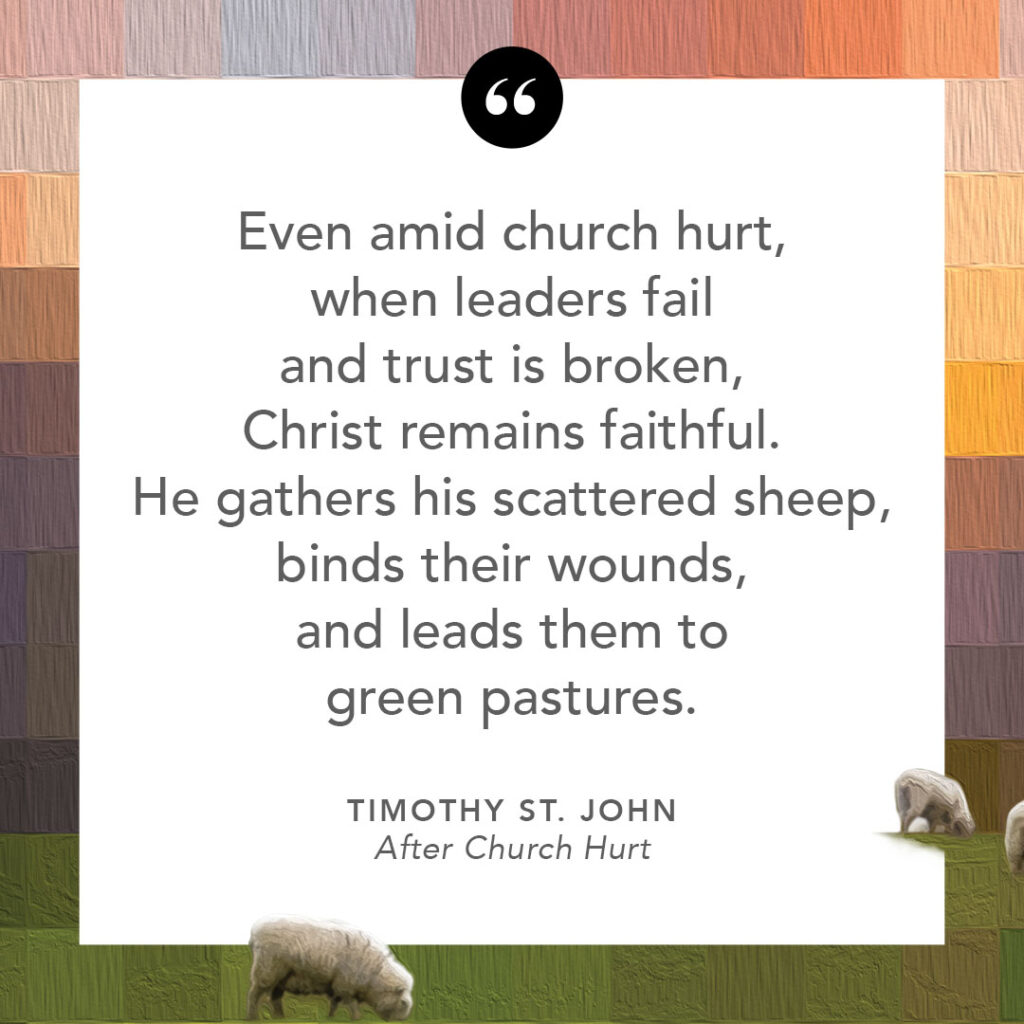
Perhaps most importantly, churches should become places where people who are suffering are pursued rather than avoided. In 1 Corinthians 12:26, Paul describes the church as a body where “if one member suffers, all suffer together.” A culture of care exists when people instinctively move toward suffering rather than away from it.
Q: What advice would you give to someone who is trying to help a friend or loved one heal? What are some of the mistakes that helpers sometimes make when trying to be supportive?
One of the greatest gifts you can offer is patient presence. Don’t feel pressure to immediately solve everything. Listen longer than feels necessary. Ask thoughtful questions. Help your friend feel understood before trying to explain what happened. Paul instructs believers to “weep with those who weep” (Romans 12:15). Proverbs also reminds us, “If one gives an answer before he hears, it is his folly and shame” (Proverbs 18:13).
One of the mistakes helpers often make is assuming every wound has a solution if we can just find the right conversation or the right strategy. But many people recovering from church hurt are grieving a profound loss. If faithful attempts at biblical reconciliation have been rejected and there is no longer a meaningful path toward restoration, there comes a point where we stop trying to solve the situation and begin helping them grieve it.
In many ways, caring for someone who left their church after church hurt is like helping them through a funeral. They haven’t simply lost a church building; they’ve often lost years of relationships, discipleship, ministry, hopes, and a community they loved. Rather than constantly revisiting every painful detail in search of another way to fix what cannot be fixed, we help them mourn what has been lost.
One illustration I often think about is a memorial service. At a memorial service, we certainly acknowledge the sadness surrounding someone’s death, but that’s not all we do. We also tell stories. We remember God’s grace throughout that person’s life. We celebrate the ways God worked, the relationships he gave, and the evidence of his faithfulness. We don’t allow the final chapter to become the whole story.
The same is true after church hurt. One of the beautiful gifts we can give someone is helping them remember not only the painful ending but also the countless evidence of God’s grace they experienced during those years. Perhaps they came to faith there. They learned Scripture. They grew in prayer. They served others. They formed friendships that genuinely reflected Christ. Remembering those mercies protects us from believing that someone’s life, or those years in that church, were simply wasted.
David concludes Psalm 23:6 by saying, “Surely goodness and mercy shall follow me all the days of my life.” That promise includes the difficult chapters too. Even while others were failing as shepherds, the Good Shepherd never stopped shepherding us. He was still teaching us, sustaining us, drawing us nearer to himself, and faithfully pursuing us with his steadfast love. Part of grieving well is learning to look back and recognize that his grace was never absent from the story. The painful ending is real, but it is not the whole story. The Good Shepherd has been faithfully at work all along and helping someone see that larger story often becomes one of the most healing parts of the grieving process.
Some common mistakes include rushing forgiveness, minimizing suffering, defending the church before understanding the story, offering simplistic Bible verses as quick fixes, or assuming every difficult church experience is identical.
People recovering from church hurt often wonder whether anyone will truly hear them. Before they need your advice, they need your compassion. Sometimes the most Christlike thing we can do is quietly sit beside them, grieve what has been lost, and over time, help them see that God’s grace has been writing a bigger story than their worst chapter.
Q: How can biblical counselors approach church hurt in a way that is both compassionate and rooted in scripture?
Biblical counselors have a unique opportunity because we aren’t merely helping people recover from painful experiences, we’re helping them encounter the care of the Good Shepherd.
That means we don’t minimize suffering, but neither do we allow suffering to become someone’s entire identity. We patiently understand the story, distinguish suffering from sin, help people lament honestly before God, and gradually anchor their story within the larger story of redemption.
Paul reminds us to “admonish the idle, encourage the fainthearted, help the weak, be patient with them all” (1 Thessalonians 5:14). That single verse captures so much of biblical counseling because it recognizes that different struggles require different kinds of care.
Ultimately, our goal is not merely emotional recovery but renewed confidence in Christ. Jesus says, “I am the good shepherd. I know my own and my own know me” (John 10:14). Throughout this book, my hope is that readers would discover that even if human shepherds have failed them, the Good Shepherd never will.
After Church Hurt
The local church is meant to function as a healing and helping community that cares for God’s people. But what if, instead of grace and care, someone experienced harm and hurt? When the church becomes a place of abuse and silence, the pain leaves people spiritually disoriented and alone. In After Church Hurt, counselor Timothy St. John offers compassion and hope to individuals who have experienced hurt in emotionally and spiritually damaging church cultures.