Kids know the value of a promise. A parent’s commitment to go out for ice cream inspires hope, but disappointment reigns when the shop closes early. Broken promises can bring tears. Yet unlike human parents, our good and all-powerful God always keeps his word. His fulfillment is better than anyone could have imagined!
The Beginner’s Gospel Story Curriculum for Toddlers and Preschoolers, written by Jared Kennedy, highlights God’s perfect promises through the stories of the Old and New Testament.Designed for children ages 2–5, each lesson centers around one of the stories from Kennedy’s popular The Beginner’s Gospel Story Bible. The curriculum package includes:
- A teacher’s guide with 52 lessons and QR codes for weekly printable handouts,
- One copy of The Beginner’s Gospel Story Bible which provides the Bible story text,
- One copy of Big Thoughts for Tiny Tots that includes a Bible doctrine question to go along with the lesson.
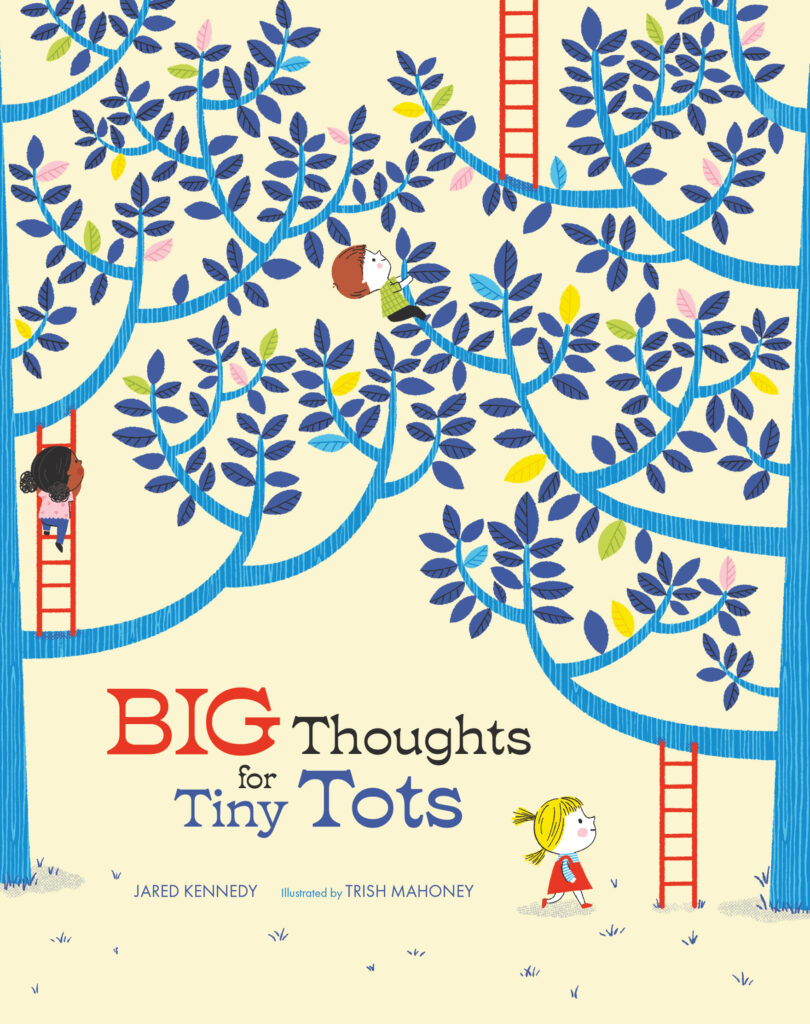
The Beginner’s Gospel Story Bible that the curriculum is based on has been a favorite of parents and preschool teachers for almost a decade, but the other book included in the curriculum, Big Thoughts for Tiny Tots: A Beginner’s Gospel Story Book of Questions and Answers, is a brand new resource that is also available for purchase on its own. This picture book introduces preschoolers to the fundamentals of faith with a series of simple questions and answers right on their level.
In this interview we talk to Jared Kennedy about his new curriculum and teaching toddlers and preschoolers.
Q: Let’s start off with some background about you. What first drew you to children’s ministry, specifically your passion for toddler and preschool ministry and writing books for young children?
When I was in seminary, I served as an associate pastor at a small church in Louisville, Kentucky. My responsibilities there included overseeing the children’s Sunday school and the Wednesday evening children’s programs. While serving there, I discovered a joy in working with volunteers, planning outreach events like VBS, and teaching the Bible to kids. A few years later, I was in my first post-seminary ministry role, serving across town as the children’s minister at a new church plant, Sojourn Church.
During the more than a decade I served at Sojourn, finding excellent material for the toddler and preschool classrooms was a persistent struggle. Those years coincided with the beginnings of the gospel-centered movement, and many great Bible storybooks were released then, but the curriculum written for toddlers at that time was less excellent. Either the lessons weren’t educationally excellent—adapted from lessons for older children without accounting for toddlers’ unique developmental characteristics—or they didn’t reflect the robust gospel-centered theology our church wanted to pass along to the next generation. So, when I met Marty Machowski, Barbara Juliani, and the team at New Growth, one of the first resources I pitched was a 52-week story Bible that could serve as the basis for a one-year curriculum for that age group.
Q: Please introduce us to the new The Beginner’s Gospel Story Curriculum for Toddlers and Preschoolers.
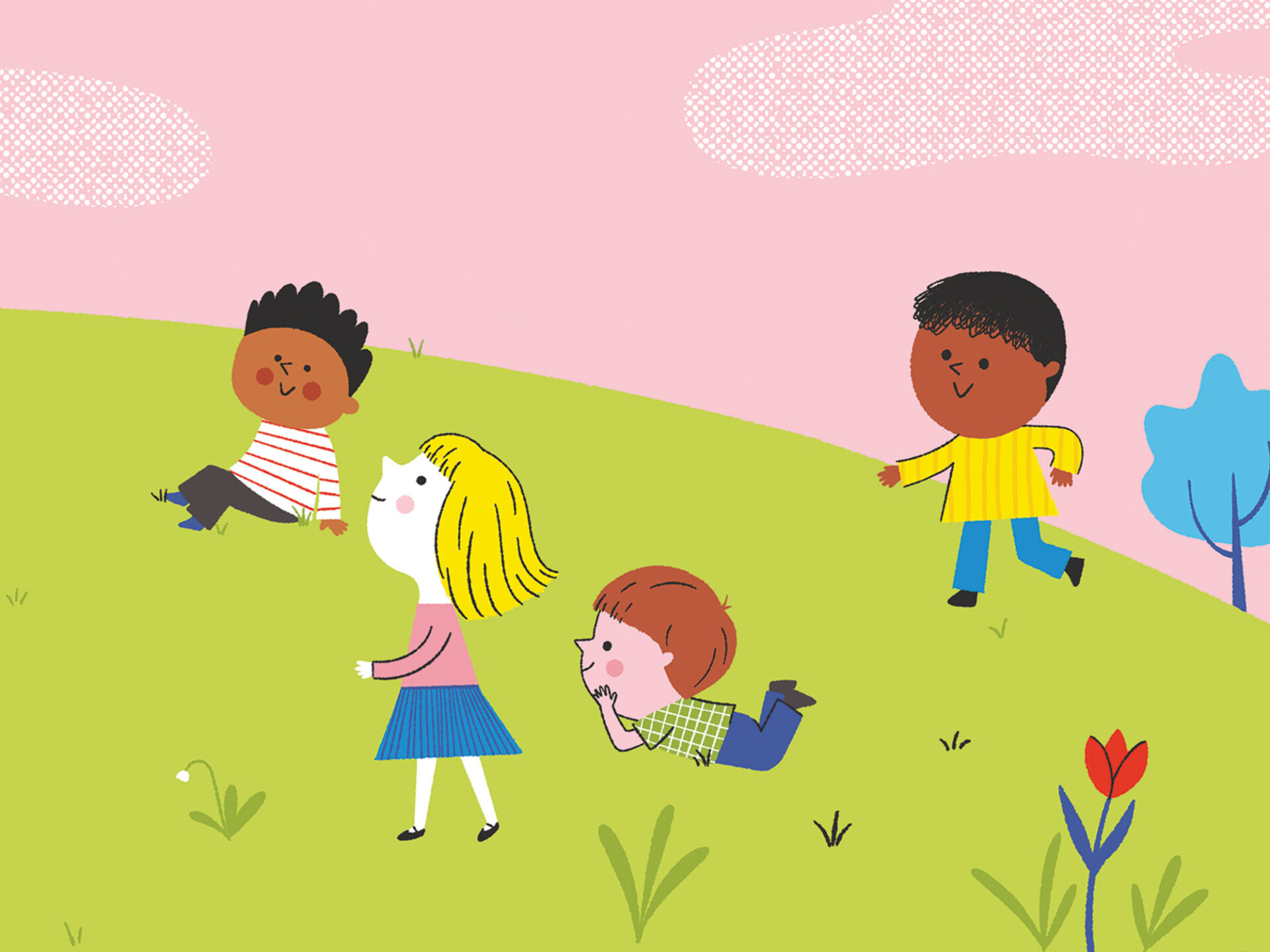
In 2015, I wrote and published The Beginner’s Gospel Story Bible with New Growth Press. That Bible storybook retells 52 stories from the Old and New Testaments. The book uses Trish Mahoney’s bright and playful illustrations, along with interactive stories and questions, to show young children that all God’s promises find their beautiful fulfillment in Jesus.
The Beginners Gospel Story Curriculum for Toddlers and Preschoolers builds on that resource. Each lesson centers around one story from The Beginner’s Gospel Story Bible. And each story’s theme is integrated throughout so that the songs, crafts, interactive games, and memory work reinforce the story’s key truth. With a total of 52 lessons, this curriculum can be completed in one year and repeated with each new class of toddlers or preschoolers. Moreover, the Christmas and Easter lessons can be arranged to fit the church calendar.
Q: What does the curriculum kit include? Do teachers need anything else to teach the curriculum?
The curriculum package includes a teacher book with the 52 lessons and copies of The Beginner’s Gospel Story Bible and Big Thoughts for Tiny Tots, a new book that includes the doctrine questions to review for each lesson. When you purchase the kit, you’ll also gain access to a QR code that links to the downloadable PDF coloring sheets and craft pages for each lesson.
You’ll certainly need standard preschool classroom supplies: Crayons, construction paper, glue sticks, teacher scissors, snacks, cups for water, and napkins or paper towels. Each lesson lists any additional craft supplies you’ll need such as craft sticks or cardboard tubes.
Q: What activities are part of each week’s lessons?
All the lessons in this curriculum open by listing the lesson title, Bible passage, and key point for quick reference. Then, each lesson follows the same basic structure, progressively moving through allotted times for play, music, the Bible story, and other games or crafts.
For story circle time, there’s typically a question or interactive activity to introduce the story, followed by interactive review questions after the reading. During snack time, time is set aside to review the memory passages and doctrine questions in Big Thoughts for Tiny Tots. The curriculum includes the lyrics for several age-appropriate songs for music time, and each lesson closes with time for prayer.
Q: What are some of the biggest challenges in teaching toddlers and preschoolers about the Bible, and how does this curriculum address them?
One challenge is that toddlers and preschoolers are still developing social and motor skills. Young twos and threes usually aren’t ready for group activities. They may play near other children, but they won’t necessarily play with one another in a cooperative way. Social researchers call this parallel play. They also have limited fine motor skills. They’ll need lots of help when coloring and gluing. The curriculum addresses this concern by keeping crafts simple and by making clear which portions should be prepared before kids arrive and which portions they’ll be able to complete themselves.
Toddlers and preschoolers also learn through experiences. At this age, kids are naturally curious and energetic. When adults merely talk at them, it’s easy for something across the room to draw their attention away and send their small bodies off to investigate. Because preschoolers have short attention spans, this curriculum includes activities that keep them physically involved in the lesson—hands-on crafts, controlled responses to the story, music with movement and motions, and active games.
Q: What are some of the developmental milestones to consider for someone who is new to teaching toddlers or preschoolers in a church setting? Do you have any advice for new teachers?
One of the most important developmental milestones to keep in mind relates to toddlers’ and preschoolers’ language abilities. Most two-year-old children can say around two hundred words. But by their fourth birthday, they’ll know nearly 1,500. A child may learn important words like Bible, prayer, or even Jesus for the first time while she’s in your care!
Also, around age two, toddlers start making up stories about daily events. Hearing and telling stories gives young kids a sense of rooted identity. So don’t underestimate the influence you have when teaching toddlers and preschoolers the most important story—the story of our redemption.
Toddlers and preschoolers thrive when leaders are consistent. They need simple repeated rules and a predictable schedule that’s regularly followed. It’s important for classroom teachers to be prepared and organized, structured and well-paced. Half of classroom management with young children is knowing exactly what you will do before the children arrive. Know the lessons well enough before teaching time so you can engage the kids in these interactive ways.
Q: What are the long-term benefits of starting your child in Sunday school as early as possible?
In a joy-filled preschool Sunday school class, children cultivate memories that can help them grow to love the church and embrace the good news. Young children learn through an emotional grid; toddlers and preschoolers soak up their teacher’s facial expressions and example. Habits form as they learn the weekly routine of coming to church, listening to God’s Word, and responding through hands-on crafts and games.
And through a Sunday school teacher’s loving care, children learn that a church community is a safe place. If you want your kids to love Christ and his church, bring them to a loving, engaging children’s ministry environment starting from their youngest years. By God’s grace, the love and joy they’re shown in Sunday school will teach their hearts to love God’s people throughout their lives.
Q: One of the books included in the curriculum package is a new release that is also available on its own, Big Thoughts for Tiny Tots. Tell us about this catechism for toddlers and preschoolers.
Teaching your toddlers and preschoolers about the Bible can feel daunting for parents, but it can be as easy as memorizing a few simple questions and answers. After all, little kids love to ask questions—it’s how they learn! Big Thoughts for Tiny Tots presents sixteen questions and answers in catechism style to introduce children ages 2–5 to the gospel message.
Each question and answer is accompanied by a Bible verse to show that what’s being taught is rooted in the Scriptures. Whimsical illustrations will keep children engaged. As families read this book together again and again, repetition will instill the message of God’s Word in children’s little hearts and minds for a lifetime.
Q: What are a few of the questions asked in Big Thoughts for Tiny Tots?
Here are some examples:
Question 1: Who made the world?
Answer 1: God did. He made everything!
“In the beginning, God created the heavens and the earth” (Genesis 1:1).
Question 4: What is sin?
Answer 4: Sin is saying “No” to God and breaking his rules.
“You are the one I’ve really sinned against” (Psalm 51:4).
Question 8: What did Jesus do to save us?
Answer 8: Jesus never sinned. He was always good and kind. Jesus died to pay for our sins.
“While we were still sinners, Christ died for us” (Romans 5:8).
Q: Why is the catechism format such an effective way to teach little ones basic biblical principles?
I can’t answer that question without discussing Martin Luther. Fifteen years after posting the Ninety-five Theses on the Wittenberg door, Luther had been publishing on the priesthood of believers and justification by faith. His message was spreading across Germany, but no one had visited rural Saxony. So, Philip Melanchthon and Luther put together teams to go and check on the churches in the region. What they found was pretty awful.
As Luther wrote in the preface to his Small Catechism, “The common people, especially in the villages have no knowledge whatever of Christian doctrine and . . . many pastors are altogether incapable and incompetent to teach.” Luther’s strategy to counter that problem was to put simple truths on paper that could be taught to children. He wrote his Small Catechism in German so that fathers could teach it to their kids at the family table. And he wrote it in Latin so it could also be taught at school as well.
That story illustrates a couple of things that are important about catechism to me. There are some things that you can teach through culture and there are some things that you can only teach through rote memory and rehearsing truths again and again. I created this curriculum for toddlers and preschoolers that refers to the same catechism that’s in a children’s book you can read at home to your kids. That way, the same truths can be reinforced in both environments. That’s how learning happens!
Q: What did you and your wife to do to have family Bible time when your kids were little? How can parents start introducing the Bible to their toddlers at home?
When our daughters were toddlers, we had a regular bedtime routine. It usually involved reading a story, saying prayers, giving hugs and kisses, and listening to some music before bed. Their stuffed toys got involved, too. Mr. Lamb would read along, and Smiley the Dog would share in hugs and kisses. Once the nightly rhythm was established, every part mattered. Knowing exactly what to expect helped our kids feel safe, confident, and secure. Kids count on a regular rhythm to thrive.
Christian parents know that rhythm should include religious instruction, but toddlers are always on the move—no wonder most of us struggle to corral them for any sort of formal family devotional time. Adding to that difficulty is the fact that young parents are often on the move, too. They’re busy establishing a career while raising toddlers and preschoolers at the same time. It’s hard to be present with your children when you’re on call, working overtime, or on the third shift. I believe God is aware of our seasons of life, and I’m thankful he doesn’t give us an overly formal family devotions model. Moses told Israel to teach their kids during the regular rhythms of life—mealtime, bedtime, drive time, and in the morning (Deuteronomy 6:7). With that guilt-free vision in mind, I encourage parents to (1) find a time that works, (2) read something simple from a children’s Bible storybook, (3) talk to God in prayer, (4) use music for memorizing, and (5) simply give your kids your full attention.
Related articles:
- https://www.thegospelcoalition.org/reviews/big-thoughts-tiny-tots/
- https://www.thegospelcoalition.org/article/five-tips-devotional-routine-toddler/
Big Thoughts for Tiny Tots
Teaching your toddlers and preschoolers about the Bible doesn’t have to be a daunting experience. It can be as easy as starting to ask them a few simple questions. Little kids love to ask questions—it’s how they learn! In Big Thoughts for Tiny Tots, author Jared Kennedy presents sixteen questions and answers in catechism style to introduce children ages 2–5 to the gospel message.