
“Safety” is one of the most important yet most misunderstood words in our cultural moment. We hear it everywhere. People are searching for safe spaces, safe relationships, safe communities—and rightly so. Many people have been hurt in places that should have been marked by care and protection. Kids are chronically bullied in classrooms, and sins like anger and abuse are hidden in homes. Even the church, which should be the safest place and warmest respite, can tragically protect sin rather than shelter its members from harm. But before we can pursue safety in the church, we need to ask a deeper question: What do we actually mean by “safe”?
How Our Definition of Safety Has Changed
According to Merriam-Webster, safety is “the condition of being safe [free from harm or risk] from undergoing or causing hurt, injury, or loss.” At its most basic level, safety refers to protection from some observable and measurable threat. Historically, this is how the word was most often used. Safety meant refuge from danger or protection from violence.
But over time, especially in modern Western culture, the meaning of safety has expanded. It now commonly includes emotional dimensions like freedom from feeling threatened, invalidated, or even uncomfortable. While this broader definition may shine light on more subtle forms of suffering, it can also lead us to expect something from the church (and the wider world) that God never promised. If safety comes to mean the absence of all discomfort, then we may begin to expect the church to be a place where nothing is hard or challenging. In other words, we want the local church to simply be our comfort zone.
A Better Foundation: God as Our Refuge
Thankfully, Scripture gives us a better definition. The Bible does not define safety as the absence of difficulty but as the presence of God’s faithful care. Psalm 121:7 says, “The Lord will keep you from all evil; he will keep your life.” God is our refuge, not because he removes every hardship, but because in his love he watches over us through everything we face. This means that Christian safety is not built on control of our environment or the removal of every threat, but on a relationship with a faithful, present Savior. The care of God is not a promise that life will be free from danger or sorrow, but it is a promise that his steadfast love goes with us, no matter what we face. He is near, he is trustworthy, and he will never abandon us (Romans 8:31–39).
What a Safe Church Actually Looks Like
So what is a safe church? It is not some cushy place that avoids all discomfort. It’s where Christlike care governs everything. Vulnerability is handled with gentleness (Galatians 6:1), truth is spoken with wisdom (Colossians 4:6), sin is addressed without harshness (2 Timothy 2:25), and burdens are shared, not ignored (Galatians 6:2). Notice something important: Everything I just listed pursues discomfort. Vulnerability is risky. Helping someone see their sin requires patience and courage. Bearing burdens involves entering into another person’s suffering. Love is uncomfortable. A safe church does not eliminate discomfort, but it shows how healthy discomfort is an essential part of Christlike love and spiritual growth. Our Savior walked the path of great pain and discomfort to love us, and loving others like Christ will cost us too. We must surrender our comfort to love as Christ loves.
Take a moment now and consider how you bring Christ’s love to others within your church. Do people feel heard when they talk to you? Are you quick to correct or quick to listen and understand? Do you bring a tone of patience or pressure? Sometimes what we label as “personality differences” are actually sinful patterns of harshness, cruelty, ingratitude, or a lack of love that Scripture calls us to address. Do others feel “safe” in your church because its people are committed to reflecting Christ’s care?
When the Church Becomes Unsafe
Unlike the discomfort that comes with loving like our Savior, there is a kind of sinful discomfort that harms because it is produced by sin. When a church harshly corrects, refuses to help the needy, or adds burdens to those who are already fainthearted, something has gone wrong. When these patterns are tolerated or even protected, the church no longer reflects Christ. Instead of revealing the Good Shepherd, it begins to obscure him.
This sinful behavior is what I describe in my book as church hurt—any unrepentant sin that is minimized, normalized, or promoted by a church culture and its leadership. When sin is brought into the light but remains unaddressed, people are often left with painful decisions.
When we are hurt like this, we often assume there are only two possible responses: either develop a “thicker skin” or leave the community altogether. But when God is our refuge, and our hearts are secure in his love, we can respond with the care of Christ, even to those who hurt us. From that place of security, you can begin to process what has happened with clarity and respond with wisdom.
In some situations, that may mean staying in a church to pursue restoration if those who harmed you show humility and a willingness to accept correction (Proverbs 9:9; Matthew 18:15). In other situations, it may involve establishing wise, biblical boundaries around certain relationships(Proverbs 9:8, 22:3, 26:4). Sadly, the church hurt may mean it’s wisest to leave the community and look for another church that will humble themselves under God’s Word and demonstrate the care of our Good Shepherd (2 Timothy 3:5).
If you have been hurt by the church, your longing for safety is not wrong. But true safety will not be found in avoiding all risk; it will be found in encountering the faithful care of Christ through his people. May God use each of us to help shape our churches into havens of healing, clarity, and Christ-centered care. And may we remember that the goal is not merely to find a church that feels more comfortable, but to humbly receive care that faithfully reflects the heart of our Good Shepherd.
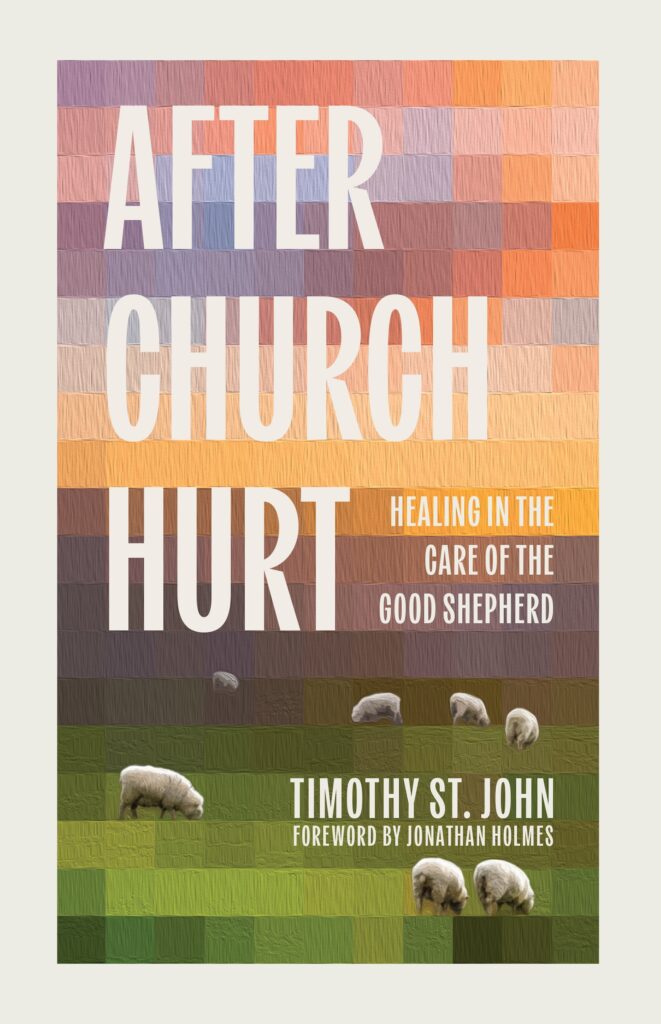
After Church Hurt
The local church is meant to function as a healing and helping community that cares for God’s people. But what if, instead of grace and care, someone experienced harm and hurt? When the church becomes a place of abuse and silence, the pain leaves people spiritually disoriented and alone. In After Church Hurt, counselor Timothy St. John offers compassion and hope to individuals who have experienced hurt in emotionally and spiritually damaging church cultures.