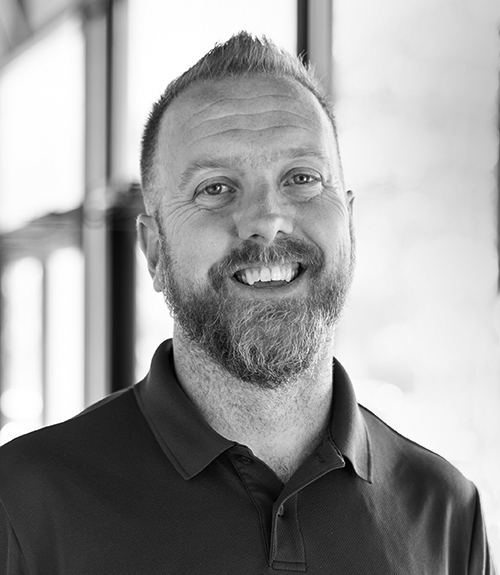
Have you ever considered building your family the way God builds his? Adoption is not only a response to the needs of children who don’t have a family, but also a profound picture of God’s love for all the children he has adopted into his family.
In Chosen: Building Your Family the Way God Builds His, Andrew Hopper, an adoptive father of a special needs child, presents a compelling, holistic exploration of Christian adoption and foster care, rooted in the gospel’s transformative power. He helps Christians deepen their understanding of their own adoption as children of God and invites them to put the gospel on display by engaging in adoption themselves.
Through Scripture, personal anecdotes, and practical advice, Hopper inspires God’s people to embrace the ministry of adoption as an act of faith, courage, and mission. In this interview, we talk to him about his book.
Q: What inspired you to write your new book, Chosen: Building Your Family the Way God Builds His?
The seed for Chosen was planted long before I ever thought about writing a book. As a pastor, I had spent years teaching the doctrine of adoption, explaining how God brings us into his family through grace, not merit. I could articulate the theology clearly and preach it confidently. But when adoption became part of our family’s story, those doctrines moved from something I taught to something I lived.
Adoption slowed me down. It forced me to sit with the implications of the gospel in a way that preaching alone never had. What I began to see was that adoption is not just a beautiful illustration of the gospel; it is one of the clearest windows into how God actually builds families and forms his people.
Q: Please tell us a little bit about your own story as an adoptive father. How has your experience shaped your understanding of spiritual adoption into God’s family?
Becoming an adoptive father has been one of the greatest joys of my life, but it has also been one of the most demanding and sanctifying journeys our family has ever walked. Bringing Faith Ann into our home meant stepping into a world of ongoing medical appointments, unanswered questions, and real uncertainty about her health and development. There have been long days in doctors’ offices, nights marked by interrupted sleep, and seasons where the path forward felt unclear. Walking with a child with Down Syndrome has required patience, advocacy, and a willingness to embrace limits we did not choose. Adoption didn’t simplify our lives; in many ways, it complicated them. But it also clarified what love looks like when it costs something.
Those experiences have profoundly reshaped how I understand spiritual adoption into God’s family. Adoption has taught me that choosing a child is not a one-time decision but a thousand daily commitments, many of them unseen and inconvenient. That reality has given new weight to the biblical truth that God adopts us with full knowledge of our weakness, our need, and our long road toward wholeness. He does not bring us into his family with unrealistic expectations or conditions for staying. Like a faithful father, he commits himself to us through every appointment, every setback, and every season of growth that takes longer than expected. Walking with Faith Ann has helped me see that spiritual adoption is not about God loving an idealized version of us, but about his steady, persevering love for us as we are, and his promise to remain with us until his work is complete.
Q: How is adoption a reflection of the gospel? Why is adoption a powerful metaphor of God’s love?
Adoption reflects the gospel because it begins with initiative and ends with belonging. In the gospel, God does not wait for us to find our way into his family; he moves toward us in Christ, choosing us while we are still powerless to save ourselves. Adoption captures that reality in a tangible way. A child does not earn adoption through effort or improvement. They are chosen, named, and given a permanent place in a family because someone else decides to love them. In the same way, the gospel declares that we are brought into God’s family not by performance or pedigree, but by grace. Through Jesus, we are not merely forgiven sinners; we are welcomed sons and daughters with a secure inheritance.
Adoption is a powerful metaphor of God’s love because it reveals both the cost and the commitment of that love. Adoption requires sacrifice, patience, and perseverance over time, not just a single emotional moment. That mirrors the heart of the gospel. God’s love is not sentimental or fragile. He binds himself to his people with covenant faithfulness, fully aware of our brokenness and the long road of growth ahead. Adoption helps us see that God’s love is not conditional or temporary. It is deliberate, enduring, and anchored in his promise to never leave or forsake those he has brought into his family.
Q: You do point out that adoption is not for everyone. How can Christians discern whether they are called to adopt?
Discerning a call to adopt begins not with asking, “Can we do this?” but with asking, “Is God inviting us into this?” Adoption is not driven by guilt, pressure, or comparison, but by obedience shaped through prayer, Scripture, and wise counsel. For many families, the first step is simply being willing to ask the question honestly before God. That means paying attention to how the gospel stirs compassion for vulnerable children, how Scripture forms our understanding of family, and how the Spirit might be prompting us over time, not in a single emotional moment. A call to adopt is rarely rushed, and it almost never comes without wrestling.
At the same time, discernment happens best in community. God often confirms a call to adopt through trusted voices in the local church, through practical realities he makes clear, and through a growing sense of peace rather than pressure. In Chosen, I stress that a sense of calling does not mean the absence of fear, limitations, or unanswered questions. It means a growing confidence that God will be faithful as we take the next step in obedience. And for families who discern that adoption is not their calling, that conclusion is not a failure of faith. God calls every believer to care for the vulnerable, but he does so in different ways. Discernment, rightly understood, leads not to uniform action, but to faithfulness, humility, and deeper trust in God’s design for both families and the church.
Q: What are the first steps for a family beginning to explore adoption and/or foster care?
The first step for a family beginning to explore adoption or foster care is not filling out paperwork but slowing down to pray and ask the right questions. I encourage families to start by anchoring their exploration in Scripture and prayer, asking God to shape their desires, expectations, and motivations. This season is about learning, not rushing. That means listening to the stories of adoptive and foster families, understanding the realities involved, and being honest about your family’s current capacity and season of life. Early exploration is less about making a decision and more about cultivating clarity.
From there, families should engage their local church and seek wise counsel. Adoption and foster care are never meant to be pursued in isolation. Pastors, elders, and trusted leaders can help families discern calling, connect them with resources, and surround them with ongoing support. Practical steps often follow naturally: attending an informational meeting, researching reputable agencies, or taking a foster care orientation.
The healthiest beginnings happen when families take small, faithful steps forward within community. Whether a family ultimately adopts, fosters, or serves as a support to others, beginning the journey this way keeps the focus on obedience, humility, and trust in God’s leading rather than pressure or fear.
Q: In what ways is the call or path to foster care different from them one to adoption?
Adoption and foster care share a heart for vulnerable children, but they are shaped by different callings and expectations. Adoption is oriented toward permanence. It is about bringing a child fully and legally into a family with the intention of lifelong belonging. Foster care, by contrast, is often defined by temporary placement and uncertainty, with the primary goal of safety, stability, and, when possible, reunification with biological family. These differences matter. Families discerning foster care must be prepared to love children deeply while holding outcomes loosely, trusting God even when the story does not end the way they might hope.
Because of that, the discernment process for foster care often requires a unique posture of surrender and flexibility. Foster families are stepping into broken systems, complex family dynamics, and situations that involve ongoing collaboration with social workers, courts, and biological families. The calling is less about building a family for oneself and more about serving as a stabilizing presence in a child’s life for a season. Foster care is a powerful expression of gospel love because it reflects God’s heart for restoration and reconciliation, even when it comes at personal cost. While adoption and foster care are distinct paths, both require deep reliance on God, strong community support, and a willingness to trust that obedience matters even when the outcome is uncertain.
Q: Chosen emphasizes the importance of the church community in supporting adoptive families. What advice would you give churches looking start a ministry to come alongside families?
I make the case that adoption and foster care are not meant to be carried by individual families alone, but by the church as a spiritual family. For churches looking to come alongside adoptive and foster families, the first step is shifting the mindset from creating a program to cultivating a culture. That means teaching a robust theology of family, adoption, and belonging from Scripture, and helping the whole congregation see that caring for vulnerable children is a shared responsibility. When churches start with biblical clarity rather than activity, support becomes more than a reaction to crises; it becomes a steady expression of who the church already is.
Practically, churches can begin by listening well to the families they want to serve. Adoptive and foster families don’t need to be managed; they need to be known. Simple, consistent support often matters more than large initiatives: meals, childcare, prayer, financial assistance, and people willing to show up over the long haul.
I also included an appendix specifically designed to help churches take these ideas and turn them into action by starting rope-holding ministries that are sustainable and relational, not burdensome or performative. When churches prioritize training volunteers, coordinating care, and building long-term relationships, families are not just supported in a moment, but sustained over time. This is how adoption and foster care move from the margins of church life to the heart of a gospel-shaped community.
Q: What does it mean to be a rope holder? What are the four avenues of rope holding outlined in the book?
Being a rope holder means committing to actively support adoptive and foster families as they walk a calling that is often joyful and demanding at the same time. Rope holding is not abstract encouragement; it is tangible, organized care rooted in the life of the local church. At Mercy Hill, we use the term to describe how the body of Christ comes alongside families, so they are not left to carry the weight alone. Rope holders recognize that while not everyone is called to adopt or foster, everyone can participate in helping families remain faithful and healthy over the long haul.
The first avenue is relationship, where rope holders serve as a family’s primary relational connection and first line of support within the church. The second is resource, which includes meeting practical needs such as meals, childcare, transportation, or financial assistance for families who may not have the capacity to serve relationally but still want to help tangibly. The third avenue is respite care, which provides short-term care through licensed foster homes to give adoptive and foster parents needed rest. The fourth is recharge nights, planned quarterly gatherings and date nights facilitated by the church to give parents space to rest, reconnect, and be refreshed. Together, these avenues form a sustainable model of care that reflects the way God himself supports, sustains, and strengthens the families he builds.
Q: Why would you encourage every Christian to read Chosen, even if they don’t feel called to adoption or cannot adopt (due to age, health, work situation, etc.)?
I would encourage every Christian to read Chosen because every Christian knows what it means to be spiritually adopted. I explore how God builds his family through grace, initiative, and covenant love, and how that reality reshapes our understanding of identity, belonging, and obedience. Those truths are foundational for every believer, regardless of life stage, health, or circumstance. Whether someone is single, married, parenting, empty-nesting, or unable to adopt, the doctrine of spiritual adoption speaks directly to who we are and how we live as followers of Jesus.
Beyond that, Chosen invites Christians to rethink what faithfulness looks like within the life of the church. Even for those who will never adopt or foster, the book calls readers to consider how they might live as rope holders, supporting and strengthening families who are walking hard roads. It challenges the idea that care for vulnerable children is a niche issue and instead presents it as a shared responsibility of God’s people. It helps readers see that the church is not simply a gathering of individuals, but a family called to reflect God’s heart together. In that sense, the book is for anyone who wants to live more fully into the gospel and participate in the way God is building his people.
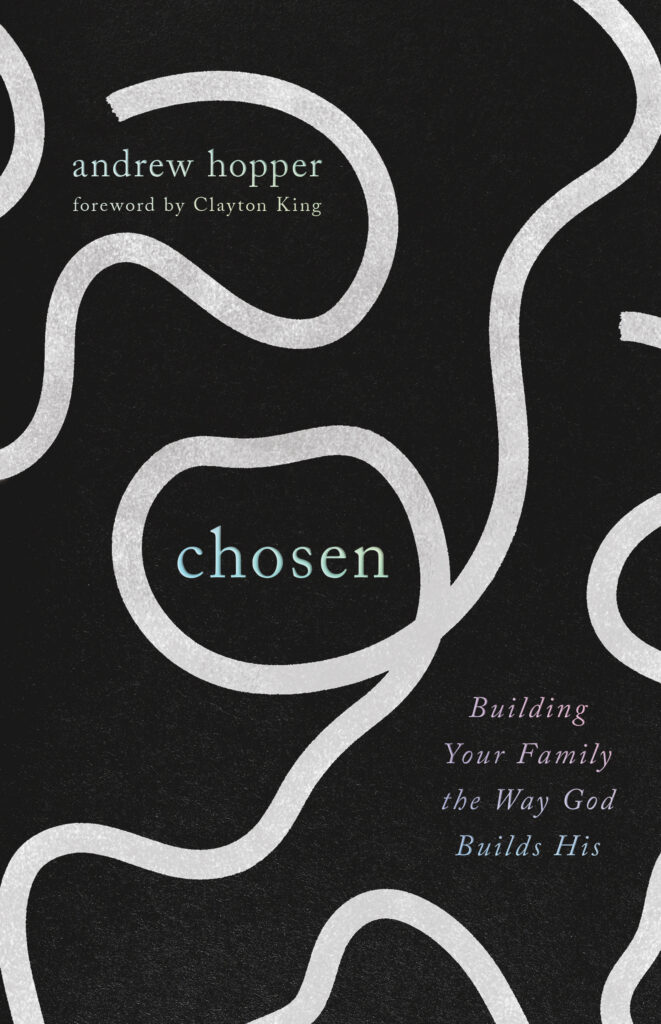
Chosen: building Your Family the Way God Builds His
Have you ever considered building your family the way God builds his? Adoption is not only a response to the needs of children who don’t have a family, but also a profound picture of God’s love for all the children he has adopted into his family. In Chosen, Andrew Hopper helps Christians deepen their understanding of their own adoption as children of God and invites them to put the gospel on display by engaging in adoption themselves.