When I served as a children’s minister, I’d often poke my head into classrooms on Sunday mornings to say “Hi” to the kids and teachers and see how class was going. One day I walked into the three-year-olds’ classroom, and the tables and chairs had all been pushed against the walls. The teacher was standing at the far side of the room. She smiled expectantly and held up a ruler with a red cardstock stop sign affixed to one side. The twelve or so toddlers scattered around the room crouched at the ready, eager for their leader to turn her little sign around and show them the large green circle on the other side.
I immediately recognized the game of red light, green light, but what happened next surprised me. The teacher looked at her sign and said, “The disciples said, ‘Stop,’ but Jesus said . . .” And after her pause, a chorus of children recited, “Let the little children come to me” (Matthew 19:14 niv). I laughed with joy. The “Go!” sign appeared, and the happy children surged toward their teacher.
That morning, I saw on clear display what makes toddler and preschool ministry so important. The three-year-olds in that classroom didn’t just hear a Bible story; their little bodies acted out its plot, and through the game, they learned a verse that would help them remember and even retell the story again and again. By God’s grace, many of those kids would grow to trust that truth, and the Spirit would use it to bring them new life.
Forming Hearts
Neuropsychologist Daniel J. Siegel and counselor Tina Payne Bryson write about implicit memories. When you wash the dishes, run a vacuum, or do other routine chores around your house, you probably don’t have to think through each step. Usually, you don’t even realize you’re “remembering” how to do them. The same is true for a pro athlete hitting a baseball. He’s done it so many times that it’s become a matter of habit.
Kids form habits too. “Remember when you gave your four-year-old a piece of bubble gum after ballet class that one time?” write Siegel and Bryson. “And what did she want and expect after every ballet class from then on? Of course. Bubble gum.” Why? The happiness your daughter felt when she got that treat after dance class formed a connection in her brain between bubble gum and ballet. If you give her bubble gum after ballet for a week, that connection grows even stronger. She now has a heart expectation based on her prior experience. A month later, she might not remember the day you gave her bubble gum, but she’ll still crave it after dance class.
In a joy-filled preschool Sunday school class, we cultivate implicit memories that can help children grow to love and embrace the good news. Toddlers and preschoolers soak up their teacher’s facial expressions and example. Habits form as they learn the weekly routine of coming to church, listening to God’s word, and responding through hands-on crafts and games. By God’s grace, the love and joy they’re shown in Sunday school will teach their hearts to love the church throughout their lives.
Training Minds
Hitting a ball is a matter of implicit habit for a baseball player, but ask that same player about the first time he attended a game, and he’ll rely instead on his explicit memory. He’ll tell you a story about where he sat, the smell of the popcorn, the ninth-inning home run, and the smile on his dad’s face when their favorite team won.
Toddlers are too young to look back on their lives and spin tales about days of old, but as Siegel observes, around age 2, they do start to tell stories. Toddlers are not only forming habits and stacking up implicit memories, they’re also starting to interpret their lives by narrating the events of each day.
God knows that kids learn through emotion, experiences, and story. That’s why when he rescued Israel and told them to pass down his law to the next generation, he didn’t only write it on stone tablets. In Exodus, he gave his people ceremonies and festivals, and he said they would be like “a sign on your hand and . . . a memorial between your eyes” (13:9 esv). Israelite kids saw the blood of the Passover sacrifice (12:25–27), tasted the unleavened bread (13:6–7), and sang about the Lord’s great deliverance (15:1).
When God instructed Israelite parents to teach his law and testimonies in lesson form, he told them,
And these words that I command you today shall be on your heart. You shall teach them diligently to your children, and shall talk of them when you sit in your house, and when you walk by the way, and when you lie down, and when you rise.
~ Deuteronomy 6:6–7 ESV
Here God instructed his people to pass along the story of redemption amid their daily routines. He tells us to do the same. We tell of his grace at meals, in the car, before bed, and in the morning. Whether in the classroom or at home, we make this a matter of habit. But the habits are only a means for giving kids the big-picture interpretive grid for life. After all, kids only understand why believers do what we do when they also learn to tell the big story of who we are.
Proclaiming Words of Life
In the years when toddlers and preschoolers first learn to narrate their experiences, their language abilities are exploding. Most two-year-old children can say around 200 words; before their fourth birthdays, they’ll know nearly 1,500. A child often learns important words like Bible, prayer, or even Jesus for the first time during the toddler years. The mind-training, worldview-forming power of a solid preschool Sunday school class is immense.
Yet there’s more to preschool ministry than teaching routines and training kids’ thinking. When we practice our weekly rhythms, and through them rehearse the gospel, Christ works powerfully through his Word. God’s Spirit convicts even young children of their sins and can grant them living faith. How do I know?
When I was five, my mother gathered my brother and me in the family room before bedtime. She opened a Bible storybook and read to us about how Jesus welcomed the children. That night I heard how the disciples thought Jesus was too busy to be bothered by young children. But when Jesus saw them sending the children away, he said, “Let the children come to me. Do not stop them. They are the kind of people God wants for his kingdom.” Later that night, I knelt by my bed, and I asked the Lord to save me and make me his child.
That’s why I felt such joy when I heard the toddlers in that Sunday school class recite Matthew 19:14 during their game. Years before, God used that very verse to save my soul. Why does preschool ministry matter? Because God works through his Word. When we faithfully teach the good news to young children, we’re holding forth the words of life.
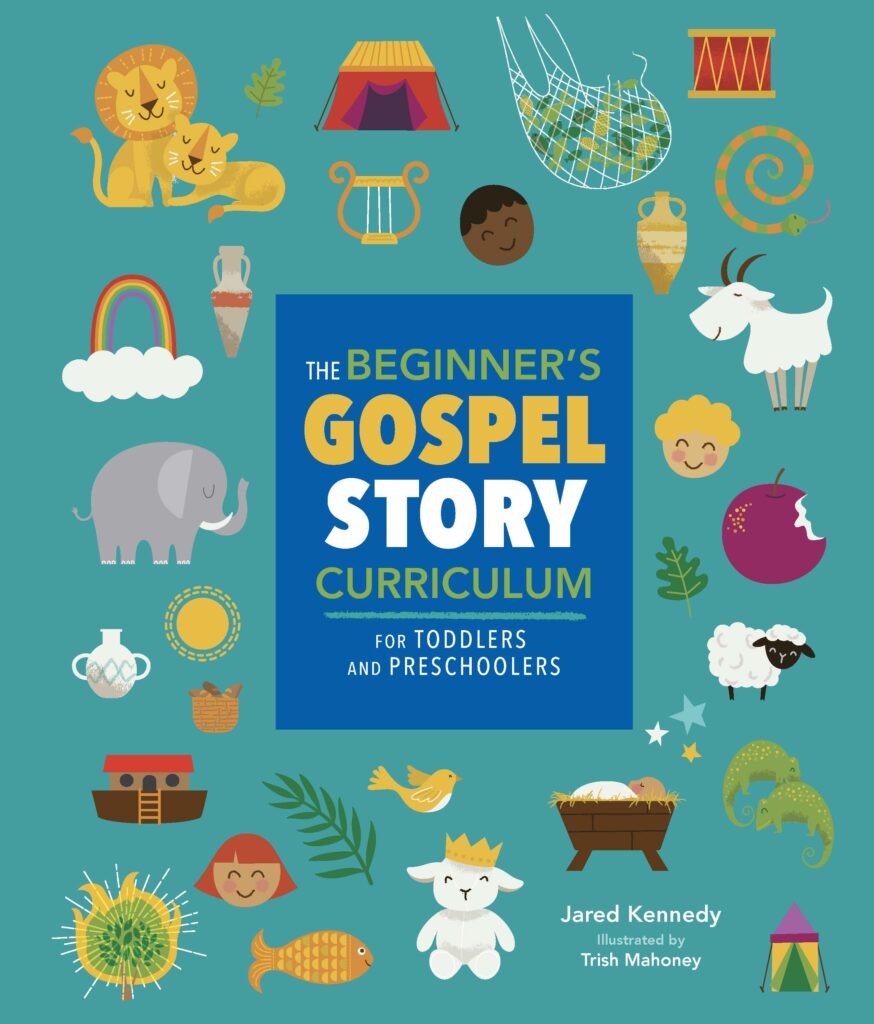
The Beginner’s Gospel Story Curriculum for Toddlers and Preschoolers
Written by Jared Kennedy, this 52-lesson curriculum highlights God’s perfect promises through the stories of the Old and New Testament. Designed for children ages 2–5, each lesson centers around one of the stories from The Beginner’s Gospel Story Bible. Each story’s theme is integrated throughout so that the songs, crafts, interactive questions, and games reinforce the story.