
This era in history is not friendly toward humility. Humility, many think, is weak, small, ineffective, cowardice-in-disguise, part of the feminization of culture. Of course, we could say this about any era in history. Power and strength have always been the real human ethic, with personal boasting considered a sign of healthy confidence. But our disregard of humility today seems even more intensified. For Christians, that means we need to give it even more careful consideration. Our honor, strength, wisdom, and life with God depend on it.
God’s people live by faith. There is no other way to live. “I need Jesus” is the daily refrain of the properly functioning heart. We are dependent creatures. Only a strong delusion—and pride is, indeed, a strong delusion—is enough to keep that reality from us. We also need help from people every day, whether we work from home or live alone in the Alaskan bush. Boasting about not needing anyone is the style of adolescents, and independence is the quest of teens who have not yet understood how life works.
Why is humility out of style? Perhaps because we think that humility is more like humiliation than wisdom. A husband and father heard a sermon on being a servant and decided he would no longer defend himself or claim any rights in the home. He reasoned that the log in his eye was larger than any other’s (Matthew 7:3–5). After two days, his experiment was, rightly, in ruins. Humility is not silence in the face on mistreatment. His approach missed what is most important about humility.
Humility is first before God. Start there and stay there. Dependence on God will overflow into daily relationships as sure as your independence before God directly affects how you drive or how you listen to people around you. We belong to God. We are his creatures and need his care if we are to take another breath. When our demanding, prideful anger contaminates relationships, God calls us to humble ourselves before him (James 4:10). Even in our anxiety we are invited to “humble yourselves, therefore, under the mighty hand of God so that at the proper time he may exalt you” (1 Peter 5:6–7).
Think of humility this way. Humility means that you live before God, dependent on him, with a heart that listens to him. That decontaminates many of the myths we might have about humility. It should sound liberating. You no longer have to protect your reputation or react to every perceived slight. You don’t have to be right all the time. Instead, you actually have space in your heart to ask a more basic question, “What is the best way to love, now?” When other people overreact in their anger and irritability, you have the strength to pursue that person in order to understand what is wrong. Have you done something against them? Are they carrying sorrows or frustrations from other relationships? Such thoughts are expressions of sheer power—humanity as we were intended to live. It is love that cannot be stopped.
Allow this powerful vision to take hold. You have no reason to defend and receive recognition. Wisdom suddenly opens up a world of possibilities, from overlooking offenses to speaking directly about them. Notice how pride—humility’s opposite—is Scripture’s prominent way of identifying all kinds of sins. “I want.” Above. Never below. New heroes come into view. Now you can be in the line of tax collectors (Luke 18:9–14). Now your aspiration is to become a child to whom dependence and neediness come naturally. Above all, watch Jesus the King walk the earth as the humble God and suffering servant. Wisdom and strength appear in his every word, every deed.
Psalm 40 can get you into this prized world. It is a psalm for kings and queens. It begins, “I waited patiently for the Lord.” You can hear New Testament wisdom in this. “You ought to say, ‘If the Lord wills, we will live and do this or that’” (James 4:15). This is life under God—life that seeks him first. On the way, we discover that he has inclined his ear toward us, as a father looks to his child and leans in to hear what is on her heart. With this in mind, a new song takes shape in our hearts. It begins, “Blessed in the man who makes the Lord his trust.” Read further in the psalms and you find that Christ himself is the true King, and we speak our words with him. Among the words that we aspire to are, “I delight to do your will, O my God.” That is the declaration of a humble heart.
Equipped with greater confidence in God’s attentive compassion and steadfast love, we speak openly. We speak of the troubles that threaten to overtake us today and how we truly need Jesus to live. Then the psalm is explicit about our more ferocious enemy. “My iniquities have overtaken me.” Not every psalm takes us both to our sufferings and sins. Psalm 40 stands among those psalms that are uniquely filled with everything we need. Humility knows that we need Jesus for both our suffering and our sins.
The psalm opens our eyes to see both God and ourselves more clearly. Midway through the psalm the psalmist makes his confession of faith. This is what he knows about God: “As for you, O Lord, you will not restrain your mercy from me.” The psalmist waits until the end of the psalm to give his Spirit-led summary of himself. “As for me, I ampoor and needy, but the Lord takes thought for me. You are my help and my deliverer; do not delay, O my God!”
Jesus begins his Sermon on the Mount with similar words. “Blessed are the poor in spirit, for theirs is the kingdom of heaven” (Matthew 5:3). Old Testament and New, these are words that lead us into our true humanity, as God created us to be. Speak these words each day for the next month and you will know more of the closeness of God (Isaiah 57:15), and you will shine a bit brighter in your community.
Strength, wisdom, the Kingdom itself, and even honor—all these are on the path of humility, and you will find them nowhere else. Contrary to the concerns we might have about humility, somehow, as you humble yourself before God you become bigger, with more influence, not less. You will love it, and others will notice.
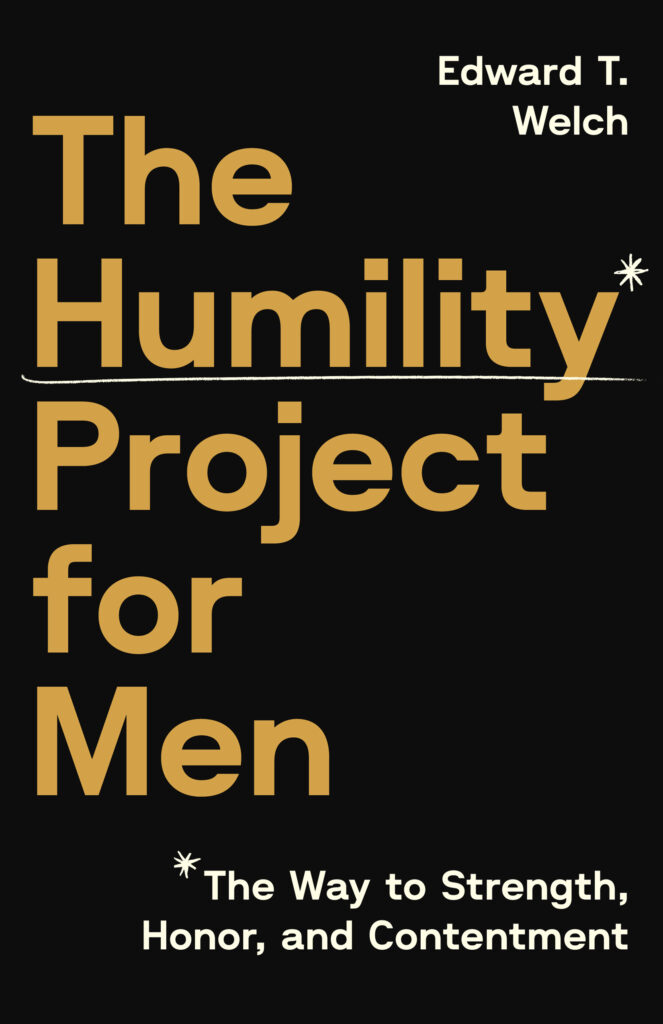
The Humility Project for Men
Edward T. Welch invites men on a 42-day biblical journey to explore the transformative power of humility for their lives, faith, and relationships. Humility might seem like the way of doormats and punching bags, but in reality, it is the path of a resilient, bold, sturdy, strong, even-tempered, and confident Christian. In these devotions, men will explore how to build lives that no longer need to teeter on fragile egos, but rest on something much firmer—the God who came to earth as the humble servant Jesus—our model and the source of humility.