History, despite its wrenching pain
Cannot be unlived, but if faced
With courage, need not be lived again.
~ Maya Angelou
History classes can be boring. But history lessons are transforming. For many readers, the advent of historical fiction, particularly in the last century, has become a meaningful way to expand our awareness of history beyond the mundane memorization of significant dates and names.
Enlivening the past is no easy task, however. Placing fictional characters in actual events is a daunting proposition. Yet, like all good work, it’s worth the effort. The art of turning two dimensional characters into three-dimensional, living, breathing human beings leads us to a deeper understanding, and sometimes a meaningful transformation. In gaining such an understanding, as Maya Angelou points out in the above quotation, we may face with courage the woes of yesterday and stop them from becoming the troubles of tomorrow.
“The past is always a rebuke to the present.”
~ Robert Penn Warren
When we chose to locate some of the books in the Lightglider Origins series in the past, we knew we were taking on a challenge. There are many events about which knowledgeable and thoughtful experts disagree. Many events of the past remain controversial and even contentious.
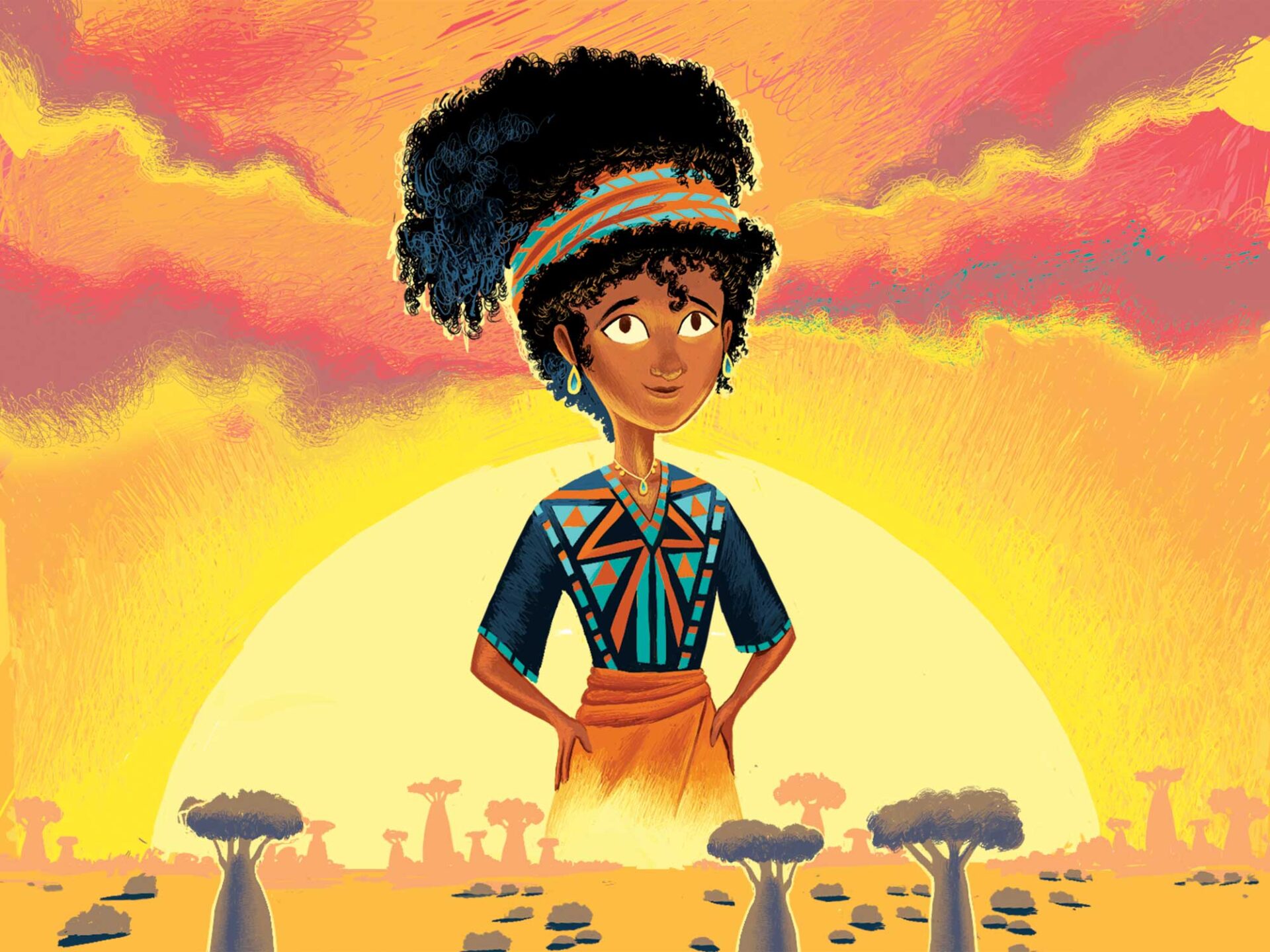
Our first attempt at historic fiction is Tambika and the Shield of Wisdom, the second book in the series, which features the real-world events of Tanzania in the 1890s.
Have you ever heard of the Berlin Conference of 1884–85? If so, you are among the few who have. We were unfamiliar with this event and its consequences, and when deciding on the time period in which Tambika would live (she has always been a character from Tanzania), we set about highlighting this period of turmoil and trauma.
The Berlin Conference was a gathering of European monarchs, called for the express purpose of divvying up the continent of Africa for their own gain. Prior to the meeting, King Leopold of Belgium had been sending expeditions into the Congo to secure treaties and agreements with local leaders, in anticipation of coordinating efforts to colonize and export the riches of the region.
Other countries caught wind of these activities and the rush to colonize Africa accelerated. European contingents collided in the Congo, and tensions rose between the Belgians, the French, and the Portuguese. King Leopold of Belgium persuaded Otto von Bismarck, Chancellor of Germany, to host a gathering to bring peace among the Europeans by agreeing on which part of Africa each would take. The Conference included representatives from ten European countries, plus Russia, the United States, the United Kingdom, and the Ottoman Empire.
These seldom-taught historic events led to brutalities and atrocities equal to many major wars. Though accurate numbers are difficult to ascertain, experts reasonably estimate that in the Congo alone, under King Leopold of Belgium, more than one million natives died as a consequence of forced labor, abuse, famine, and disease.
Though the casualties were not as horrific for Tambika’s people on the eastern coast of Africa, the theft of their labor and the violence they suffered was no less acceptable. Coming of age in this reality, Tambika observes a contrast in the ways people in her village respond to foreign invaders and physical assault.
As the contrasting responses unfold, a divide develops in Tambika’s heart and mind. Her uncle, the real Hehe tribal warrior Chief Mkwawa, uses violence to push back against violence. Her mother, a fictional but accurately represented village nurse, uses healing and love for all—even her enemies—to push back against violence. These two paths represent the response of the flesh and the response of Jesus.
“Then Jesus said to him, ‘Put your sword back into its place.
For all who take the sword will perish by the sword.’”
~ Matthew 26:52 ESV
“Darkness cannot drive out darkness, only light can do that.
Hate cannot drive out hate, only love can do that.”
~ Martin Luther King, Jr.
Like Tambika, we find ourselves in times of great consequence. And like Tambika, we wrestle, often daily, with how to respond to anger and even violence. May we have the courage to face our humanity, by God’s grace, in Christ’s love, so that we can learn from history and pursue the good, the beautiful, and the true—in our own hearts and in those we meet, even our enemies.
Lightgliders Membership and Book Giveaway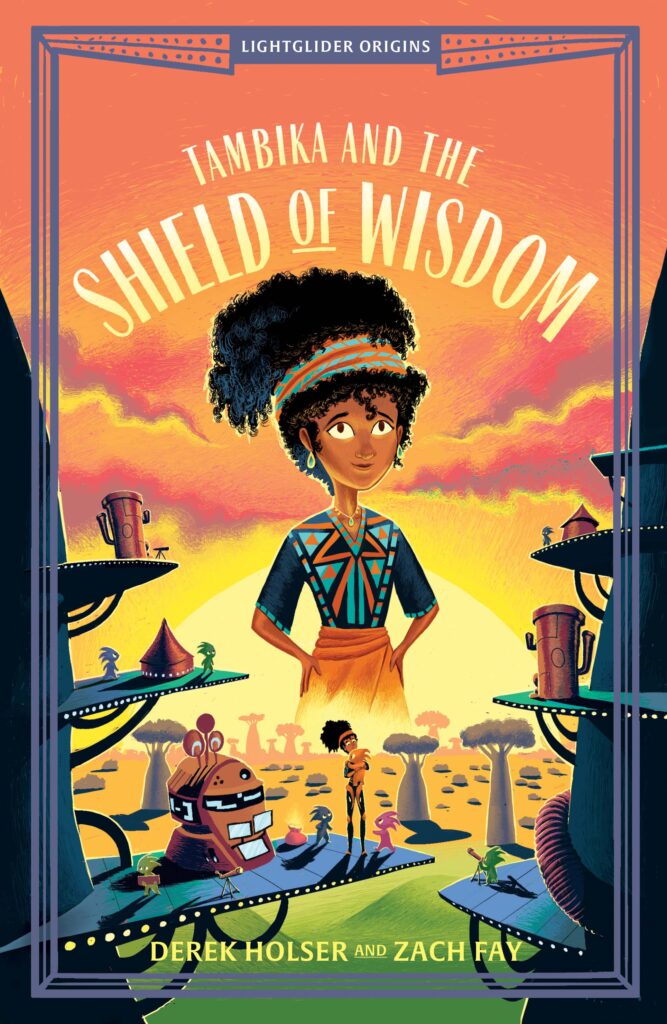
Tambika and the Shield of Wisdom
As long as she’s been alive, Tambika’s tribe, the Hehe, has lived in conflict. She longs to be a leader who stands up for her people, but her desire for vengeance endangers her destiny. When Tambika and her friends break into the German armory to take back their tribe’s silver, she attacks a young soldier and flees the scene. As she escapes into the bush, Tambika sees a cosmic light that fills the sky and transports her to another realm, the land of Glideon.