
What is the most important piece of any healthy relationship?
Maybe the first thing you thought of was love or trust or selflessness. But let us suggest an answer that is even deeper: truth.
Relationships simply cannot exist without truth. If I lie to you about who I am, then you don’t know the real me. We can only know each other to the degree that we are honest with one another. The root problem in our relationships is that we are all more dishonest than we think we are. We hide the bad parts of our lives and we project the impressive things. Social media only makes this problem worse.
We are going to look at two areas where we struggle to be honest in our relationships: telling the truth about ourselves and telling the truth about others. Both are necessary if we want real relationships.
TELLING THE TRUTH ABOUT OURSELVES
First, we are tempted to avoid telling the truth about ourselves because we don’t want people to know us as we really are. We want to appear a certain way—to be known as a certain kind of person. So we create an “image” for ourselves. Author Brennan Manning refers to this image as “the impostor”:
[We] present a perfect image to the public so that every-body will admire us and nobody will know us. . . . The false self causes us to live in a world of delusion. The impostor is a liar.
~ Brennan Manning, Abba’s Child (NavPress, 2002), 31.
Christians are good at being impostors. It’s exactly what Adam and Eve did in the garden of Eden. When God created them, they were “naked, and they felt no shame” (Genesis 2:25). But once they sinned, they became aware of their nakedness and “sewed fig leaves together” (Genesis 3:7) to cover up the shame they now felt. Then when God came to the garden, they hid from him out of fear and shame. They tried everything they could think of to avoid honestly owning up to what they had done. Their sin damaged their relationships with each other and with God; their dishonesty about their sin made the damage worse. They had started withholding things from each other and from God.
We’ve been doing the same thing ever since: hiding our sins and mistakes to make ourselves look better.
This dishonesty about ourselves is one of the main causes of shallow community. The apostle John calls it “walking in darkness.” And his remedy is truth—or, as he puts it, “walking in the light”:
God is light, and in him is no darkness at all. If we say we have fellowship with him while we walk in darkness, we lie and do not practice the truth. But if we walk in the light, as he is in the light, we have fellowship with one another, and the blood of Jesus his Son cleanses us from all sin. If we say we have no sin, we deceive ourselves, and the truth is not in us. If we confess our sins, he is faithful and just to forgive us our sins and to cleanse us from all unrighteousness.
~ 1 John 1:5-9 ESV
“If we walk in the light, as God is in the light, we have fellowship with one another.” In other words, when we are open and honest, we have true community. We have real relationship. We’re not pretending, hiding, covering up. You know the real me, and I know the real you. And that’s a good recipe for genuine friendship.
But how can we consistently walk in the light? What gives us the freedom to live in honesty and truth with one another? It’s the gospel. The gospel tells us the truth about ourselves: We sin, and we cannot fix ourselves. But “the blood of Jesus . . . cleanses us from all sin” (1 John 1:7 ESV). Jesus has given us his perfect record, and God accepts us and adopts us into his family. We are secure in his love. When we really grasp the love and security God gives us, we can be confident rather than fearful. We don’t need to hide who we are or worry about what other people think. In Jesus, our shame is taken away, and our struggle for righteousness and identity is resolved. We are God’s beloved children, and nothing can change that!
The confidence that comes to us through the gospel makes it possible for us to be truthful about ourselves. And this truthfulness makes it possible for us to experience the kind of honest community we long for.
So when you find yourself afraid of what people would think if they knew the real truth about you, remind yourself that you don’t need to keep up a false image of yourself and protect it at all costs by hiding or pretending. You don’t have to struggle to keep up appearances. The good news of the gospel is that your identity is in Christ, not in what people think of you. And your righteousness comes from Christ, not your good behavior or reputation. Jesus gives you a new identity and a righteousness you did not earn on your own. They are yours by grace. And because you didn’t earn them, you can’t lose them! You can find peace in the identity and righteousness that Jesus provides.
SPEAKING THE TRUTH TO OTHERS
Hiding our true selves and putting up a false image is the first way we are tempted to be dishonest in our relationships; a second way we are tempted to be dishonest is not telling others the truth about themselves when hearing it would really help them.
The fact is, we do not see ourselves accurately. We think more highly of ourselves than we ought to, and we think less of ourselves than we ought to. We all have areas of sin and weakness in our lives. And we all have blind spots. This is why we are commanded to speak the truth in love to one another (Ephesians 4:15). We need the insight of others who know us and care about us. They can help us see the truth about what we’ve been thinking or doing. Then we can ask God to forgive us, work in our hearts, and lead us back into the light.
Speaking truth to one another can take many forms: encouraging, teaching, warning, challenging, confronting, etc. But the point is always “speaking the truth in love” (Ephesians 4:15, emphasis added). Loving people means truly wanting what is good for them. So relying on the Holy Spirit, we speak truth to build people up in their faith and help them walk in the light. If truth-telling is motivated by pride or defensiveness or anger, it will only hurt people and damage relationships. But when we speak with kindness and humility, we reflect the love and grace God has shown us—and we remind the other person of the love and grace God has for them.
When the gospel of grace is believed, reflected on, and talked about in community, that brings about life-changing honesty. In such a community, people will learn to find their identity in Christ and not in the approval of others; self-righteousness will give way to the righteous-ness we receive by faith in Jesus; and people will be loved as they really are, yet also helped to grow to be more like Jesus. It will be a community of light, truth, goodness, and beauty, where the glory of God is on display to the world.
Isn’t that the kind of community you want? It all starts with you and me walking in the light.
Excerpted from The Gospel-Centered Community for Teens © 2025 by Robert H. Thune and Will Walker. Used with permission of New Growth Press. May not be reproduced without prior written permission.
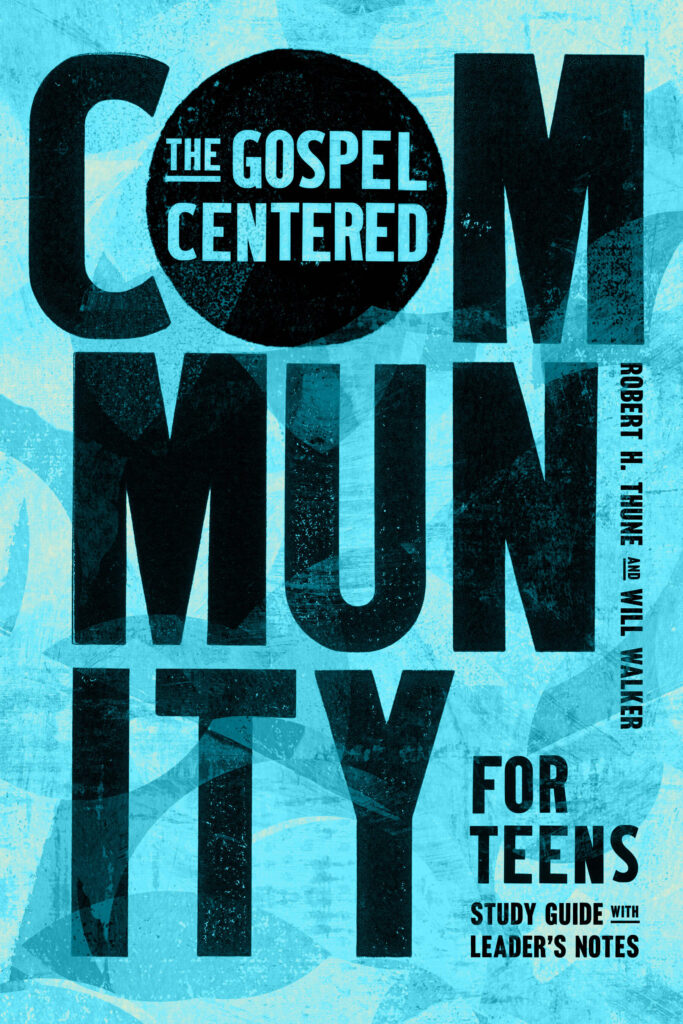
The Gospel-Centered Community for Teens
The Gospel-Centered Community for Teens by bestselling authors Robert H. Thune and Will Walker gives teenagers biblical and practical guidance for building deep friendships and being part of a community where they can grow and flourish. Teenagers will find a place to belong where people love, care for, enjoy, serve, and even challenge one another in good ways.