
We might try to manage our anxiety by not thinking about it, which, of course, is impossible. But consider a different strategy. Let’s take a hard look. Underneath fears and anxieties are personal desires that are at risk. We are anxious about a job interview because a poor interview jeopardizes our financial future. We are anxious about the results of a biopsy because cancer can be life-threatening. Fears identify what we want, what is important to us, and what we desire. If such desires are always wrong, fear is sinful. But such desires are not always wrong.
The Old Testament speaks of natural, human desires:
- What is desired in a man is steadfast love. (Proverbs 19:22)
- I am my beloved’s, and his desire is for me. (Song of Solomon 7:10)
- You satisfy the desire of the afflicted. (Isaiah 58:10)
The Bible certainly has its warnings about misplaced and unleashed desires, but Scripture attests that to be human is to have desire. Fears identify those things that are important to you.
Among our natural desires are life and health, food and shelter, love, enough money to care for ourselves and our families, peace in relationships, freedom from injustice and oppression, and a good reputation. The New Testament assumes natural desires (Luke 22:15) yet emphasizes our tendency to always want more. This emphasis gives us opportunity to consider if our fears are built on excessive desires. What makes them excessive is when we love them more than we love Jesus. When we notice that is true, we turn and ask for forgiveness. But not all desires are excessive. And the presence of natural desires means that, in an uncertain world, we have good reasons to be afraid.
The experience of grief is a helpful analogy. Grief is fear’s mirror twin. Fear is a desire that is threatened; grief is a desire taken away. Fear is when a loved one’s diagnosis is uncertain; grief is when a loved one dies. A life without grief is a life without love. The apostle Paul was distressed over a dear friend’s illness. When he recovered, Paul wrote that Epaphroditus’s death would have caused him “sorrow upon sorrow” (Philippians 2:27), and no one would have begrudged him such grief. Grief is met with compassion rather than suspicion of reckless desires. Fear, too, is met with compassion. The Lord expects us to be afraid.
The Lord Expects Us to Be Afraid
Some people seem to be fearless. There are countless stories of men and women who were heroic, which means they placed their life in jeopardy in order to serve other people. When you hear the details of those stories, the heroes sound quite mortal. They were afraid, but love and a mission would not let fear stop them from what they desired even more, just as you would act in heroic ways if someone you love needed help.
Is it possible to live without fear and anxiety? Perhaps, but it would be a severe pathology that also left you without love. Such a life would mean that your soul is dead. It would not signal your great faith. Quite the opposite. It would reveal that life had lost all meaning, you had abandoned all hope, God was irrelevant, and you simply didn’t care anymore.
Scripture assumes that we live with fear and anxiety. We are weak people who can control very little. Our reputation, finances, loved ones, and even our lives are at risk every day. The Psalms are filled with human fears and anxieties—and these are words that the Lord asks us to speak to him. He actually wants to hear about our fears.
My heart is in anguish within me; the terrors of death have fallen upon me.
Psalm 55:4–6
Fear and trembling come upon me, and horror overwhelms me.
And I say, “Oh, that I had wings like a dove! I would fly away and be at rest.”
How long, O Lord? Will you forget me forever?
Psalm 13:1–2
How long will you hide your face from me?
How long must I take counsel in my soul and have sorrow in my heart all the day?
How long shall my enemy be exalted over me?
The cords of death encompassed me;
Psalm 18:4–6
the torrents of destruction assailed me;
the cords of Sheol entangled me;
the snares of death confronted me.
In my distress I called upon the Lord.
My heart is like wax;
Psalm 22:14
it is melted within my breast.
These are not confessions of sin. They are confessions that we truly do need the Lord, and such dependence pleases him.
The apostle Paul also acknowledges his fears. “For even when we came into Macedonia, our bodies had no rest, but we were afflicted at every turn—fighting without and fear within” (2 Corinthians 7:5, emphasis added). God’s comfort came in the person of Titus and in his report that the churches were following the words that Paul had written to them.
Fear and anxiety express our weakness amid the threats of daily life. We are merely human—finite, limited, and weak. We are not the Creator. Weak people are also sinners, but weakness is not sin. Weakness means that we need help from God and other people. The good news is that God’s help is available to all who ask. You can start by asking right now for the help you need.
Excerpted from Fear Is Not a Sin: It Is a Call to Action © 2025 by Edward T. Welch. Used with permission of New Growth Press. May not be reproduced without prior written permission.
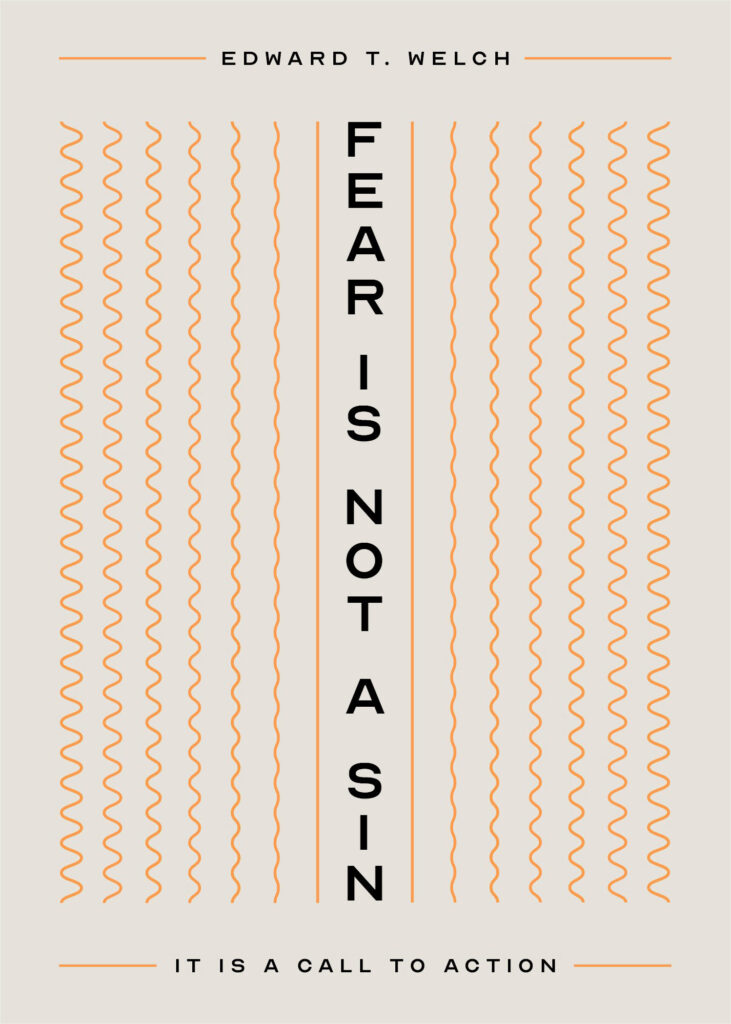
Fear Is Not a Sin
When life takes a turn for the worse, our natural response is fear and anxiety, even though God commands his people many times in Scripture to not be afraid. However, as bestselling author and biblical counselor Edward T. Welch explains, those commands do not mean that our fears are inherently sinful. Instead, they are an invitation from God to go to him with our troubles.