My family’s adoption story did not begin in a courtroom. It began in a hospital.
The day our daughter was placed in our arms, we stepped into a world of trauma, special needs, and spiritual battles that we were not prepared for. The joy was real—our adopted daughter is one of the greatest joys of our lives—but the cost was real too. Adoption is beautiful, but it is also hard. And like every adoptive family experiences, there were moments early on when the weight of the calling felt heavier than we expected.
Despite the difficulty, one truth kept rising to the surface even in the hardest moments: Adoption is first and foremost a gospel issue, not a personal one.
I care deeply about adoption, not simply because I am an adoptive father, but because I am a Christian. And that distinction changes everything.
Spiritual Adoption: The Heart of the Gospel
Many Christians think of adoption as a niche ministry—something for “those families” who feel uniquely called. But Scripture never treats adoption as an optional side ministry. It places adoption at the very center of our salvation.
Paul says in Galatians 4:4–5 that God sent his Son “so that we might receive adoption as sons.” In Romans 8:15, our salvation is described in terms of receiving “the Spirit of adoption.” In Ephesians 1:5, God tells us that he “predestined us for adoption.”
In other words, God is not merely using adoption as a metaphor. He is revealing how salvation works. We were not neutral. We were not wandering nearby waiting to be chosen. We were spiritually orphaned—estranged, separated, and without hope in the world. And God did the unthinkable: he set his love on us, pursued us, and brought us into his family at the cost of his own son.
That means every Christian, regardless of family structure or calling, already has a lived experience with adoption. It is the story at the center of our faith.
This is why Christians should care deeply about adoption and foster care, even if they never personally adopt. We can never understand the gospel fully without understanding spiritual adoption. And once we understand spiritual adoption, we can never look away from physical adoption.
Understanding the Weight (and the Joy) of Adoption
Adoption is not abstract to me. My daughter has special needs. She has walked through trauma. Our family has faced battles that we never expected. But if I’m honest, those challenges have not made me question whether adoption is worth it; they have made me more aware of the gospel cost that God bore for us.
When people step into adoption, they don’t enter a blank slate situation. They step into brokenness. They step into wounds. They step into a history that requires patience, sacrifice, and the long work of love. And yet, who among us would say that Jesus did anything different?
When he brought us into the family, he didn’t adopt “pretty stories.” He adopted sinners. He adopted prodigals. He adopted the broken.
This is why Christians cannot reduce adoption to sentimental pictures or emotionally charged moments. As I often tell people in our church, “Cute pictures and sad stories are not good enough reasons to adopt.” If a family’s motivation is only emotional, it will not sustain them.
But the gospel can.
The gospel does.
And when Christians see adoption through a gospel lens, something changes inside them, even if they never adopt.
Every Christian Has a Role
Because adoption is at the heart of salvation, it is also at the heart of the church’s mission. That means every Christian, without exception, participates in the church’s responsibility to vulnerable children.
Not everyone will adopt.
Not everyone should adopt.
But everyone can care.
Here are a few ways every believer is invited to embody the heart of God toward the fatherless:
- Pray for the fatherless. James1:27 tells us that pure religion includes caring for orphans and widows. Even if someone is never physically involved in adoption, they can join God’s heart through prayer.
- Support adoptive and foster families. The families stepping into adoption and foster care are stepping into spiritual battles. They need rope holders—people who pray, babysit, bring meals, help financially, and simply show up.
- Cultivate gospel-shaped hospitality. Spiritual adoption is the ultimate act of divine hospitality—God bringing strangers home. When Christians practice hospitality, they mirror the heart of adoption.
- Advocate for vulnerable children. Whether through local ministries, church initiatives, or broader justice work, Christians can use their voice and resources to defend the fatherless.
- Celebrate adoption as a picture of redemption. Every adoption is a story of God’s heart breaking into a broken world. Even when the process is messy and complex, it echoes the gospel.
Every Christian can participate in these ways because every Christian has been adopted. Adopted people adopt people. Chosen people choose people.
What Adoption Reveals About God’s People
When a church is shaped by spiritual adoption, the ripple effects are unmistakable. Families begin to see adoption not as a heroic act but as a natural expression of gospel identity. Believers embrace sacrifice because they understand the sacrifice made for them. Churches rally around vulnerable children because they understand that they were the vulnerable.
In our church, we have watched family after family step into the adoption waters not because they were fearless or uniquely equipped, but because they were motivated by the gospel. And we have watched others come alongside them—not by adopting but by playing crucial supporting roles. This kind of community becomes a countercultural witness. In a world that often sees children as burdens or commodities, the church’s commitment to adoption declares that every child has dignity, value, and worth because they reflect the image of God.
The Takeaway: Let Spiritual Adoption Shape Your Life
You may never adopt.
You may never foster.
But the gospel truth is this: Your salvation is an adoption story.
That means:
- You were pursued when you ran.
- You were chosen when you had nothing to offer.
- You were welcomed when you were unworthy.
- You were made a child of God when you had no claim.
And when those realities sink in, it becomes impossible to ignore the children who live every day in the shadows of that same longing—the longing to belong, to be seen, to be brought home.
Every Christian should care about adoption because every Christian has already experienced it. Not everyone will adopt, but everyone can reflect the God who adopts.
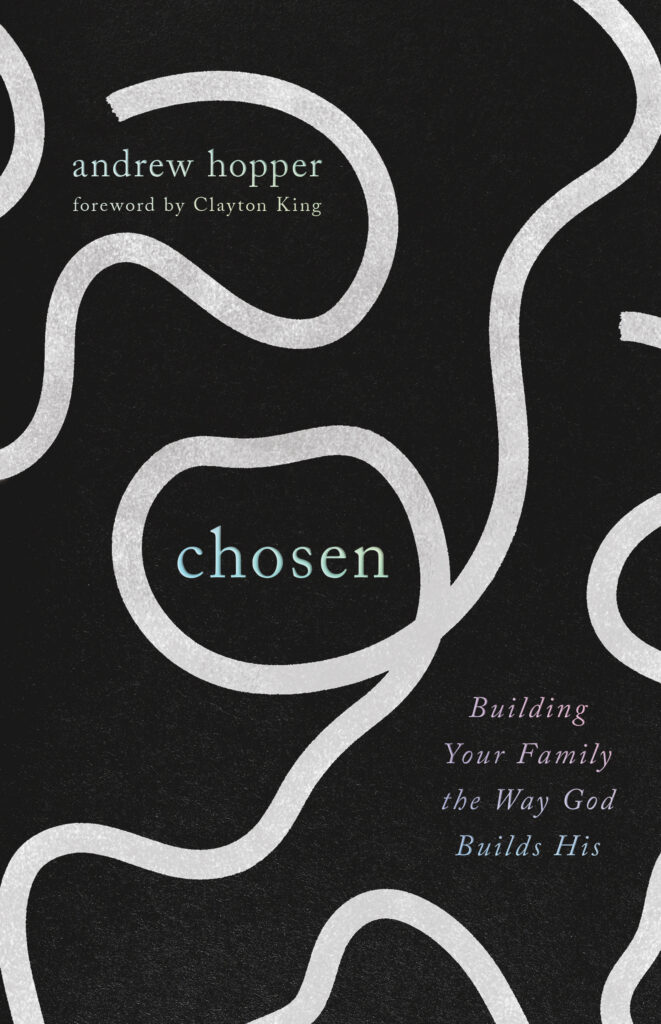
Chosen: building Your Family the Way God Builds His
Have you ever considered building your family the way God builds his? Adoption is not only a response to the needs of children who don’t have a family, but also a profound picture of God’s love for all the children he has adopted into his family. In Chosen, Andrew Hopper helps Christians deepen their understanding of their own adoption as children of God and invites them to put the gospel on display by engaging in adoption themselves.