
There’s something about turning the calendar to January or watching the first buds appear in spring that feels like God whispering, “Let’s begin again.” These seasonal rhythms—New Year’s resolutions, fresh planners, longer days, the faint green returning to the world—have a way of stirring renewed purpose in my heart. Maybe it’s because creation itself seems to proclaim what Scripture has said all along: that our God is a God of new mercies, new seasons, and new beginnings.
As another year begins and as spring slowly edges winter aside, I find myself returning to a few faith practices that anchor me, clarify my purpose, and gently guide me back to who I’m called to be. I share them with you in the same spirit I practice them—with warmth, humility, and a grateful awareness that we’re all learning how to begin again.
The Faith Practice That Grounds Me
Every January, I block out several quiet mornings called my “first fruits time.” It’s not complicated—sometimes it’s just coffee, an open Bible, and a blanket I love. But this practice has become sacred. Before I write goals or schedule commitments, I sit with the Lord and ask Him to reorder my desires.
I pray through Psalm 90:12: “Teach us to number our days, that we may gain a heart of wisdom.”
There is something humbling and freeing about asking God to help me steward—not conquer—my time. If I’m honest, I can be ambitious in all the wrong directions. “First fruits time” keeps my soul from sprinting into the year without God’s direction.
I ask questions such as:
- Lord, what are You already doing in my life that You want me to join?
- What needs pruning? What needs nurturing?
- Who are the people You’re calling me to love more intentionally this year?
It’s in those unhurried spaces that my real purpose gets clarified—not the purpose driven by comparison, hurry, or expectation, but the purpose shaped by God’s gentle voice.
Choose Rhythms, Not Resolutions
Years ago, I realized something about myself: I’m great at making goals, but not always great at sustaining them. I needed habits, not hype. That’s when I started choosing rhythms over resolutions.
A resolution might say, “Read the whole Bible this year.”
A rhythm says, “Meet with God daily, even if it’s for 10 minutes.”
A resolution says, “Exercise five days a week.”
A rhythm says, “Move your body with gratitude every day.”
A resolution says, “Be more intentional with relationships.”
A rhythm says, “Reach out to two people each week.”
Rhythms don’t shame us—they shepherd us. They create steady pathways for growth, not all-or-nothing pressure.
Plus, rhythms mirror God’s design. Creation itself was made in rhythm—day and night, work and rest, seedtime and harvest. When my life moves with God’s rhythms, I find purpose is no longer something I chase; it’s something I step into.
Verses that Renew Our Purpose This Season
Keep a list of Scriptures close during this time of year—verses that stir obedience, renew hope, and call you back to the mission God has entrusted to you.
Isaiah 43:18–19 — “Forget the former things; do not dwell on the past. See, I am doing a new thing!”
This verse is my permission slip to stop rehearsing old failures. God is not stuck in my yesterday.
Lamentations 3:22–23 — “His mercies never come to an end; they are new every morning.”
Not just every January. Not just in spring. Every single morning. That’s enough to keep me going.
Showing Up for the People I Love
A renewed purpose from God always spills into our relationships. Love is never theoretical. This year, I’m asking God to help me show up in ways that are more intentional, more personal, and simpler than I used to think.
Here are a few simple commitments to consider:
1. Name the Good Daily
Every day, try to speak one piece of encouragement—one specific kindness—to someone in your life. It might be a text, a note in a lunchbox, or a sentence in a conversation. Naming the good we see in others is one of the easiest ways to reflect Christ.
2. Practice Presence, Not Performance
Our families don’t need a perfect version of us—they need a present one. I’m learning to put down my phone more quickly, linger at the dinner table longer, and listen without planning what to say next. Showing up means being where your feet are.
3. Create Margin for People
Purpose gets suffocated when every minute is filled. Work on leaving margin in your calendar so that you can say “yes” to real-life needs—an unexpected coffee, a friend who needs prayer, or someone having a hard day. Ministry happens in the margins.
4. Pray Specific Prayers for Loved Ones
Instead of praying general prayers like “God bless them,” journal one specific prayer per person. It’s amazing how much more deeply you love someone when you consistently carry their name to the Lord.
The Gentle Invitation of a New Season
As we begin a new year and look toward the new life of spring, I feel God inviting me (and maybe He’s inviting you, too) into a renewed purpose that is less about striving and more about surrender. Less about self-improvement and more about Spirit-empowered transformation. Less about chasing significance and more about walking faithfully with the One who already loves us completely.
New beginnings aren’t just seasonal. They are the daily reality of life with Jesus. Whether you feel energized or exhausted, hopeful or hesitant, confident or confused, God meets you with new mercy today. And He whispers again: “Let’s begin again. I’m doing a new thing.”
May this year be filled with rhythms of grace, deepening faith, and a renewed purpose that grows from your life with Christ—and spills out beautifully into the lives of those you love.
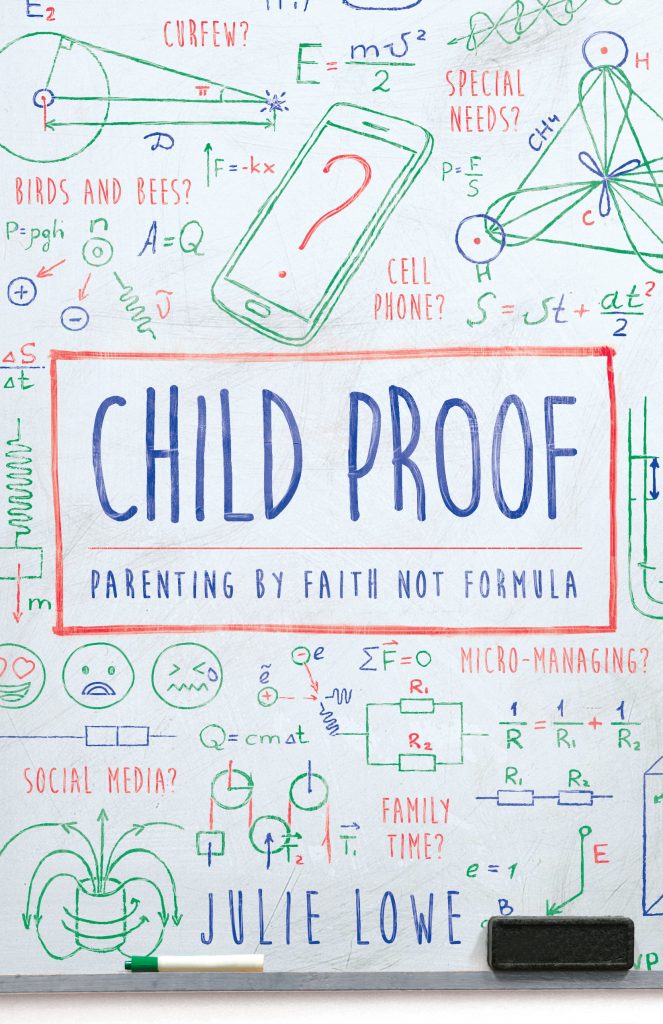
CHILD PROOF
As a freedom-over-formula parenting book for moms, dads, and caregivers of all ages, Child Proof provides biblical insight and encouragement for readers who want to parent by faith. Julie Lowe uses Scripture and biblical wisdom to teach caregivers how to know their children and specifically love them with the love of Christ.