“The words of the wise are like goads,
and like nails firmly fixed are the collected sayings;
they are given by one Shepherd.”— Ecclesiastes 12:11
Trapped in a dark world without a clear a view of God, the writer of Ecclesiastes sought frantically for some light on the path—but indulging in everything this world had to offer left him empty and unfulfilled. After climbing high on life’s ladder, he made the tragic discovery that it was propped against the wrong wall. Cynical about worldly achievements, he began to question—rightly—whether anything mattered or everything was only vanity.
In this study, we’ll consider what this challenging and relevant Old Testament meditation has to say about life’s apparent futility and will be reminded that there is only one true hope that can give our existence lasting meaning. When so many pass their days running down dead-end streets, we can live with purpose. First, though, we must discover and embrace what it means to fear God, which is the beginning of true wisdom.
Key Themes
- the vanity of life
- fear of God
- effects of the fall
- toil and labor
- enjoyment of God’s creation
Setting
Likely written sometime during the period of Israel’s monarchy (900–576 BC), Ecclesiastes addresses a diverse group of Israelite God-fearers—people with backgrounds as royal counselors and day laborers alike (Ecclesiastes 8:1–9; 11:6). The book calls God’s people to heed wisdom and fear their Creator (Ecclesiastes 12:9–14).
Characters
The Preacher: The title given to the author of Ecclesiastes (1:1). The Hebrew word translated into English as “the Preacher” is Qoheleth, from the Hebrew verb qahal, which means “to assemble.” It suggests the picture of a respected Israelite king standing before an assembly of his people, instructing them in wisdom. Ecclesiastes reveals that the Preacher was a Davidic king (1:1), was greatly wise and wealthy (1:12–2:11), and arranged many proverbs (12:9). Though the book is technically anonymous, Solomon best fits the description.
Words/Phrases/Definitions
Vanity: Translated from the Hebrew word hevel, it literally means a “mist” or “vapor.” It is used throughout Ecclesiastes in this sense but can also refer figuratively to something that is transient, fleeting, or elusive—an enigma or paradox.
Under the Sun: In the Preacher’s view, this phrase refers to the time and the place in which life occurs. Ecclesiastes is written not from the vantage point of the infinite, personal creator God but from that of His creation.
Fear God: This repeated phrase refers to the heart disposition of God’s children before Him—one not of terror but of reverential awe in response to God’s character.
Ecclesiastes 1: A Word to the Wise
“I have seen everything that is done under the sun,
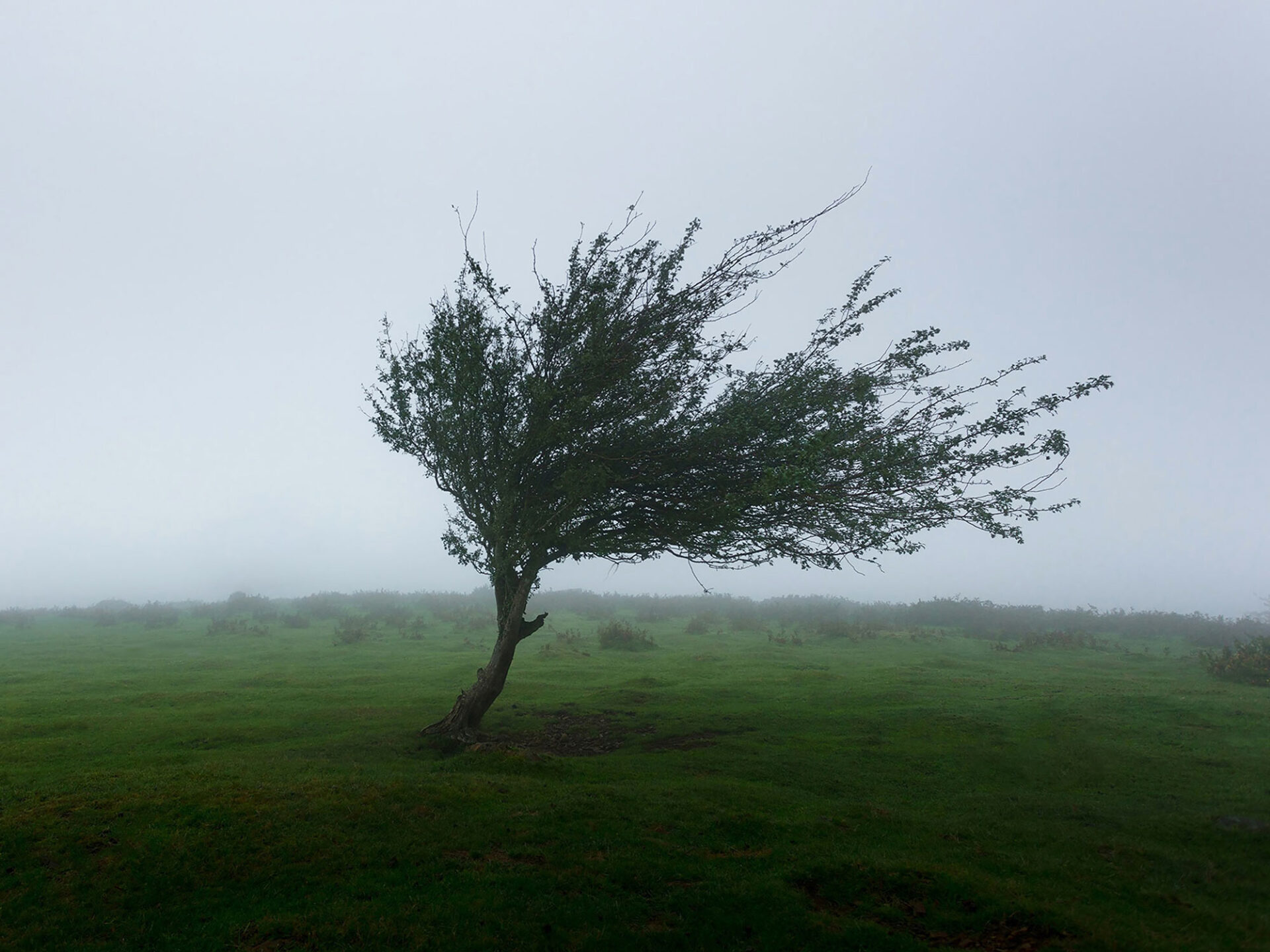
and behold, all is vanity and a striving after wind.”— Ecclesiastes 1:14
Study the Book
T. S. Eliot once remarked, “Human kind / Cannot bear very much reality” [“Burnt Norton,” Four Quartets (1943)]. What we find throughout Ecclesiastes, however, is a heavy dose of just that: reality.
In most of our twenty-first-century cultures, entertainment takes us to worlds of fantasy and mirage, to that which is out and beyond us. We falsely believe that if we could only get out of our reality, then perhaps we could find the answers. But the book of Ecclesiastes provides us no such escape. Instead, this ancient meditation continues generation after generation to shine its searchlight on matters of real life.
Verse 1 introduces us to the Preacher. He does in writing what few people are willing to do even in their minds: He wrestles with the enigmas of life, searching tirelessly for answers. The Preacher doesn’t approach his subject like a distanced university professor, raising questions only to watch his students debate one another. Rather, he’s involved in the very questions he raises. He has built an observation tower at ground level, so to speak.
What does the Preacher observe? Our answer is in verse 2, which reads more like a conclusion than an introduction: “All is vanity.” In Hebrew writing, it was customary to put the most important point up front. The Preacher follows this pattern, piquing our curiosity right away: How can he say that everything is vanity? It’s an invitation to read on to learn how the Preacher arrived at such a conclusion—and whether his insights will persuade us of the same.
The Preacher points out in verse 3 that his survey of life “under the sun” is conducted not from God’s vantage point but from man’s. The Preacher will show us that in any framework that fails to account for God’s existence, everything under the sun, from birth to death, is meaningless.
In verses 3–18, the Preacher unpacks his conclusion in six points:
- Life is marked by drudgery. Again, in verse 3, the Preacher asks, “What does man gain by all the toil at which he toils under the sun?” Put simply: Life can be boring! It doesn’t matter our vocation; for everyone—mothers at home, college students, CEOs, retirees—much of life possesses an inherent monotony.
- Life is marked by transience. In verse 4, the Preacher’s observation of generations coming and going testifies to our lives’ frailty and brevity. As our days go by and familiar faces pass away, the words of Psalm 90:10 seem to resonate with us: “The years of our life are seventy, or even by reason of strength eighty; … they are soon gone, and we fly away.”
- Life is repetitive. The Preacher observes in verses 5–7 several features of our natural world: the sun, wind, and streams. The sun, he points out, is in its same course every day; it never goes on vacation. The wind may blow somebody’s hat off, provide a refreshing breeze, or make the aircraft bounce around—but it doesn’t cease. Streams flow into the sea, yet the sea is never full. The Preacher wants us to see that our human experience closely mirrors the natural world. Life is repetitive.
- Life is insatiable. As verse 8 says, “All things are full of weariness; a man cannot utter it; the eye is not satisfied with seeing, nor the ear filled with hearing.” In other words, life has an appetite that can never be satisfied.
- Life is the same old, same old. “What has been is what will be, and what has been done is what will be done, and there is nothing new under the sun. … It has been already in the ages before us” (vv. 9–10). Just when we think we’ve had a new idea, we discover it’s already been done. In the framework of life “under the sun,” there are no surprises; there are no true breakthroughs.
- Life is marked by insignificance. In verses 12–18, the Preacher raises for us an essential question: Is there true life before death, or are we limited to mere survival? While king in Jerusalem, he saw everything done under the sun, concluding that it was merely a striving after the wind. “What is crooked cannot be made straight,” he says, “and what is lacking cannot be counted” (v. 15). Life is like a Rubik’s Cube with two blocks missing: No matter how many times we spin it, it can’t be solved, because it’s inherently flawed.
The Preacher concludes chapter 1 with verses 16–18, which tell us that in his intellectual pursuits of wisdom, madness, and folly, he wound up vexed and sorrowful. This, too, he discerned, is a striving after the wind.
Live Out the Book
Life “under the sun” apart from God is ultimately meaningless. But for those asking, “Is there life before death?” there is the promise of Jesus, which came centuries after Ecclesiastes: “I am the way, and the truth, and the life” ( John 14:6, emphasis added). We know today what it would take the Preacher eleven more chapters to discover in part: that in the Lord Jesus Christ is the answer to all the deepest heartaches and greatest longings we experience. In order to fully appreciate that fact’s implications, however, we must first come to terms with the vanity of life apart from Him.
- God does not appear as a character in Ecclesiastes 1, but we may be reminded of Him as we think of the vanity the Preacher describes. How does God stand in contrast to what we see here?
- Of the six points the Preacher makes, which are most relevant to your life situation? Are any of them particularly hard for you to believe? Why?
- Jesus offers us a significance and permanence that the world cannot. Are there any worldly promises that you tend to put your hope in? How might you lay those at the feet of Christ?
Excerpted from Ecclesiastes: Chasing the Wind © 2025 by Alistair Begg. Used with permission of New Growth Press. May not be reproduced without prior written permission.
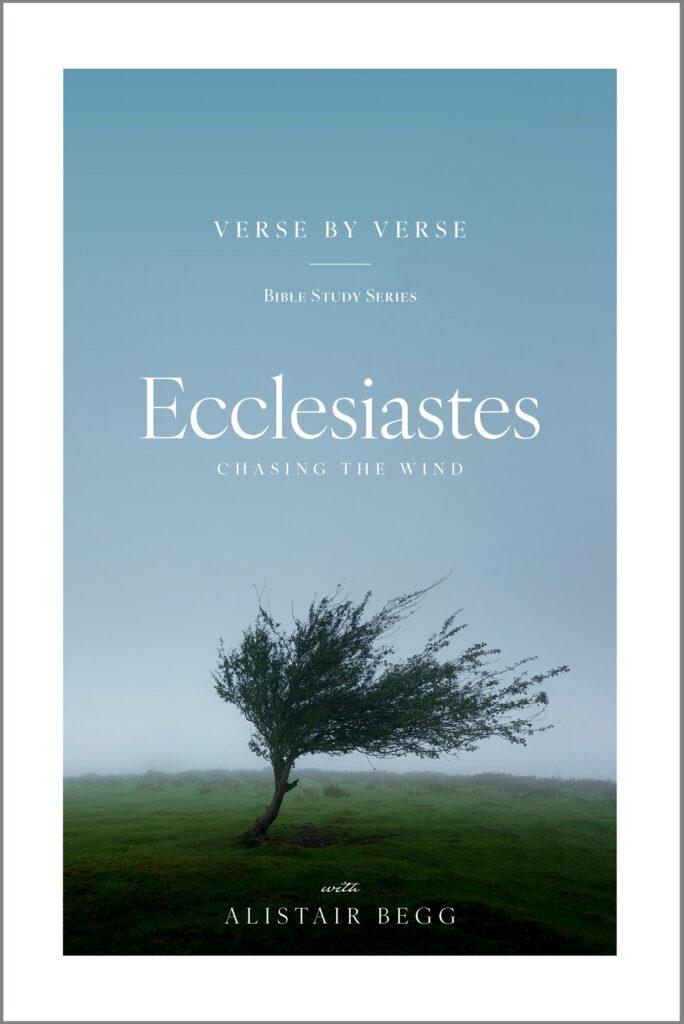
Ecclesiastes: Chasing the Wind
Trapped in a dark world without a clear a view of God, the writer of Ecclesiastes sought frantically for some light on the path—but indulging in everything this world had to offer left him empty and unfulfilled. In this twelve-week, verse-by-verse study, you will consider what the challenging “words of the Preacher” have to say about life’s apparent futility. You will also be reminded of the one true hope that can give your existence lasting meaning.